
The Remodeling Sales Process: From First Call to Signed Package
The remodeling sales process moves a homeowner from first contact to a signed contract through a series of stages: respond, qualify, meet, present options, propose, handle objections, close, and hand off. The remodelers who win more often aren't the ones with a different process. They're the ones who move through it faster and give homeowners clear choices at the moment of decision.
This guide walks through each stage, with a focus on where standardized packages and good, better, best options remove friction. If you're also evaluating the tools behind the process, see our guide to construction sales management software.
Key takeaways
- Speed matters most at two points: first response and time to proposal.
- Presenting options turns price objections into scope conversations.
- Standardized packages let every rep run the same proven process.
Stage 1: Respond to the Lead Fast
Homeowners often contact more than one contractor. The first one to respond with something useful has the advantage. Answer calls live when you can, and use an AI sales assistant to answer and capture leads when you can't. Our guide to the five-minute rule covers why response speed matters.
Stage 2: Qualify Before You Drive
A short qualification call saves wasted appointments. Confirm project type, timeline, decision-makers, and budget range. Sharing package pricing or a link to your published packages early helps homeowners self-qualify before you get in the truck.
Stage 3: Run a Consistent Appointment
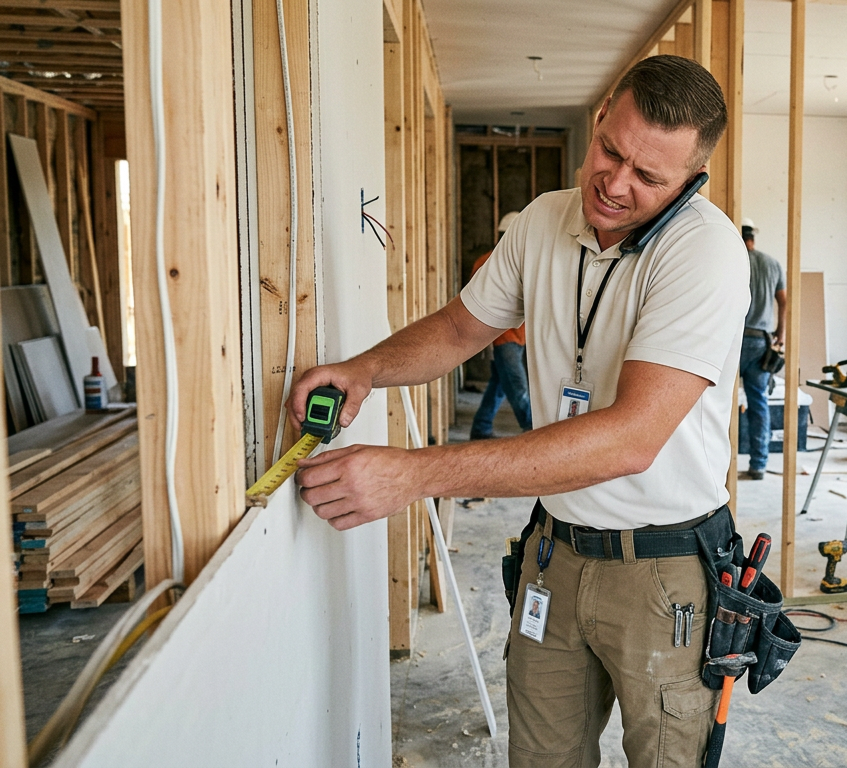
Every rep should follow the same structure: understand goals, walk the space, capture conditions and measurements, and preview the options. Capturing the walkthrough on video with an AI video estimator means the scope doesn't depend on someone's notes.
Stage 4: Present Options, Not a Single Number
This is where most remodeling sales processes leave money on the table. A single price invites a yes-or-no decision and comparison shopping. Presenting good, better, best options with photos and clear scope gives the homeowner a way to say yes at the level that fits.
Stage 5: Send the Proposal the Same Day
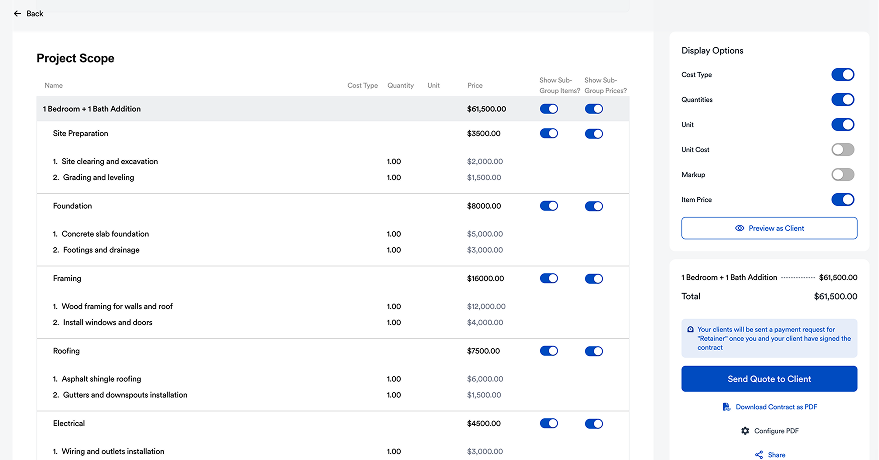
Every day between the appointment and the proposal is a day for the homeowner's excitement to fade. When your options are prebuilt as packages, the proposal is mostly assembled before you leave the driveway. Include scope, the selected option and add-ons, allowances, payment milestones, and an online signature. Our construction quote template with options shows the structure.
Stage 6: Handle Objections With Choices
- "It's more than we expected." Show the next tier down or remove an add-on, rather than discounting.
- "We need to think about it." Ask what's unclear and offer to walk through the options again.
- "Another contractor was cheaper." Compare scope line by line. Packages make your scope easy to defend.
- "We can't afford it all at once." Offer customer financing or a phased approach.
Stage 7: Follow Up on a System
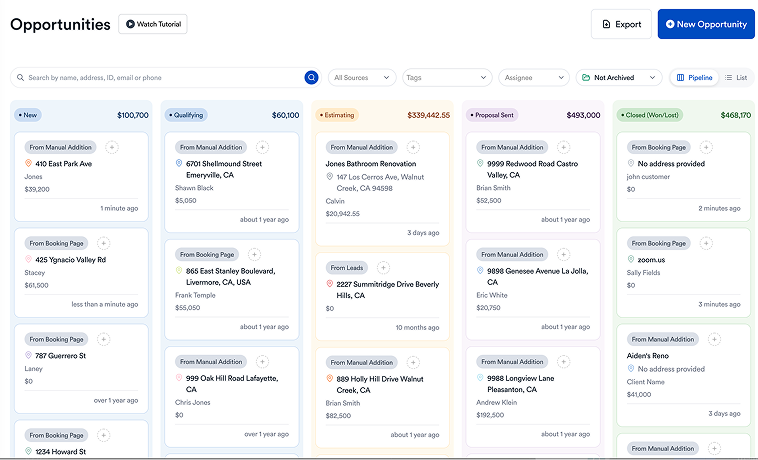
Most unsigned proposals aren't lost to price; they're lost to silence. Set automatic follow-up reminders for every open proposal. See our guide to building a follow-up system that wins more jobs.
Stage 8: Close and Hand Off Cleanly
Collect the signature and deposit, then hand off to production without re-entering anything. The signed package's scope, selections, and milestones should carry straight into the project schedule and budget.
Sales Manager Checklist
Run the Whole Process in One Place
Eano Pro connects each stage: an AI sales assistant to answer calls, a construction CRM with follow-up reminders, sales packages with preset scope, pricing, and photos, and proposals with e-signature that hand off directly to production. Browse a live sample package catalog to see how homeowners experience it. To build your packages, start with how to standardize remodeling sales packages.