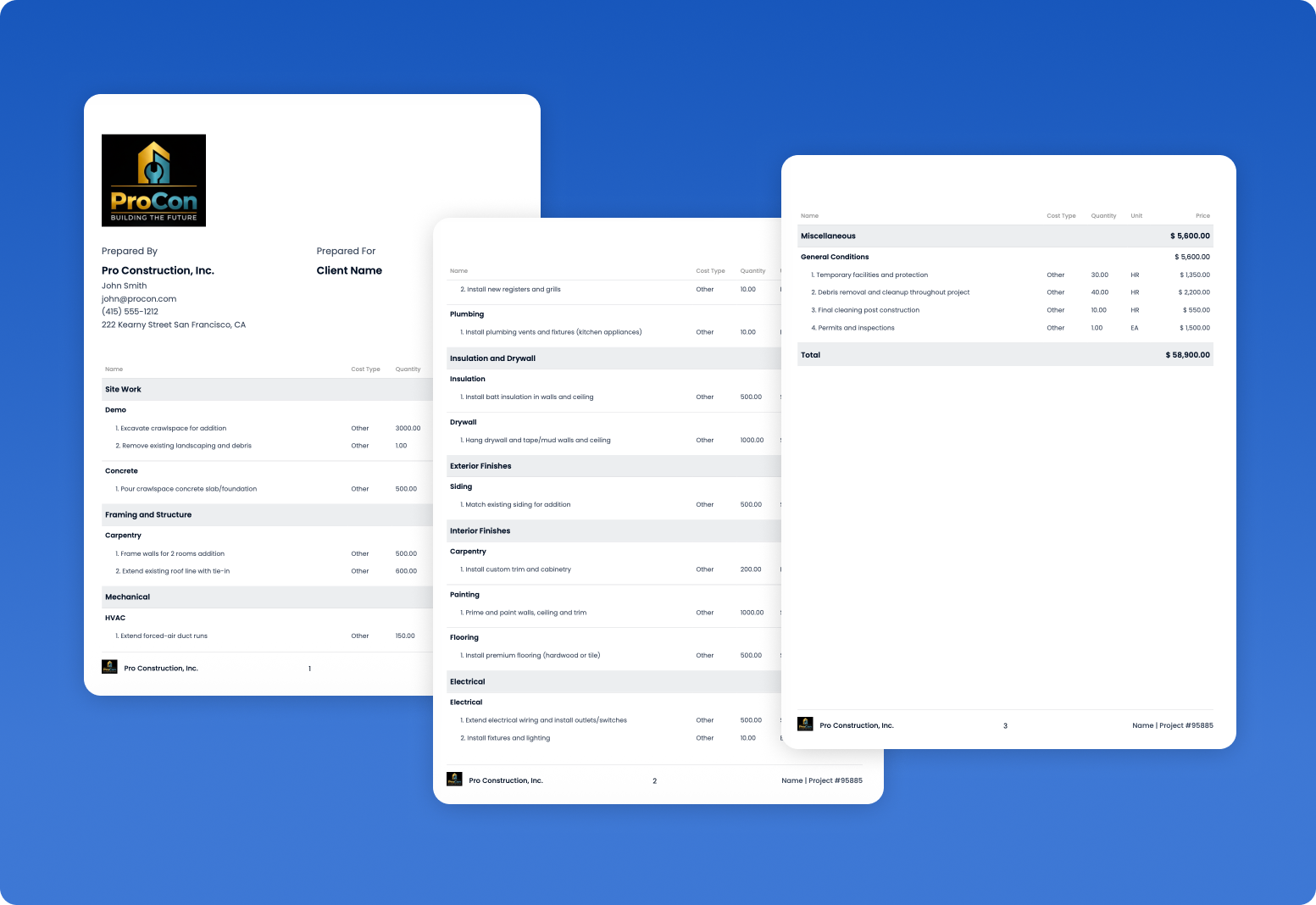

Construction Quote Template With Options: How to Present Tiers and Add-Ons Clients Can Choose
A construction quote template with options presents a shared base scope, two or three complete project options with their own prices, and a short list of add-ons, so the homeowner can choose a version of the project and sign for exactly what they picked. It turns a yes-or-no quote into a guided decision.
Single-price quotes put homeowners in an awkward spot: accept a number that may feel high, or go find another contractor to compare against. A quote with options keeps the comparison inside your proposal. The client compares your Refresh to your Modern Upgrade instead of comparing you to the next company on Google.
Below you'll find a copy-ready template, sample wording for each section, filled-in examples for a bathroom, kitchen, and deck, an add-on menu by project type, and a practical approach to presenting and closing.
Key takeaways
- Separate the base scope (always included) from options (choose one) and add-ons (choose any).
- Describe what changes between options as an outcome, not just a materials list.
- Price every option from its own line items so each one is profitable.
- Record the client's choice in the signed document to prevent disputes later.
- If you sell the same projects repeatedly, save your options as reusable packages instead of rebuilding them.
When to Use a Quote With Options (and When Not To)
| Options work well for | A single scope works better for |
|---|---|
| Kitchens, bathrooms, tub-to-shower conversions | Insurance and restoration work with a defined scope |
| Decks, patios, flooring, and exterior upgrades | Code-required repairs and structural fixes |
| Clients who are unsure of their budget | Architect-designed projects with fixed specifications |
| Projects with clear finish levels (standard, mid, premium) | Small service calls where options add confusion |
Even when a single scope makes sense, a short list of priced add-ons still gives clients a way to customize without slowing down the decision.
The Construction Quote Template With Options
Use these ten sections in this order. Each includes sample wording you can adapt.
1. Header
Company name and logo, license number, phone, email, quote number, quote date, and an expiration date. An expiration date (commonly 15 to 30 days) protects you from material price changes and creates a natural reason to follow up.
2. Client and project summary
Client name, project address, and a short paragraph in the client's own terms.
"You'd like to update your primary bathroom so it's easier to use day to day, replacing the tub with a walk-in shower and adding more storage. Below are three options, from a cost-conscious refresh to a full spa-style remodel."
3. Base scope (included in every option)
List everything that doesn't change between options: permits, protection, demolition, disposal, rough-in updates, patch and paint, and cleanup. Putting it once, up front, keeps each option short and makes the comparison easier.
4. Options (choose one)
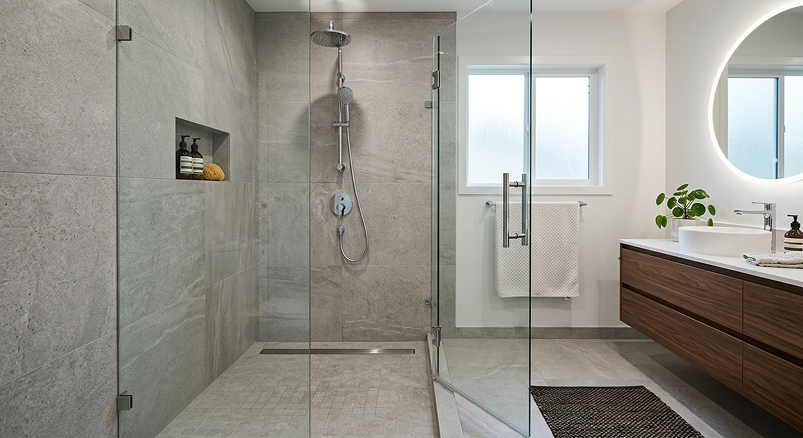
For each option: a name, a one-line outcome, what's included, a photo of similar finished work, and the total price. Mark one as recommended.
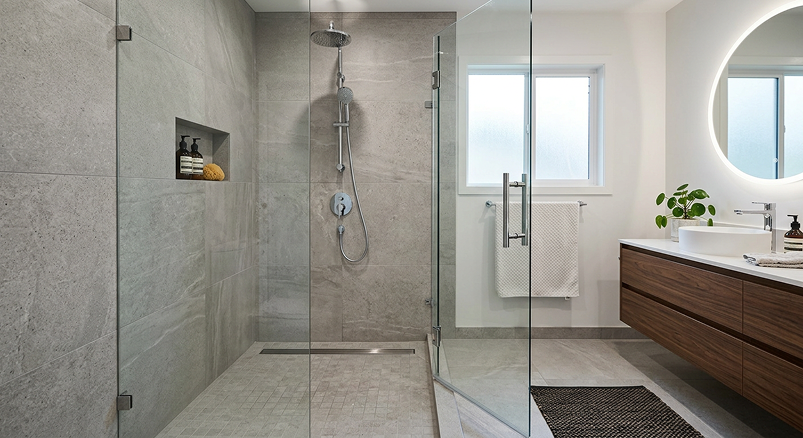
"Option B: Modern Upgrade (recommended). Replaces your tub with a tiled walk-in shower and glass door, adds a semi-custom vanity with quartz top, and installs porcelain tile flooring. Best for homeowners staying in the home long term who want a lasting upgrade."
5. What changes between options
A side-by-side comparison table. This is the most important part of the document: it shows the client exactly what each step up buys.
6. Optional add-ons (choose any)
Four to six upgrades, each with a one-line description and individual price. Add-ons should work with any option.
7. Allowances
"This quote includes a $1,200 allowance for plumbing fixtures (faucet, shower valve and trim, and toilet). If your selections exceed the allowance, the difference will be documented as an upgrade before ordering. If they come in under, the difference will be credited."
8. Exclusions and assumptions
"This quote does not include: relocation of plumbing or electrical beyond the existing footprint, repair of concealed water damage or rot, structural modifications, or asbestos and lead abatement. Pricing assumes normal working access and that existing framing is sound. Any concealed conditions discovered during demolition will be reviewed with you and priced as a change order before work continues."
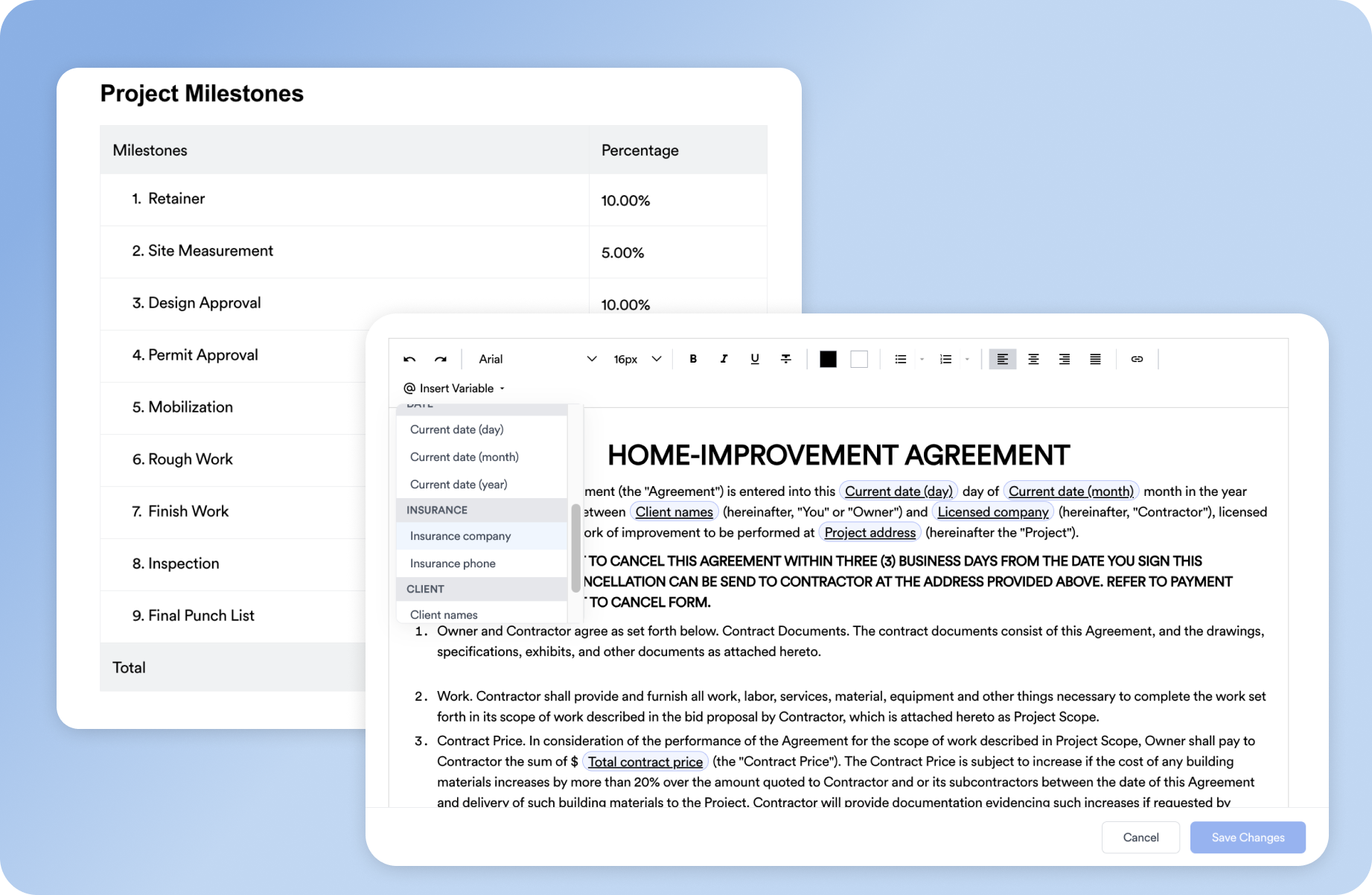
9. Payment milestones and timeline
Tie payments to visible progress, not dates. Include an estimated start window and duration for each option, since premium options often take longer.
10. Terms and signature
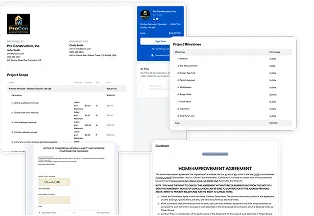
Warranty terms, the change order process, and a signature block that captures the client's selection:
"I accept Option ___ with the following add-ons: ______________, for a total contract price of $________, under the scope, allowances, exclusions, and payment terms above."
Recording the selected option and add-ons in the signed document is what prevents "I thought that was included" conversations later.
Filled-In Example 1: Bathroom Remodel
All prices in these examples are illustrative, to show structure. Use your own costs and markup.
Base scope (all options): permit, floor and fixture protection, demolition and disposal of existing tub, surround, vanity, and flooring, plumbing and electrical rough-in updates, drywall repair, paint, and final cleaning.
| Option A: Refresh | Option B: Modern Upgrade (recommended) | Option C: Spa Bath | |
|---|---|---|---|
| Outcome | Clean, updated bath on a tight budget | Tub-to-shower conversion with modern finishes | Curbless walk-in shower with premium finishes |
| Shower/tub | New tub with acrylic surround | Tiled walk-in shower, glass door | Curbless tiled shower, frameless glass, bench |
| Vanity | Stock vanity, cultured top | Semi-custom vanity, quartz top | Custom floating double vanity |
| Flooring | LVP | Porcelain tile | Large-format tile |
| Fixture allowance | $600 | $1,200 | $2,500 |
| Est. duration | 1 to 2 weeks | 2 to 3 weeks | 3 to 4 weeks |
| Total (example) | $14,500 | $24,000 | $38,000 |
Optional add-ons (any option): heated floor ($1,400), shower niche ($450), exhaust fan with humidity sensor ($380), lighted mirror ($650).
Filled-In Example 2: Kitchen Remodel
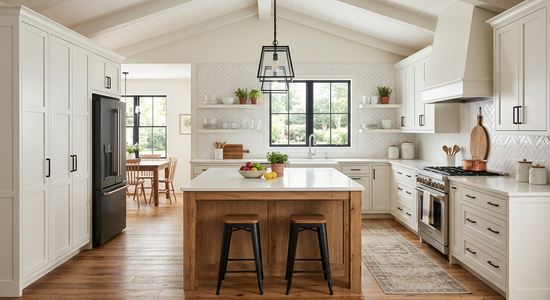
Base scope (all options): permit, dust protection, demolition and disposal of existing cabinets and countertops, electrical updates to code for the kitchen circuits, plumbing disconnect and reconnect, drywall patch, paint, and final cleaning.
| Option A: Kitchen Refresh | Option B: Full Remodel (recommended) | Option C: Signature Kitchen | |
|---|---|---|---|
| Layout | Keep existing | Keep existing | Reconfigure with island |
| Cabinets | Paint and new hardware | New semi-custom cabinets | Custom cabinets with organizers |
| Countertops | Entry-level quartz | Mid-range quartz | Premium quartz or natural stone |
| Backsplash | Simple subway tile | Full-height tile | Designer tile or slab |
| Lighting | Replace fixtures | Recessed + under-cabinet LED | Layered design with pendants |
| Appliance allowance | Reuse existing | $6,000 | $15,000 |
| Total (example) | $28,000 | $62,000 | $115,000 |
Optional add-ons: pot filler ($900), pull-out organizers ($1,200), beverage fridge installation ($750), under-sink water filtration ($450).
Filled-In Example 3: Deck
Base scope (all options): permit and drawings, layout, footings and framing for a 16' x 14' deck at existing door height, ledger flashing, stairs to grade, and debris removal.
| Option A: Wood Deck | Option B: Composite Deck (recommended) | Option C: Outdoor Living | |
|---|---|---|---|
| Decking | Pressure-treated wood | Composite boards, hidden fasteners | Premium composite with picture-frame border |
| Railing | Wood railing | Composite railing | Aluminum or cable railing |
| Extras | None | Stair lighting | Built-in bench, lighting, and landscaping touch-up |
| Maintenance | Periodic staining and sealing | Low maintenance | Low maintenance |
| Total (example) | $13,000 | $21,000 | $32,000 |
Optional add-ons: privacy screen ($1,100), under-deck drainage ($2,400), additional stair lighting ($350 per light), pergola ($6,500).
Add-On Menu Ideas by Project Type
| Project | Add-ons homeowners commonly choose |
|---|---|
| Bathroom | Heated floors, shower niche, grab bars, lighted mirror, upgraded exhaust fan, built-in storage |
| Kitchen | Pot filler, pull-out organizers, under-cabinet lighting, beverage fridge, water filtration, additional outlets |
| Deck | Lighting, privacy screen, built-in seating, pergola, under-deck drainage |
| Flooring | Furniture moving, subfloor leveling, new baseboards, stair treads, transition upgrades |
| Exterior | Gutter guards, trim upgrades, exterior lighting, shutters, door replacement |
How to Price Each Option
- Build each option from its own line items. Don't just add a percentage to the base option. Each tier should hit your target margin on its own.
- Make the recommended option the easiest step up. The jump from A to B should feel like obvious value.
- Make the top option clearly premium. A larger gap to C reinforces that it's special and makes B look like the smart choice.
- Price add-ons individually so clients can mix and match without a new quote.
For the markup and margin math behind each tier, see how to price a kitchen remodel as a contractor.
Spreadsheet, Document, or Software?
| Format | Works well when | Watch out for |
|---|---|---|
| Spreadsheet | You want full control over the math | Hard to make client-friendly; formula errors |
| Word or PDF | You quote occasionally and want a polished look | Retyping numbers; printing and scanning to sign |
| Proposal software | You quote often or have multiple salespeople | Setup time up front |
If you're still on spreadsheets, see general contractor software vs. spreadsheets for signs it's time to switch.
How to Present a Quote With Options
- Restate their goals first. "You told me storage and a walk-in shower matter most."
- Walk through the base scope briefly. It reassures them that the essentials are covered in every option.
- Present the recommended option first, then show what the step down and step up change.
- Show photos for each option. Clients choose what they can picture.
- Introduce add-ons last, after they've chosen an option, so they don't distract from the main decision.
- Ask for the decision. "Which option feels right for you?" works better than "What do you think?"
- Make it easy to sign. A proposal they can approve on their phone, with a deposit, closes faster than a PDF.
Following Up on a Quote With Options
Options give you a better follow-up than "just checking in." Try:
- Day 1: "Here's a link to the options we discussed. Happy to answer any questions about Option B."
- Day 3: share a photo of a finished project similar to the option they leaned toward.
- Day 7: "If budget is the concern, Option A still gets you a walk-in-ready layout, and we can add the niche later."
- Before expiration: remind them when the quote expires and that material pricing may change.
For a full system, read the follow-up system that wins more construction jobs.
Common Mistakes to Avoid
- Options that only differ in price. If clients can't see what changes, they'll pick the cheapest.
- Too many options. Three options plus a short add-on list is enough.
- Repeating the base scope in every option. It makes the quote long and the comparison harder.
- Vague allowances. State the dollar amount and how overages are handled.
- Not recording the choice. The signature block should name the selected option and add-ons.
- No expiration date. Material prices change; protect your margin.
Stop Rebuilding Options for Every Quote
If you sell the same kinds of projects repeatedly, you shouldn't have to rebuild three options from scratch for every lead. Eano's sales packages let you save your most popular projects as ready-to-sell packages with preset scope, pricing, payment milestones, and photos. Build them by cloning a successful past project or converting an existing template, publish them as customer-facing landing pages, capture leads into the Eano Pro CRM, and send detailed estimates for e-signature in a few clicks. Here's a live example of a package catalog with bathroom, kitchen, and deck packages.
For more on structuring tiers, read good, better, best pricing for remodelers. To roll options out across a sales team, see how to standardize remodeling sales packages. Prefer a traditional single-scope document? Start with our free construction proposal template, contractor estimate template, or guide to writing a construction proposal.