
How to Write a Construction Proposal (With 10 Sample Project Examples)
Most contractors don't lose jobs because they can't do the work.
They lose jobs because the proposal doesn't inspire confidence.
Think about the homeowner's perspective. They're about to spend tens of thousands—or sometimes hundreds of thousands—of dollars on a project they probably know very little about. They may not be able to judge the quality of your framing, waterproofing, or project management process. What they can judge is how clearly you explain the work, how organized your proposal feels, and whether it gives them confidence that you've thought through the details.
A construction proposal is often the first tangible example of how you'll run the project.
The best proposals don't simply communicate price. They communicate professionalism. They answer questions before they're asked. They set expectations, reduce misunderstandings, and create a framework for a successful project long before the first hammer swings.
In this guide, we'll break down what makes a great construction proposal and examine ten real-world project examples that demonstrate proposal-writing best practices across some of the most common residential construction projects.
What Is a Construction Proposal?
A construction proposal is more than an estimate.
An estimate answers the question: "How much will this cost?"
A proposal answers the bigger question: "What exactly am I getting, and what happens next?"
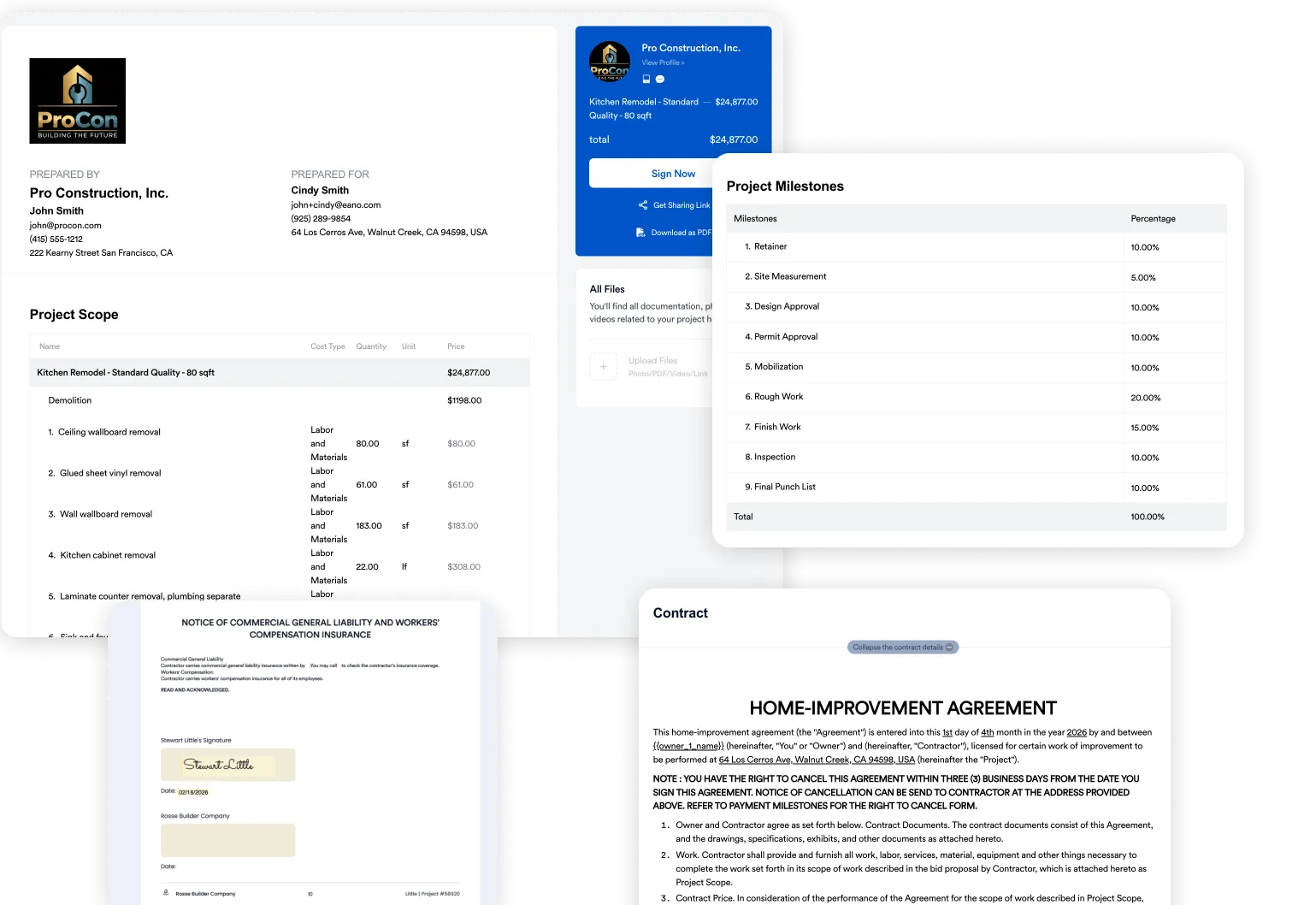
A strong proposal typically includes:
- Project overview
- Detailed scope of work
- Pricing breakdown
- Allowances
- Exclusions
- Project timeline
- Payment schedule
- Change order process
- Contract acceptance section
The more complex the project becomes, the more important these elements become.
Many homeowner disputes don't start because contractors performed poor work. They start because expectations were never aligned in the first place.
A clear proposal helps eliminate those gaps.
Jump right to our construction proposal library or our free proposal template.
What Every Construction Proposal Should Include
Before we get into project-specific examples, it's worth understanding the components that appear in almost every successful proposal.
A Detailed Scope of Work
The scope of work is the most important section of any construction proposal because it establishes a shared understanding of what the project actually includes. When scope descriptions are vague, homeowners fill in the blanks with their own assumptions—and those assumptions rarely match the contractor's intent.
Consider the difference between a proposal that says "Remodel kitchen" and one that says, "Remove existing cabinetry, countertops, sink, and appliances. Install 42 linear feet of shaker-style cabinetry, quartz countertops, under-cabinet lighting, and dedicated appliance circuits." Both describe the same project, but one creates uncertainty while the other creates clarity. The more specific your scope becomes, the fewer opportunities there are for confusion, disputes, and unexpected conversations later in the project.
Allowances
In many remodeling projects, not every selection has been finalized when the proposal is prepared. Homeowners may still be choosing tile, plumbing fixtures, flooring, appliances, or cabinetry. Rather than delaying the proposal until every decision is made, contractors often use allowances to create a reasonable placeholder budget.
Allowances provide flexibility without forcing either party to guess. They establish a realistic spending target while giving homeowners time to make final selections. More importantly, they create transparency. If a client selects products above or below the allowance amount, everyone understands how those decisions affect the final project cost.
Exclusions
One of the easiest ways to avoid future disputes is to clearly document what is not included in the proposal. Many contractors focus heavily on explaining the work they plan to perform but spend very little time discussing potential exclusions.
That omission can become expensive. Existing structural damage, concealed plumbing issues, permit fees, utility upgrades, and homeowner-supplied materials are all common examples of items that may fall outside the original scope. By documenting exclusions upfront, contractors set realistic expectations and reduce the likelihood of misunderstandings once construction begins.
Payment Schedule
A good payment schedule protects both the contractor and the homeowner. Rather than tying payments to arbitrary dates, most successful contractors align payment milestones with meaningful project progress.
For example, payments might be structured around demolition completion, rough inspections, cabinet installation, or project completion. This approach creates a clear connection between work performed and money exchanged, helping both parties feel more comfortable throughout the project.
Change Order Process
No matter how carefully a project is planned, changes happen. Homeowners make new selections, hidden conditions are discovered, and scope evolves as work progresses. The question isn't whether change orders will occur—it's how they'll be handled when they do.
A strong proposal clearly explains the process for pricing, approving, and documenting changes. When everyone understands how modifications are evaluated and incorporated into the project, change orders become a manageable part of the workflow rather than a source of frustration. Clear procedures protect the relationship, maintain transparency, and help keep the project moving forward.
Sample Construction Proposal #1: Kitchen Remodel

Download sample kitchen remodel proposal
Kitchen remodeling proposals are some of the most common—and most complicated—documents residential contractors create.
The challenge isn't usually construction. It's selections.
A kitchen proposal may include:
- Cabinet allowances
- Countertop allowances
- Appliance allowances
- Electrical upgrades
- Plumbing modifications
- Flooring replacement
The strongest kitchen proposals clearly separate fixed costs from selection-dependent costs.
For example, cabinet installation labor may be fixed while cabinetry itself remains an allowance until selections are finalized.
Lesson from Kitchen Proposals
Use allowances strategically.
Homeowners appreciate flexibility, but contractors need budget control. Allowances create a structure that supports both.
Sample Construction Proposal #2: Bathroom Remodel

Download sample bathroom remodel proposal
Bathrooms may be smaller than kitchens, but they're often less forgiving.
Hidden plumbing issues, waterproofing requirements, and tile selections create risk that isn't always visible at the proposal stage.
Strong bathroom proposals define:
- Demolition assumptions
- Waterproofing scope
- Plumbing fixture allowances
- Tile quantities
- Ventilation requirements
Lesson from Bathroom Proposals
Document unknown conditions.
If the scope depends on what is discovered during demolition, explain that upfront rather than hoping it never becomes an issue.
Sample Construction Proposal #3: ADU Construction
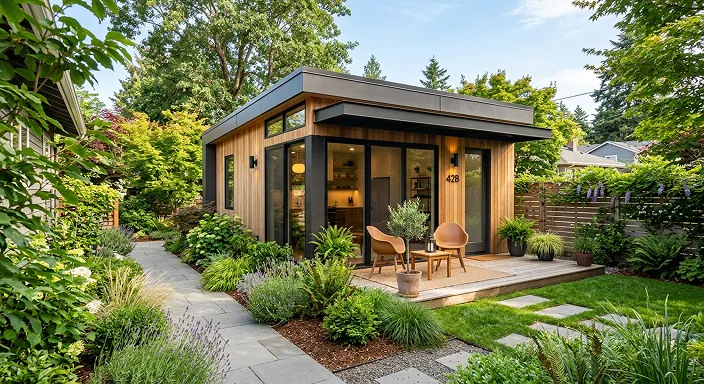
Accessory Dwelling Units behave much more like new construction than remodeling.
These projects involve:
- Site work
- Foundation
- Framing
- Roofing
- Utilities
- Inspections
- Permit coordination
Large projects can overwhelm homeowners when presented as one giant number.
Lesson from ADU Proposals
Break large projects into phases.
Grouping costs by project stage makes proposals easier to understand and improves transparency.
Sample Construction Proposal #4: Home Addition
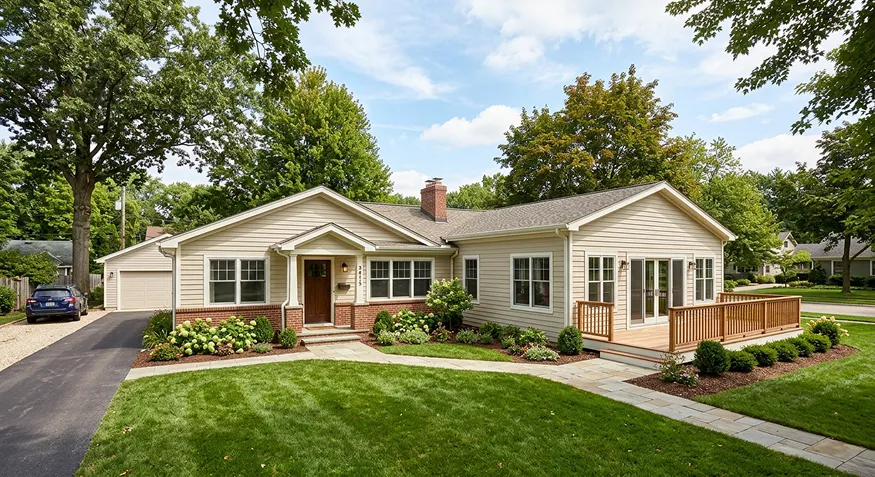
Download sample home addition proposal
Home additions combine the challenges of remodeling and new construction.
The new work must connect seamlessly with existing conditions.
Strong addition proposals address:
- Demolition
- Structural modifications
- Utility relocation
- Existing-condition assumptions
- Temporary weather protection
Lesson from Addition Proposals
The more existing conditions matter, the more assumptions should be documented.
Homeowners generally accept uncertainty when it's communicated clearly.
Sample Construction Proposal #5: Multi-Level Deck Construction
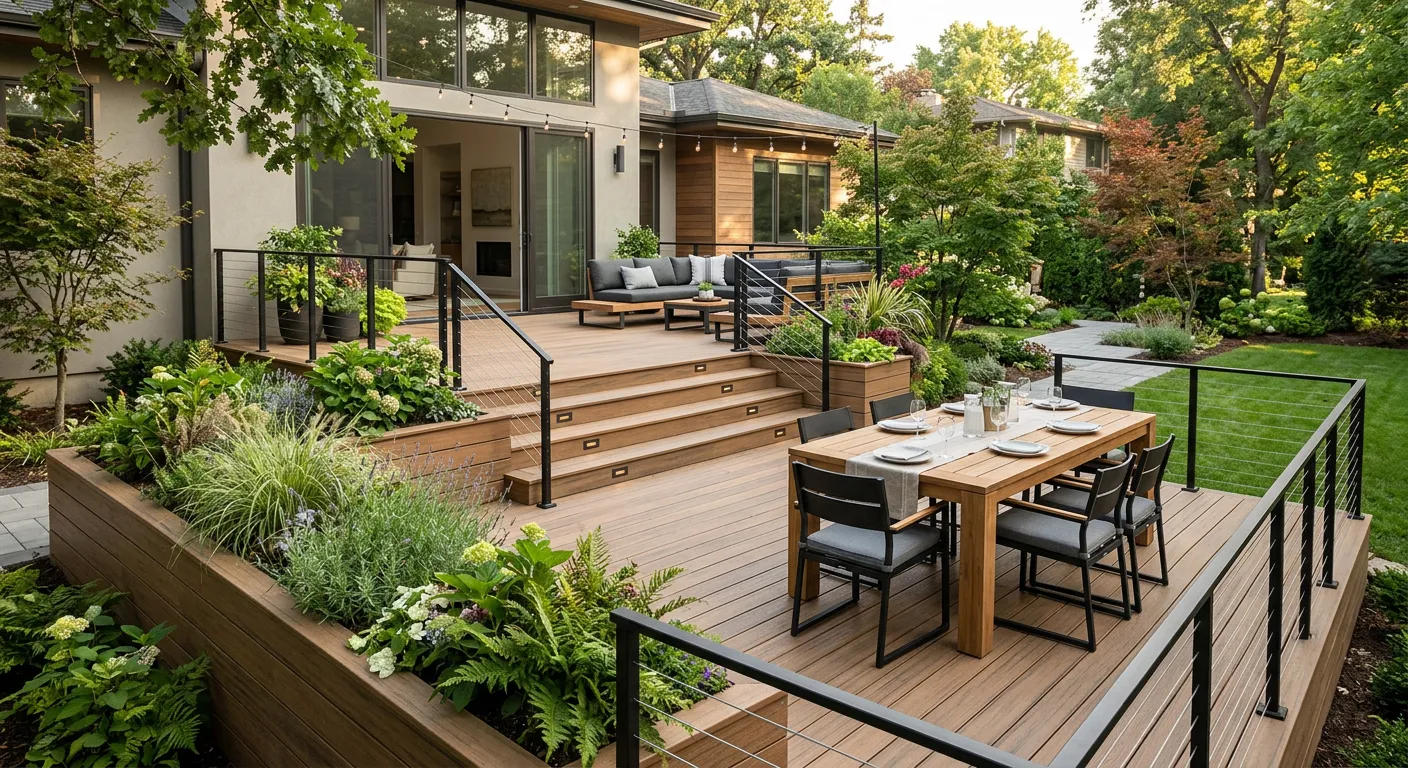
Deck projects are relatively straightforward, which makes them useful examples of proposal clarity.
Typical deck proposals include:
- Footings
- Framing
- Decking materials
- Railings
- Stair systems
Because homeowners can easily visualize the finished product, unclear scope stands out quickly.
Lesson from Deck Proposals
Simple projects still require detailed descriptions.
Never assume homeowners understand what's included.
Sample Construction Proposal #6: Landscape Project

Download sample landscape design and installation proposal
Landscape proposals often contain multiple project types under one contract.
Examples include:
- Irrigation
- Hardscape
- Drainage
- Planting
- Lighting
- Retaining walls
Without organization, these proposals become difficult to follow.
Lesson from Landscape Proposals
Group related work together.
Breaking scope into categories improves readability and makes change orders easier to manage later.
Sample Construction Proposal #7: Hardwood Flooring Installation

Download sample flooring proposal
Flooring projects are excellent examples of quantity-based estimating.
The proposal should clearly define:
- Square footage
- Material type
- Underlayment
- Floor preparation requirements
- Transition details
Many flooring disputes occur because assumptions weren't documented.
Lesson from Flooring Proposals
Tie scope directly to measurable quantities.
The more measurable the scope, the easier it becomes to avoid misunderstandings.
Sample Construction Proposal #8: Walk-In Shower Conversion

Download sample walk-in shower conversion proposal
Walk-in shower conversions combine functional improvements with finish selections.
Typical scope includes:
- Plumbing modifications
- Waterproofing
- Tile installation
- Glass enclosure
- Accessibility upgrades
Homeowners often care as much about the outcome as the technical process.
Lesson from Shower Conversion Proposals
Explain benefits, not just scope.
Help homeowners understand why the work matters.
Sample Construction Proposal #9: Open Floor Plan Conversion

Download sample open floor plan conversion proposal
Open-concept renovations frequently involve structural modifications.
Removing walls often requires:
- Engineering review
- Beam installation
- Temporary support
- Inspection approvals
- Finish restoration
Lesson from Open Floor Plan Proposals
Clearly define structural assumptions.
Structural work creates uncertainty. The proposal should acknowledge that reality rather than ignore it.
Sample Construction Proposal #10: Wood Privacy Fence Installation

Download sample fence proposal
Fence projects are often perceived as simple jobs, but they're a great example of why proposal clarity matters. Homeowners frequently assume details that contractors may not have included in their pricing, such as gate hardware, post spacing, staining, haul-away services, or property line verification.
A strong fence proposal clearly defines:
- Linear footage included
- Fence height and style
- Post and footing specifications
- Gate quantities and hardware
- Demolition and disposal scope
- Staining or finishing requirements
- Property line responsibilities
Because fencing is typically priced by linear foot, small misunderstandings can have a significant impact on profitability. A homeowner who assumes the proposal includes three gates when the contractor priced one can create a difficult conversation before work even begins.
Lesson from Fence Proposals
Define measurable quantities and material specifications clearly.
Fence proposals work best when homeowners can easily understand exactly what is being installed, how much of it is included, and what options would affect the final price. Clear quantities reduce confusion and make future change orders easier to manage.
Why Most Construction Proposals Lose Jobs
Many contractors assume proposals lose jobs because of price.
Often, that's not true.
Homeowners compare more than numbers.
They compare:
- Professionalism
- Clarity
- Detail
- Organization
- Responsiveness
Common proposal mistakes include:
Vague Scope
The homeowner doesn't understand what's included.
Missing Allowances
Selections become a source of conflict.
Missing Exclusions
Expectations drift beyond the agreed scope.
Weak Payment Structures
Cash flow becomes difficult to manage.
Poor Presentation
The proposal feels rushed or incomplete.
A proposal is often a preview of how the project itself will be managed.
What the Best Construction Proposals Have in Common
After reviewing hundreds of proposals across different project types, certain patterns consistently emerge.
The strongest proposals:
- Clearly define scope
- Separate allowances from fixed costs
- Document assumptions
- Include exclusions
- Explain the payment process
- Define change order procedures
- Make approval easy
Notice what's missing from that list.
Price.
The best proposal isn't always the cheapest.
It's often the clearest.
When homeowners understand exactly what they're buying, confidence increases. When confidence increases, price becomes less of a deciding factor.
How Eano Pro Helps Contractors Build Better Proposals
Creating professional proposals shouldn't require juggling spreadsheets, PDFs, Word documents, and email threads.
Eano Pro helps contractors move from estimate to proposal faster by connecting estimating, AI takeoffs, proposal generation, approvals, and project management in a single workflow.
Instead of manually formatting documents, contractors can:
- Generate proposals directly from estimates
- Use AI-assisted estimating workflows
- Create digital approval experiences
- Manage change orders
- Track project budgets
- Maintain a complete project record
The result is a smoother process for both contractors and homeowners.
More importantly, it reduces the risk of information getting lost between estimating, proposal creation, and project execution.
Final Thoughts
A construction proposal isn't just paperwork.
It's one of the most important sales tools a contractor has.
Long before a homeowner sees your craftsmanship, they see your proposal.
Long before they experience your project management process, they experience how clearly you've explained the project.
The examples in this guide demonstrate that while project types vary, the principles of a strong proposal remain remarkably consistent.
Clear scope.
Well-documented assumptions.
Professional presentation.
Transparent pricing.
When those elements come together, proposals stop being documents and start becoming trust-building tools.
And trust is often what wins the job.
All the samples prepared took minutes to create in Eano Pro. Start a free trial to create your complete construction proposal just as easily.