Free Electrical Price List Template
Build a Price Book So Every Electrical Quote Is Consistent
Pricing the same breaker swap three different ways costs you money and credibility. This free electrical price list template turns your material costs, labor units, and markup into a consistent sell price and margin for every item you install.

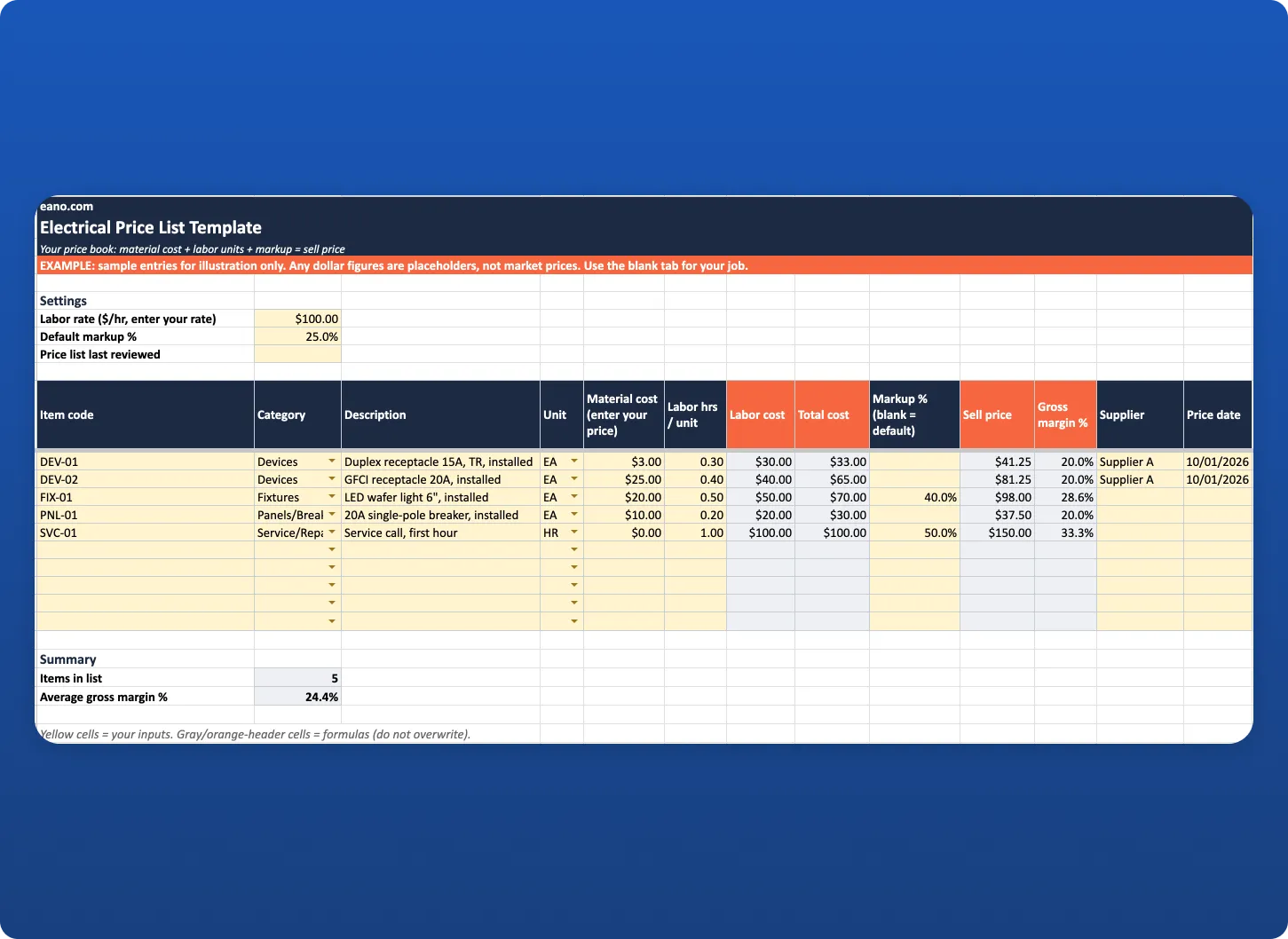
Cost, Labor Units, and Markup on Every Line
Each item carries its material cost, labor hours, and markup. The sheet calculates labor cost, total cost, sell price, and gross margin so you can see what each item really earns.
Default Markup with Per-Item Overrides
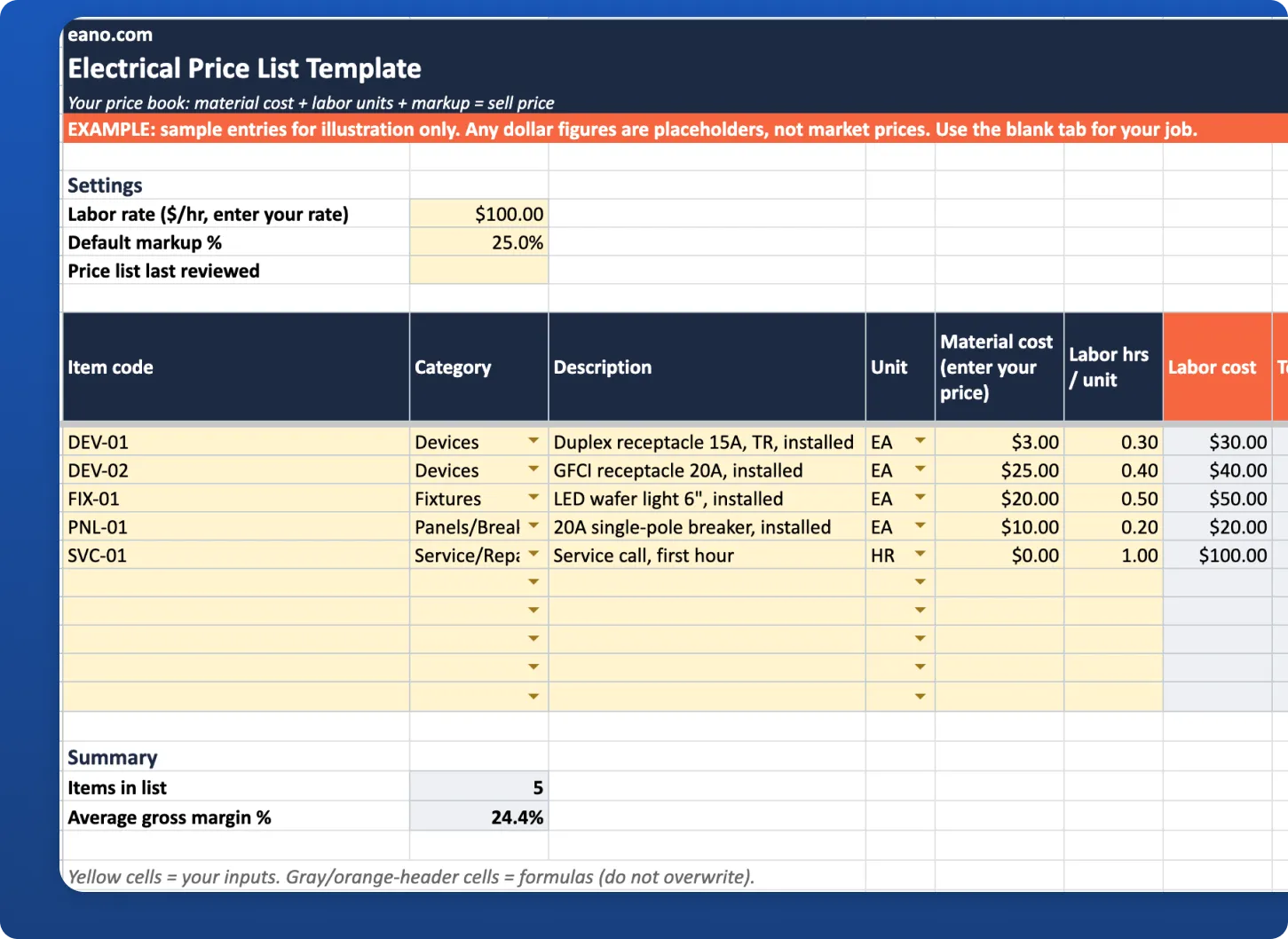
Set one default markup for the whole list, then override it where it makes sense, such as service calls or specialty fixtures. A price date column flags lines that need a fresh supplier quote.
How to Use This Electrical Price List
What's in the Electrical Price List Template
An electrical price list (often called a price book) is the list of items and tasks you sell, each with a set price. Instead of pricing every receptacle, fixture, and breaker from scratch on each job, you build the price once from your material cost, labor time, and markup, then reuse it. This template gives you that price book in a spreadsheet you can edit.
The download includes:
How to Build Your Electrical Price Book
1. Set your labor rate and default markup
Enter your loaded labor rate (wages plus payroll taxes, insurance, and benefits) and the markup you normally apply. If you don't know what markup you need to cover overhead, work it out with the free profit margin calculator.
2. List what you sell
Give each item a code, category, description, and unit. Write descriptions the way you want them to appear on a quote, such as "GFCI receptacle 20A, installed." Use the "HR" unit for time-based service work.
3. Enter material cost and labor units
Material cost should come from your current supplier invoices or quotes. Labor hours per unit should come from your own job history; if you don't track it yet, start with your best estimate and correct it as you collect data from timesheets.
4. Review the sell price and margin
The sheet calculates:
Scan the margin column. Lines with thin margins are where you're most likely to lose money when something goes wrong on site.
5. Keep it current
Record the supplier and the date for each price. Set a regular review, such as monthly for wire and quarterly for devices, and update the "Price list last reviewed" date in Settings.
Worked Example
The Example tab uses a placeholder $100/hour labor rate and 25% default markup. A GFCI receptacle line with a placeholder $25 material cost and 0.4 labor hours has $40 of labor, $65 total cost, and an $81.25 sell price at 25% markup, which is a 20% gross margin. The LED wafer light line overrides markup to 40%. Replace the placeholders with your own numbers and every sell price updates.
Common Price List Mistakes
Use It with Your Takeoff and Estimates
A price list works best paired with a quantity count. Count the job with our free electrical takeoff sheet, price it from this list, and build the client-facing estimate with the electrical estimate template. When you're ready to stop copying numbers between spreadsheets, AI estimating in Eano Pro keeps a cost catalog, builds estimates from it, and sends them to clients for approval.
Who This Price List Is For
Residential electricians who quote service work and small projects get the most from a price book, because the same tasks repeat: receptacle and switch swaps, fixture installs, breaker replacements, and service calls. General contractors can use it too, to keep electrical allowances and change order pricing consistent across jobs.
How to Customize It
Add categories to match how you sell, such as EV charger installs, panel upgrades, or generator hookups. Add an "Assembly" line that bundles items you always install together, like a receptacle with box, plate, and wire allowance, and price it as one line. Keep a copy of last year’s list so you can see how prices have moved. If you sell flat-rate, the sell price column becomes your menu price; if you sell time and materials, use the labor rate and material columns separately.
Tips for Accurate Labor Units
Labor units are where price books succeed or fail. Compare your labor hours per unit against actual hours from completed jobs every few months. Note conditions that change the time, such as finished walls, high ceilings, or old wiring, and create separate lines for them instead of averaging. Small adjustments to labor units on high-volume items can change your margins more than any markup change.