Free Lien Waiver Template for Contractors
Collect and Sign Lien Waivers the Right Way
Lien waivers protect both the property owner and the contractor — but only when they're the right type and signed at the right time. This free download includes both conditional and unconditional lien waiver forms plus a log to track waivers collected from every sub and supplier.

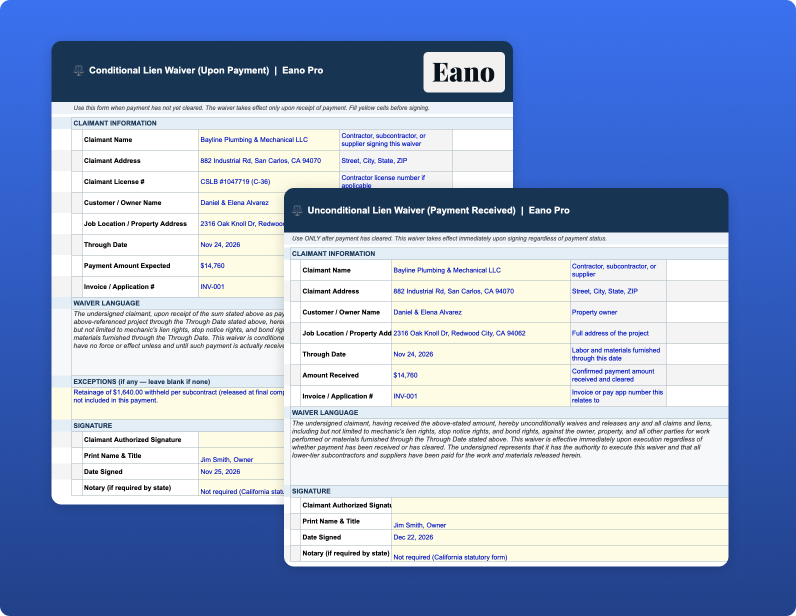
Conditional and Unconditional Forms Included
The conditional lien waiver is used when payment has not yet cleared — the waiver takes effect only upon actual receipt of funds. The unconditional lien waiver is used after payment has cleared — it releases lien rights immediately upon signing. Using the wrong form at the wrong time is one of the most common lien waiver mistakes contractors make.
Lien Waiver Log for the Whole Project
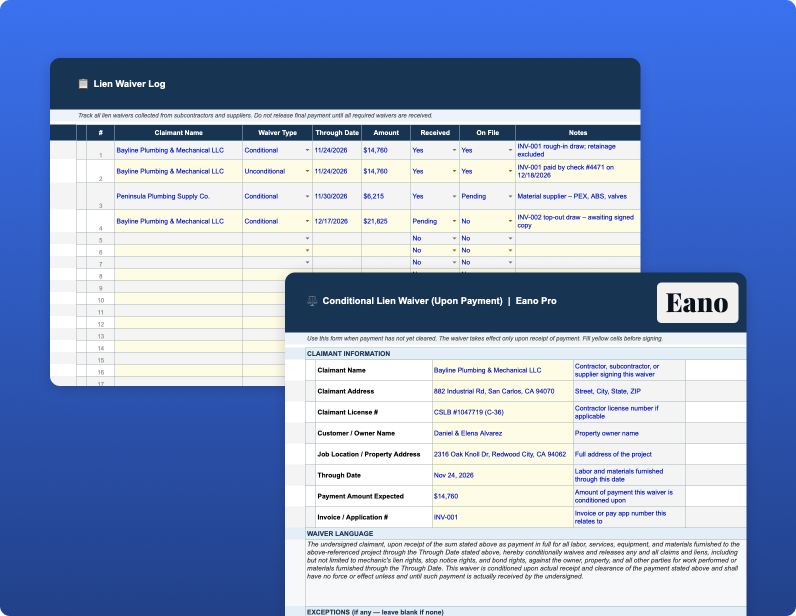
On any project with subcontractors or material suppliers, the GC needs to collect lien waivers from every party that could file a lien. The Lien Waiver Log tab tracks every claimant name, waiver type, through date, amount, whether it's been received, and whether it's on file — so nothing gets missed before final payment.
What's Included in the Download
What’s Included in the Lien Waiver Template
This construction lien waiver template gives general contractors, subcontractors, and suppliers a practical way to document lien waivers associated with project payments and maintain a central record of the waivers collected throughout a job.
Lien waivers are commonly used in construction to document that a contractor, subcontractor, supplier, or other potential lien claimant is waiving certain lien rights in connection with payment. Because signing the wrong type of waiver—or signing an unconditional waiver before payment has actually been received—can have significant consequences, it is important to understand what the waiver covers, the payment or through date it applies to, and whether the waiver is conditional or unconditional.
The Excel download includes three tabs:
- Conditional Lien Waiver — Designed for situations where payment is expected but has not yet cleared or been confirmed. The form includes claimant information, the applicable through date, expected payment amount, waiver language, an exceptions section, and a signature block. A conditional waiver is generally intended to become effective only when the specified payment condition has been satisfied, subject to applicable state law and the language of the waiver.
- Unconditional Lien Waiver — Designed for situations where payment has already been received and confirmed. The template includes prominent warning language because an unconditional waiver may take effect when signed regardless of whether there is a later disagreement about payment. Contractors should verify that the applicable payment has actually cleared before using or signing an unconditional waiver.
- Lien Waiver Log — Maintain a running record of waivers requested and collected from subcontractors, suppliers, and other project participants. Track the claimant name, waiver type (Conditional, Unconditional, or Final), through date, payment amount, whether the waiver has been received, whether it is on file, and any relevant notes.
Yellow cells indicate fields intended for manual entry. The waiver type, received status, and on-file status include dropdown selections, making it easier to maintain consistent records across multiple subcontractors, suppliers, payments, and project phases.
How to Use the Lien Waiver Template
Start by determining which type of lien waiver is appropriate for the payment being made. If payment has been issued or promised but has not yet cleared, a conditional lien waiver may be appropriate. If payment has already been received and confirmed, an unconditional lien waiver may be appropriate, subject to the requirements of your state and contract.
Complete the claimant information, payment amount, and through date carefully. The through date is particularly important because it helps identify the period of work, labor, materials, or payment covered by the waiver. Review any exceptions so that amounts or claims that should remain outstanding are not inadvertently included.
Once a waiver is signed or received, record it in the Lien Waiver Log. Update the received and on-file fields so your team can quickly identify which waivers have been collected and which are still outstanding.
Over the course of a construction project, this creates a centralized record rather than requiring your team to reconstruct lien waiver history from emails, payment records, subcontractor folders, or individual project documents.
What Is the Difference Between a Conditional and Unconditional Lien Waiver?
The primary difference is when the waiver becomes effective.
A conditional lien waiver generally makes the waiver dependent on a stated payment condition being satisfied. This type of waiver is commonly associated with a payment that is being made but has not yet been confirmed.
An unconditional lien waiver generally does not contain the same payment condition. Once properly executed, it may waive the specified lien rights even if there is later a problem with payment. For that reason, an unconditional waiver should not be treated as interchangeable with a conditional waiver.
The exact legal effect of either document depends on applicable law and the language of the waiver.
What Information Should a Lien Waiver Include?
Depending on the jurisdiction and type of waiver, a construction lien waiver may identify the claimant, customer or hiring party, project or property, payment amount, through date, type of waiver, exceptions, signature, and date signed.
Some states prescribe specific lien waiver forms or statutory language that must be used. Others place restrictions on when lien rights can be waived or what language is enforceable.
Before using a lien waiver, contractors should therefore verify whether their state requires a specific statutory form, notices, wording, notarization, or other information.
What Is a Lien Waiver Through Date?
The through date identifies the point in time through which lien rights are being addressed by the waiver. It helps define the work, labor, materials, or payment period covered rather than simply stating that a waiver applies to the project generally.
For example, a subcontractor submitting a progress payment waiver may provide a waiver through a particular billing date while retaining rights related to work performed after that date or specifically listed exceptions.
Accurately recording through dates in the Lien Waiver Log can also help a general contractor identify gaps between billing periods and determine whether current waiver documentation has been collected from each subcontractor or supplier.
Why Keep a Lien Waiver Log?
On projects involving multiple subcontractors and suppliers, collecting the waiver itself is only part of the process. Contractors also need to know which waivers have been requested, which have been received, what payment period they cover, and which documents are still missing.
A lien waiver log provides a central record for this information. It can be particularly useful when reviewing subcontractor payments, preparing owner billing documentation, closing out a project, or checking whether required waivers are on file before releasing additional payments.
Consistent tracking can also help distinguish conditional waivers associated with pending payments from unconditional or final waivers associated with completed payments or project closeout.
Important: Lien Waiver Requirements Vary by State
Lien laws are state-specific, and this template should not be treated as a universal legal form. Some states require statutory lien waiver forms or specific language, while others have different rules governing when and how lien rights can be waived.
Before using either waiver on an actual project, verify the requirements in the state where the property is located and consider having your lien waiver forms and collection process reviewed by a qualified construction attorney.
This template is intended as a practical starting point for organizing lien waiver information and tracking waiver collection. It is not legal advice and does not guarantee that a waiver will satisfy the requirements of any particular jurisdiction.