
Time Card App for Construction: Reduce Payroll Processing Time by 80%
If you walk into almost any construction office on a Friday afternoon, you'll probably see the same scene play out.
Someone from accounting is tracking down a superintendent who hasn't submitted timecards yet. A foreman is texting photos of handwritten notes from earlier in the week because one employee forgot to clock out. Another crew member insists they worked ten hours on Wednesday, but nobody can remember which job they were actually on. Payroll is supposed to go out Monday morning, yet the office is still trying to figure out who worked where and for how long.
For many contractors, that's simply "how payroll works."
The problem is, it shouldn't.
Labor is one of the largest costs on nearly every construction project, yet many companies still rely on paper timesheets, spreadsheets, text messages, or memory to track it. Those systems may feel familiar, but they're rarely efficient, and they almost always become harder to manage as a company grows.
The consequences go far beyond a frustrating Friday afternoon. Inaccurate labor tracking affects payroll, job costing, estimating, scheduling, and ultimately profitability. A project that looked profitable on paper can quietly lose money simply because labor wasn't recorded accurately enough to understand where the hours actually went.
Contractors are beginning to recognize that time tracking isn't an administrative task—it's operational data.
According to a recent survey by QuickBooks, nearly half of construction businesses identified inaccurate time tracking as one of their biggest payroll challenges. That's hardly surprising when many payroll departments still spend hours every week manually collecting, verifying, and entering labor data before they can even begin processing paychecks.
At the same time, labor shortages continue to put pressure on contractors to do more with fewer people. The latest workforce survey from the Associated General Contractors of America found that most contractors continue to struggle finding qualified workers, making productivity improvements more valuable than ever. When hiring isn't easy, improving the systems that support your existing team becomes one of the fastest ways to increase efficiency.
That's where construction time tracking software has quietly become one of the highest-return investments many contractors can make.
It isn't just about replacing paper timecards with a mobile app. It's about creating a single source of truth for labor—from the moment an employee clocks in until payroll is processed and project costs are analyzed months later.
Stop wasting hours sorting through paper timesheets and late text messages.
For many contractors, payroll doesn't become stressful because it's complicated—it becomes stressful because the information needed to run payroll is scattered everywhere. One crew turns in paper timecards at the end of the week. Another texts their hours to a foreman. Someone else updates a spreadsheet, while a project manager keeps notes in a notebook that's still sitting in the truck.
By Friday afternoon, the office isn't processing payroll. It's playing detective.
The frustrating part is that none of this work adds value to the business. It doesn't help finish projects faster or make customers happier. It's simply administrative time that pulls project managers and office staff away from more important work. If you're looking for one of the fastest ways to reduce payroll headaches, improving how your team tracks time is a great place to start.
Why Outdated Timekeeping Drains Your Business
Paper time cards and spreadsheets may seem inexpensive because they don't require a monthly software subscription, but they often carry hidden costs that are much larger than contractors realize. Every pay period, someone has to collect timesheets, verify hours, calculate overtime, resolve discrepancies, and manually enter everything into payroll software. Even when the process goes smoothly, those administrative tasks consume hours that could be spent supporting projects or customers.
The bigger issue is that manual systems rarely scale with the business. What works for a three-person crew quickly becomes difficult to manage when you're running multiple projects with several foremen and employees moving between jobsites. Suddenly, payroll depends on everyone remembering to submit accurate information on time, and that's where delays begin.
Beyond payroll, poor time tracking also affects project profitability. Labor is one of the largest costs on most residential construction projects, so inaccurate hours make it much harder to understand whether estimates were realistic or whether a particular job actually performed as expected. Without reliable labor data, future estimates become less accurate because they're based on assumptions instead of completed project history.
How Construction Time Tracking Software Simplifies Payroll
Construction time tracking software replaces disconnected processes with a single system that captures labor information as the work happens. Employees clock in and out from their phones, supervisors review hours digitally, and payroll staff can see approved time in real time instead of waiting until the end of the week.
That simple change has a ripple effect across the business. Instead of collecting paper timecards from multiple jobsites or searching through text conversations for missing hours, payroll administrators receive organized, accurate labor records that are already tied to the correct projects. Hours can be reviewed, approved, and exported directly into accounting software with far less manual effort than traditional methods require.
Digital time tracking also reduces the small mistakes that create so much extra work. Handwriting doesn't need to be interpreted, overtime can be calculated automatically, and employees don't have to remember exactly when they started or finished a task several days later. The information is already there.
If you're searching for a system built specifically for contractors, Eano Pro's construction time tracking software lets crews clock in from the field, assign hours to specific jobs, and route approvals through supervisors before payroll is processed. Because time tracking is connected to project management and job costing, labor data becomes useful long after paychecks have been issued.
Key Benefits of Using Digital Timesheets
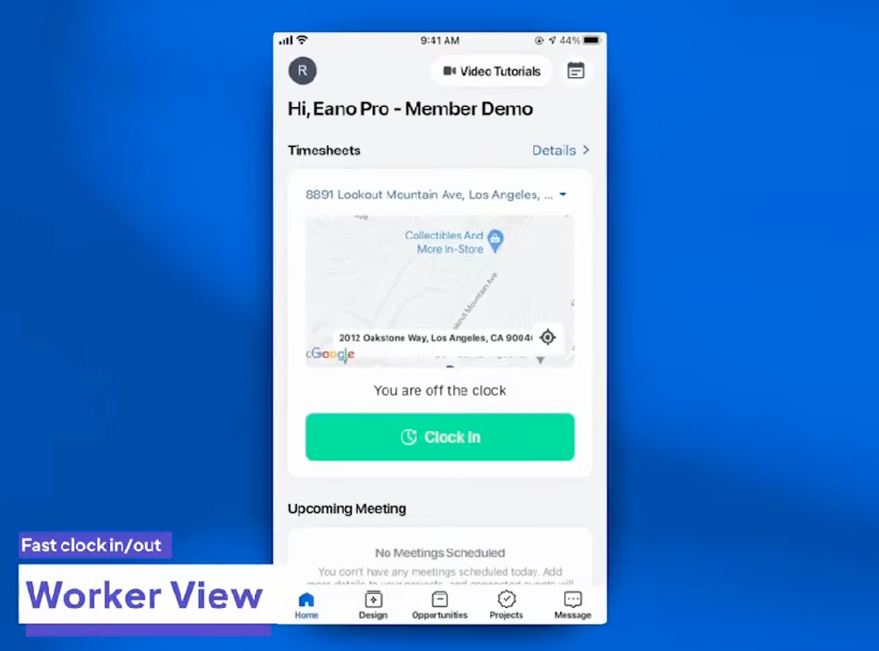
Moving from paper timecards to digital time tracking isn't just about convenience. For many contractors, it fundamentally changes how labor information flows through the business. Office staff spend less time entering data, supervisors spend less time approving hours, and project managers gain better visibility into where labor is actually being spent.
Some of the biggest advantages include:
- Real-time visibility: Know which employees are on site, what project they're working on, and when they've clocked in or out without waiting for end-of-day reports.
- Faster approvals: Supervisors can review and approve timesheets from anywhere, eliminating delays caused by missing paperwork or unavailable foremen.
- Improved payroll accuracy: Automated calculations reduce mistakes involving overtime, breaks, and total hours, helping ensure employees are paid correctly the first time.
- Cleaner accounting exports: Instead of manually re-entering labor data into payroll or accounting software, approved hours can be exported directly, saving time while reducing opportunities for data entry errors.
Perhaps the biggest benefit isn't any individual feature—it's consistency. When every employee follows the same process every day, payroll becomes predictable instead of stressful.
Construction Time Tracking Software: What to Look For
Not every employee time clock is designed for construction. Contractors have different needs than restaurants, retail stores, or office environments, so it's worth looking beyond basic clock-in and clock-out functionality.
A strong construction time tracking solution should include:
- A mobile app so crews can clock in directly from the field.
- Offline capability for jobsites with unreliable cell service.
- Custom job codes and cost codes to track labor accurately across multiple projects and phases.
- GPS location verification to confirm employees are clocking in from the correct jobsite when needed.
- Automatic overtime and break calculations to simplify payroll and reduce errors.
- Detailed reporting that helps project managers understand labor costs, productivity, and project performance over time.
The best platforms also integrate with estimating, scheduling, and job costing rather than treating time tracking as a standalone tool. When labor data flows throughout the rest of the business, contractors gain a much clearer understanding of how projects are performing from start to finish.
Eano Pro was built with that connected workflow in mind, combining construction time tracking with project management, estimating, proposals, and financial reporting in a single platform.
Making the Switch with Eano Pro
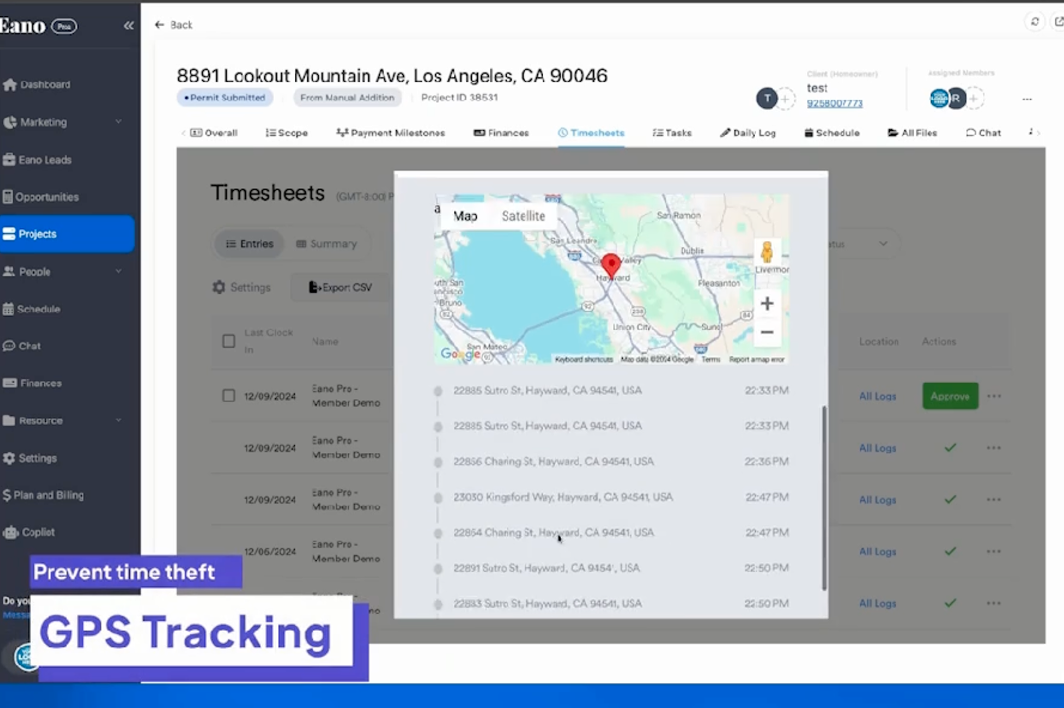
Many contractors delay upgrading their time tracking system because they assume the transition will be disruptive. In reality, most teams adapt much faster than expected because the process is simpler than what they're replacing.
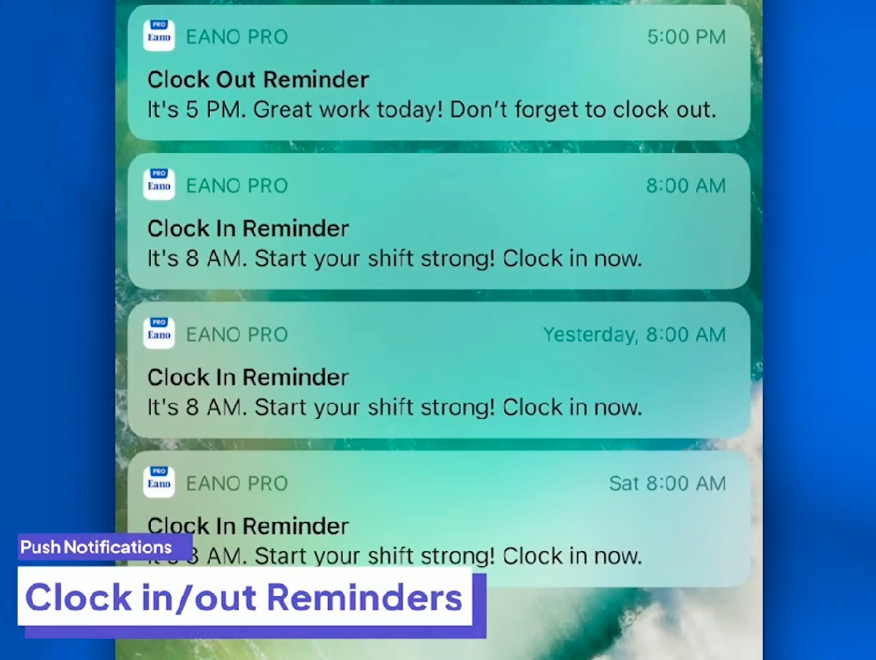
Field crews already carry smartphones throughout the day, so clocking in from an app usually requires very little training. Supervisors approve hours digitally instead of collecting paperwork, while payroll staff immediately notice the reduction in manual data entry and follow-up calls.
Most companies begin running time cards through Eano Pro within just a few days. As crews become familiar with the system, the weekly scramble for missing timesheets disappears, giving office staff more time to focus on project coordination, customer communication, and other higher-value work instead of administrative cleanup.
Digital Time Cards Doesn't Just Help With Payroll
Not only does this give you a figure on how much to pay employees, but also job costing. You can apply hours to to workers per job, so the money you pay them goes to the overall job cost.
Increase Accuracy and Cut Down on Payroll Headaches
The biggest advantage of construction time tracking software isn't simply that payroll runs faster—it's that your business starts making decisions with better information.
Accurate labor data helps contractors understand which jobs are profitable, where crews are most productive, and whether future estimates need to be adjusted. Payroll becomes one outcome of a better process rather than the only reason for tracking employee hours in the first place.
With Eano Pro, contractors can manage time tracking, approvals, job costing, and project management from the same platform, eliminating many of the disconnected workflows that slow growing businesses down. The result is less time spent chasing paperwork, fewer payroll mistakes, and greater confidence that every project is being measured against accurate labor costs.
When payroll becomes a smooth, predictable process instead of a weekly fire drill, everyone benefits—from the office staff processing paychecks to the crews who expect to be paid accurately and on time.
Ready to see how much faster your payroll could be? Book a demo today and see Eano Pro in action.