
Construction Daily Logs: The Complete Guide for Contractors (2026)
Every Job Leaves a Paper Trail—Whether You Create One or Not
Every construction project tells a story.
The weather changes. Materials arrive late. Crews show up short-handed. A homeowner requests an extra outlet. A subcontractor finishes ahead of schedule. An inspector asks for corrections before signing off.
Months later, those seemingly small events can become expensive questions.
"Why did the project finish two weeks late?"
"Who approved that additional work?"
"When was the plumbing inspection completed?"
"Didn't we already deliver those materials?"
Without accurate documentation, those conversations often become one person's memory against another's.
That's why experienced contractors don't rely on memory—they rely on daily logs.
Whether you're a one-person remodeling company or managing dozens of active projects, keeping a consistent construction daily log creates a record of exactly what happened each day. It helps your team stay organized, improves communication with clients, and provides valuable documentation if disputes ever arise.
In this guide, we'll cover everything you need to know about construction daily logs, from what information belongs in every entry to how modern contractors are replacing paper log books with digital tools.
What Is a Construction Daily Log?
A construction daily log is a chronological record of everything that happens on a jobsite during a single workday.
Think of it as the project's diary.
Rather than trying to remember details weeks or months later, contractors document important activities while they're still fresh.
A daily log typically includes:
- Weather conditions
- Crew members on site
- Labor hours
- Equipment used
- Material deliveries
- Completed work
- Safety incidents
- Inspections
- Delays
- Site photos
- Client conversations
- Subcontractor activity
- Change requests
Some companies keep these records in notebooks. Others use spreadsheets or printable forms. Increasingly, contractors are using dedicated Construction Daily Log Software that allows crews to update logs from their phones, attach photos, and automatically organize everything by project.
Why Construction Daily Logs Matter
“One photo—taken days earlier—showed the piece missing before work began. Conversation over. That day I learned something uncomfortable but true: Photos are stronger than trust in construction.”
— Stella Wu, CEO & Co-founder, Eano
Many contractors start keeping daily logs because they were told they should.
The contractors who stick with them do so because they've seen firsthand how valuable they become.
A good daily log isn't just administrative paperwork. It's documentation that protects your time, your reputation, and your bottom line.
Daily logs help contractors:
- Resolve customer disagreements
- Document delays outside their control
- Track labor productivity
- Verify deliveries
- Improve communication between office and field
- Support change orders
- Prepare invoices
- Reduce warranty disputes
- Create historical records for future projects
Even if you never end up in arbitration or court, you'll likely find yourself referring back to old daily logs far more often than you expected.
What Should Every Construction Daily Log Include?
A useful construction daily log should answer a few basic questions: Who was on the jobsite? What happened? What changed? What caused problems? And what evidence do you have to back it up?
The exact format varies from contractor to contractor, but most strong daily logs capture the same core information.
Document the Day, Not Just the Data
A daily log becomes much more valuable when it explains what actually happened rather than simply checking boxes.
For example, writing:
Installed framing.
doesn't tell someone much if they review the log six months later. A better entry would be:
Completed first-floor exterior wall framing on east elevation. Installed approximately 280 linear feet of wall framing and completed rough openings for six windows.
That level of specificity creates a usable project history. It can help project managers understand progress, verify subcontractor work, answer customer questions and reconstruct events if a dispute arises later.
"The most important thing to remember is that a daily report isn't for reading tomorrow it's for figuring things out much later when today is long gone from memory. You need to be able to recreate what happened day by day when sh#% has gone wrong and you need to figure what went wrong and how much it cost."
–RK036, Top 1% /Construction (Reddit)
Pay Special Attention to Anything That Affects the Schedule
Routine progress matters, but exceptions are often the most important things to document.
If rain stopped exterior work for four hours, write it down. If a material delivery arrived two days late, record the supplier and delivery time. If the homeowner requested a change that prevented the crew from continuing, document the request. The same applies to inspection failures, permitting issues, utility delays and equipment breakdowns.
These details create a contemporaneous record of why the project deviated from the original plan, rather than forcing everyone to reconstruct the story weeks or months later.
Use Photos to Support the Written Record
Photos are especially valuable when they're connected to the corresponding daily log rather than sitting in someone's camera roll.
Take photos of completed work, deliveries, existing conditions, damage, inspections and work that will soon be concealed. Plumbing, electrical, waterproofing and framing conditions, for example, may become impossible to see once walls and finishes are installed.
The written entry provides context; the photos provide evidence. Together, they create a much stronger project record.
Don't Forget Decisions and Conversations
Not everything important on a construction project involves physical work. Customer and subcontractor conversations can affect scope, cost and schedule just as much.
Daily logs should note meaningful site visits, requested changes, material selections, schedule discussions and approvals. You don't need to transcribe every conversation. The goal is to create enough of a record that someone reviewing the project later can understand what was decided, when it happened and who was involved.
Paper Log Books vs. Digital Daily Logs
Many contractors still use traditional construction log books.
They're inexpensive, familiar, and don't require internet access.
But they also come with limitations.
Digital daily logs also eliminate another common problem: remembering to fill them out later.
Field staff can document activities while they're happening instead of reconstructing an entire day from memory that evening.
Common Construction Daily Log Mistakes
Keeping a daily log is only useful if the information is accurate, specific, and recorded consistently. A log filled out days later—or one that simply says "worked on plumbing"—may not provide much help when you actually need to reconstruct what happened on the jobsite.
Here are some of the most common mistakes contractors should avoid:
Daily Logs for Residential Contractors
Residential projects move quickly.
Customers frequently visit jobsites, request changes, and ask questions.
A good residential daily log should emphasize:
- Client communication
- Selection decisions
- Progress photos
- Change requests
- Material deliveries
- Inspection dates
These records help everyone stay on the same page throughout the project.
How Eano Pro Makes Construction Daily Logs Easier
Daily logs are valuable, but only if your team actually completes them. The problem with paper forms, spreadsheets, and group texts is that documenting the job can quickly become another administrative task your field team puts off until the end of the day—or forgets entirely.

Eano Pro brings daily logs directly into the project workflow, so your team can document what's happening on the job without creating a separate filing system.
With Eano Pro, contractors can:
- Create daily logs from the field. Record progress, jobsite conditions, delays, deliveries, and other important updates while the details are still fresh.
- Add jobsite photos directly to a log. Instead of leaving project photos scattered across phones and text messages, photos stay connected to the daily record where they belong.
- Capture updates with audio. Field teams can add audio to daily logs when speaking an update is faster than stopping to type one out.
- Keep records organized by project. Daily logs become part of the project's history, making it easier to go back and determine what happened on a particular day.
- Give the office better visibility. Project managers don't have to call the field just to find out what happened that day. Updates are captured in the same system the team uses to manage the project.
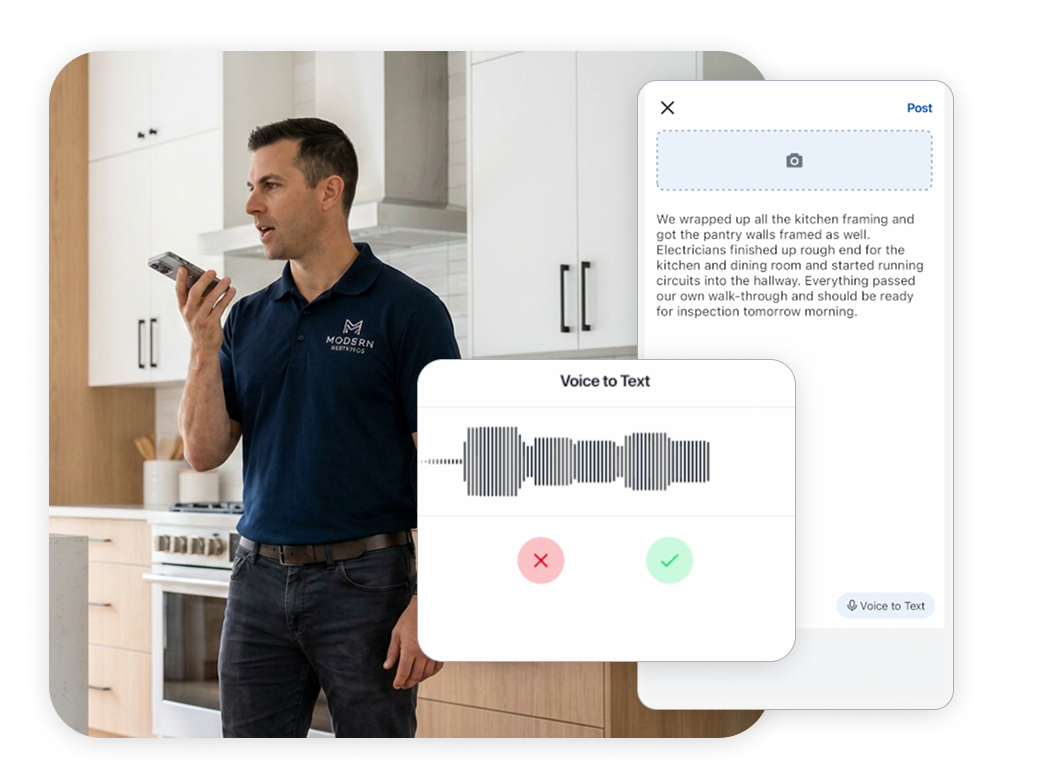
That becomes especially useful when a question comes up weeks or months later. Instead of searching through someone's camera roll, texts, emails, and handwritten notes, your team has a chronological record of what happened on the job.
For contractors managing multiple projects, that can turn daily logging from another piece of paperwork into a useful part of project management.
.png)
Daily Logs for Commercial Projects
Commercial construction typically requires more formal documentation.
Daily logs often include:
- Multiple subcontractors
- Equipment tracking
- Safety meetings
- Quality control
- RFIs
- Schedule impacts
- Coordination meetings
- Manpower counts
Because more stakeholders are involved, consistency becomes even more important.
Construction & Maintenance Daily Logs
Maintenance contractors have different documentation needs than project-based builders.
Instead of recording progress toward project completion, maintenance logs often track:
- Service visits
- Preventive maintenance
- Equipment condition
- Repairs completed
- Follow-up work
- Warranty service
- Tenant requests
- Recurring issues
These records create valuable maintenance histories that improve future service.
How Daily Logs Help Resolve Disputes
One of the biggest benefits of maintaining detailed daily logs is having documentation when disagreements occur.
Daily logs can help support:
- Payment disputes
- Change orders
- Delay claims
- Warranty discussions
- Insurance claims
- Property damage investigations
- Scheduling disagreements
Rather than relying on memory, contractors can reference contemporaneous records created on the day the work occurred.
That documentation often carries far more weight than recollections months later.
When Is It Time to Move Beyond Paper?
Paper log books still work.
But as projects become larger and teams become more distributed, digital documentation becomes increasingly valuable.
Many contractors eventually move to digital daily logs because they want to:
- Attach unlimited photos
- Share updates with the office instantly
- Search previous logs in seconds
- Keep everyone working from the same information
- Reduce paperwork
- Create more consistent records
The goal isn't simply replacing paper.
It's creating documentation that's easier to capture, easier to find, and far more useful when you actually need it.