

Concrete Estimator Software: How Residential GCs Can Choose a Tool That Protects the Bid
Concrete estimator software helps contractors turn plan information into a priced scope, but the best choice depends on what happens after the estimate is approved. A basic tool can calculate concrete volume; a stronger workflow also carries verified quantities, assumptions, and costs into the proposal, project budget, schedule, purchasing, and job-cost review. AI-assisted takeoffs can reduce repetitive measuring, but they do not replace estimator judgment about drawings, site access, reinforcement, production, or supplier pricing.
What a Concrete Estimate Needs to Cover
A concrete estimate is more than a cubic-yard calculation. For a residential addition, foundation, driveway, or slab-on-grade, the estimator may need to account for excavation, subgrade preparation, forms, reinforcement, concrete placement, finishing, curing, cleanup, equipment, and delivery constraints.
The core quantity still starts with dimensions:
Length × width × thickness = volume
That calculation is useful for a quick sanity check, and a concrete calculator can help with that first pass. A bid becomes dependable only when the volume is connected to the work required to place it.
For example, a slab quantity may look straightforward on a floor plan, but the real cost can change when the estimator finds thickened edges in the structural details, a stepped elevation, a pump requirement, limited truck access, or a finish that adds labor. The software should help organize those decisions rather than hide them behind a single volume number.
A practical estimate typically includes:
- Concrete volume by mix design and placement area
- Rebar, welded wire reinforcement, dowels, embeds, vapor barrier, insulation, joints, and curing materials
- Formwork materials and labor
- Labor hours for layout, prep, placement, finishing, stripping, and cleanup
- Owned or rented equipment, pump charges, delivery, and minimum-use fees
- Waste, overhead, contingency, and markup
- Exclusions, allowances, alternates, and assumptions that must be visible in the proposal
The best estimating setup makes each of these items traceable. If a project manager cannot see why a cost was included once the job is awarded, the team is likely to recreate the scope from scratch.
Where AI-Assisted Concrete Takeoff Helps—and Where It Does Not
AI-assisted takeoff software can help contractors extract lengths, areas, counts, and other quantities from a digital plan set. This is especially helpful when an estimator is working through repetitive slab areas, footings, walls, or related plan elements.
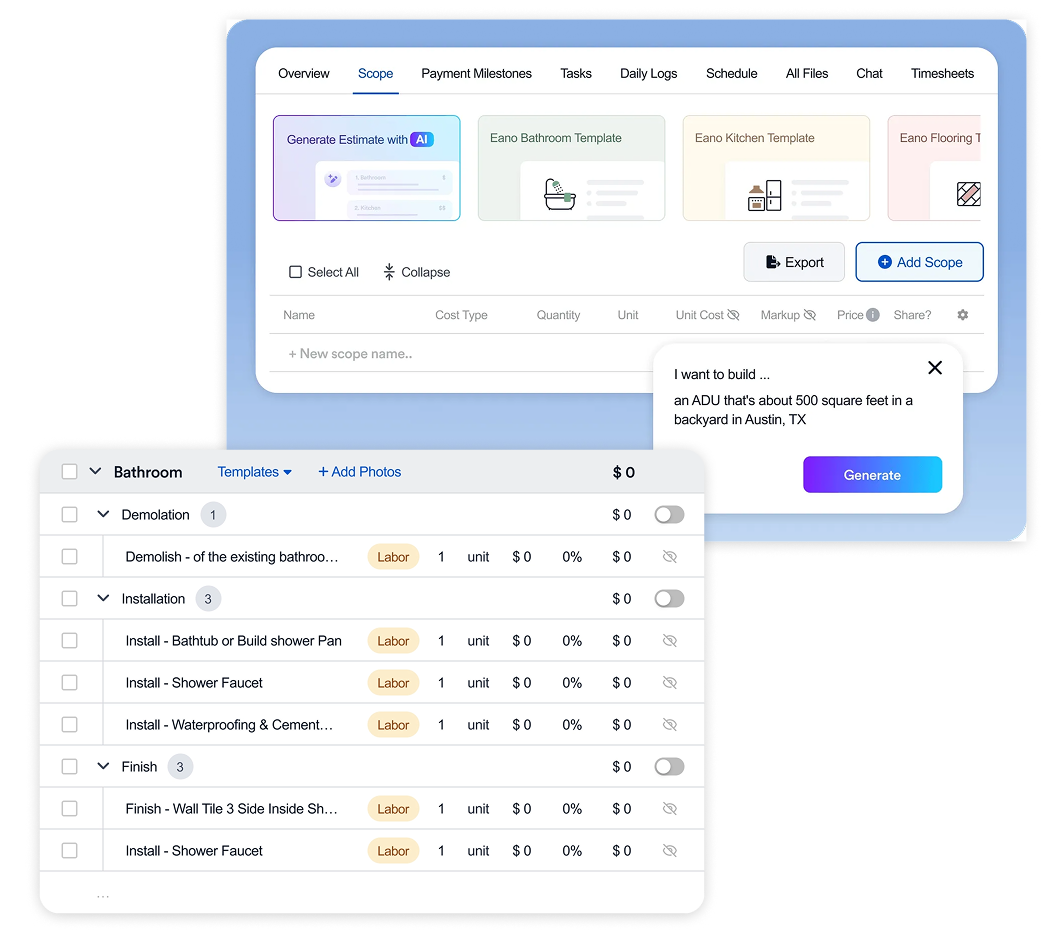
Eano’s AI takeoff software is designed to move quantities from uploaded drawings into an estimating workflow, reducing the need to manually re-enter measured quantities in a separate system. That connection matters because a takeoff that remains isolated in a PDF or spreadsheet still has to be transferred, checked, and maintained before it becomes a bid.
A sensible review process still looks like this:
- Confirm the current plan set, revisions, and drawing scale.
- Review AI-generated measurements against plans, sections, structural schedules, and details.
- Apply the company’s assemblies, labor assumptions, waste factors, equipment, and supplier quotes.
- Identify exclusions, unclear scope, alternates, and site constraints.
- Approve the estimate before it becomes a client-facing proposal.
AI can speed up the measuring portion of the work. It cannot reliably determine whether trucks can access a placement area, whether a pour must be staged, whether a design requires additional bracing, or whether a local supplier will add a short-load fee. Those are estimating and operations decisions, not drawing-recognition tasks.
Evaluate the Tool by the Workflow After the Takeoff
The right software category depends on the contractor’s operating model.
Software typeBest fitWhere it can fall shortConcrete calculatorQuick field checks and simple quantity verificationDoes not create a detailed, priced project scopeSpreadsheetA stable, familiar process with low estimating volumeVersion control, manual formulas, and duplicate entry become harder to managePDF takeoff toolEstimators focused mainly on digital measurement and markupQuantities may still need to be re-entered into estimating or project-management toolsTrade estimating platformDetailed, repeatable concrete bidsMay not support the wider residential GC workflow after awardConstruction management software with estimatingResidential GCs managing the project from lead through closeoutRequires the team to standardize its estimating and handoff process
A concrete subcontractor bidding a high volume of similar scopes may prioritize detailed assemblies and fast plan measurement. A residential GC usually has a broader problem: the concrete estimate must fit into the total project estimate, proposal, client approval process, schedule, project budget, subcontractor coordination, change orders, invoices, and job costing.
That is why the decision should not stop at, “Can this tool calculate my quantities?” Ask instead: “What does the team have to recreate after the contract is signed?”
With construction management software, an approved estimate can become the starting point for the project rather than a separate document that goes stale after award.
Concrete Details That Still Need Estimator Review
Drawings, revisions, and structural details
An accurate measurement from an outdated plan set is still an inaccurate bid. Before pricing, confirm the revision date, addenda, sheet scale, and whether architectural, structural, and civil information agrees.
Concrete scope is often distributed across plan views, sections, schedules, and notes. A slab plan might show an area, while thickness changes, reinforcing requirements, and edge conditions appear elsewhere. Estimators need software that preserves a clear audit trail from the estimate back to the drawing and the assumption behind it.
Access, placement, and production
The same cubic yards can cost very differently depending on how the work will be installed. Site access can determine whether ready-mix trucks can back to the placement area, whether a pump is necessary, how far labor must move material, and whether multiple mobilizations are likely.
Those decisions affect labor hours, equipment, delivery charges, and scheduling. They should be reflected in the estimate before the proposal is sent—not discovered when the crew is already mobilized.
Reinforcement, forms, and safety
Volume-only estimating is where many concrete bids become incomplete. Rebar size and spacing, laps, hooks, dowels, congestion, form height, bracing, stripping, and architectural finish requirements can materially change the scope.
Safety planning belongs in the estimate as well. OSHA’s concrete and masonry construction requirements cover work activities that may affect the equipment, access, crew methods, and controls required on site. Estimators should account for those project-specific conditions instead of expecting field crews to absorb them.
Supplier pricing and waste
Concrete prices vary by location, mix design, supplier, order size, and delivery conditions. Broader trends can be monitored through the Bureau of Labor Statistics’ Producer Price Index data, but an index cannot replace current, project-specific ready-mix quotes.
Waste should also be a documented assumption, not a permanent default. Uneven subgrade, complicated forms, placement access, and uncertain drawings may justify different allowances from one project to the next. Good software lets the team apply and review those assumptions at the line-item or assembly level.
Test Concrete Estimator Software With a Real Project
A vendor demonstration will not show how a platform handles the conditions that slow down actual estimating. Before choosing a tool, recreate a completed project using the original drawings, notes, supplier quotes, and final scope.
Look for five things:
- Measurement traceability: Can a reviewer see the drawing location and calculation behind a quantity?
- Cost flexibility: Can the team use its own labor burden, productivity rates, material costs, equipment rules, waste assumptions, and markup?
- Revision control: Can the estimator identify what changed after a revised drawing or addendum?
- Proposal readiness: Can approved scope, exclusions, and allowances be presented clearly to the client?
- Project handoff: Can the approved estimate inform the budget, schedule, purchasing, change orders, and job-cost review without rekeying data?
Eano’s concrete contractor software positions estimating, proposals, scheduling, daily logs, budgets, change orders, invoicing, and financial reporting in one connected workflow. For a residential GC, the practical value is in the handoff: when the estimate becomes the working budget, the project manager has a clearer starting point for tracking committed and actual costs.
Choose Software That Keeps the Estimate Useful After Winning the Job
Concrete estimator software should reduce measuring and calculation work without separating the bid from the way the project will actually be delivered.
Use the platform to organize takeoffs, assemblies, cost assumptions, and proposal documents. Keep estimator review focused on the risks software cannot resolve: plan conflicts, site conditions, access, reinforcement, production rates, supplier terms, and scope gaps.
For residential GCs, the strongest system is usually the one that connects the concrete scope to the wider construction-management workflow. The estimate then remains useful when the job moves from lead intake and proposal through scheduling, field coordination, change orders, invoicing, and final job-cost review.



.png)