Concrete Bag Calculator
Concrete Calculator: How many bags do I need?
The Concrete Bag Calculator helps you estimate how much concrete you need for common project shapes like slabs, circular columns, curbs, and stairs. Instead of guessing, you can enter your dimensions and instantly see the estimated amount of concrete required in both cubic feet, cubic yards, and bags.
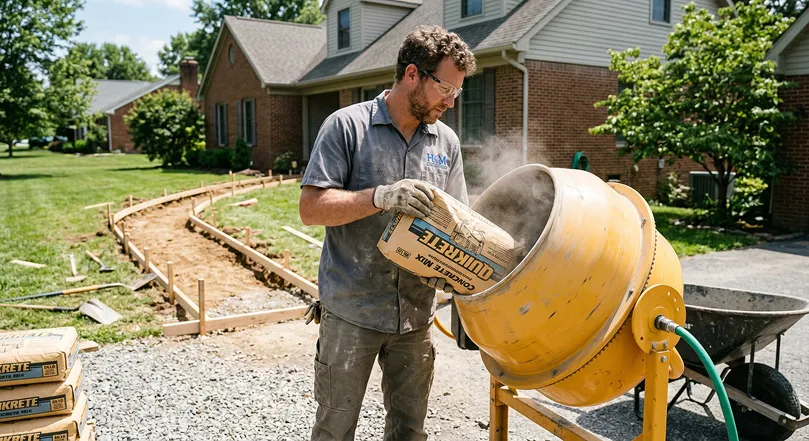
Why Accurate Concrete Estimating Matters
Concrete is one of those materials where being slightly off can create bigger problems than expected.
If you under-order, you may end up with:
- delays during the pour
- inconsistent finish quality
- extra delivery costs
- scheduling issues for labor and equipment
If you over-order, you may end up with:
- wasted material
- unnecessary bag purchases
- higher project cost
- disposal headaches for leftover mix
A simple calculator helps remove that guesswork by translating dimensions into the quantities you actually need to order.
What the Calculator Covers
This concrete calculator is designed to estimate concrete volume for several common shapes:
- Slabs
- Circular columns
- Curbs
- Stairs
It then converts the volume into:
- cubic feet
- cubic yards
- bag count based on bag size
- recommended order quantity with waste included
That gives users a quick way to plan material needs whether they are mixing from bags or comparing against ready-mix yardage.
Benefits of Using a Concrete Calculator
A good calculator does more than save time. It also improves decision-making before the project starts.
Faster Material Planning
Instead of manually converting dimensions into cubic yards, the calculator does the math instantly. That makes it easier to quote jobs, plan labor, and get accurate material counts fast.
Better Ordering Accuracy
Concrete estimates are often affected by thickness, shape, and waste allowance. A calculator reduces the chance of missing a step or using the wrong conversion.
Fewer Delays On Site
Having a more reliable material estimate helps keep the project moving. That matters whether you are pouring a small pad or working through a larger concrete scope.
Easier Conversion Between Bags and Yards
Some jobs are easier to handle with bagged concrete, while others are better suited for yard-based ordering. This calculator helps you quickly compare both.
How to Use the Concrete Bag Calculator
Using the calculator is simple.
Start by choosing the shape of the project. The calculator currently supports slabs, circular columns, curbs, and stairs.
Then enter the dimensions for that shape:
- slab length, width, and thickness
- column diameter and height
- curb length, width, and height
- stair count, rise, run, and width
Next, choose the bag size you plan to use. The calculator supports common options such as 40 lb, 50 lb, 60 lb, and 80 lb bags.
You can also add a waste or overage percentage to account for spillage, uneven subgrade, or real-world jobsite conditions.
Once entered, the calculator will show:
- volume in cubic feet
- volume in cubic yards
- approximate number of bags needed
- rounded recommended order quantity
That gives you a much clearer starting point before buying material.
Why Waste Allowance Matters
Concrete jobs rarely go exactly to the theoretical volume.
Subgrade irregularities, spillage, variation in formwork, and minor dimension changes can all increase actual material use. That is why many crews add a small overage instead of ordering only the exact calculated amount.
A waste factor helps make the estimate more practical, especially for:
- uneven excavation
- hand-mixed jobs
- irregular forms
- stair and curb work
- first-time DIY pours
Even a small waste allowance can make the difference between finishing cleanly and running short.
When Bags Make Sense vs. Cubic Yards
The calculator outputs both bags and cubic yards because different jobs call for different approaches.
Bagged Concrete
Bagged concrete is often a good fit for:
- smaller pours
- repairs
- footings
- short curbs
- small pads
- DIY jobs
Cubic Yards / Ready-Mix
Yard-based ordering often makes more sense for:
- larger slabs
- bigger formed work
- multi-section pours
- projects where mixing bags would take too much time
Seeing both outputs helps users decide which route is more practical for the project.
How Eano Pro Helps Beyond the Calculator
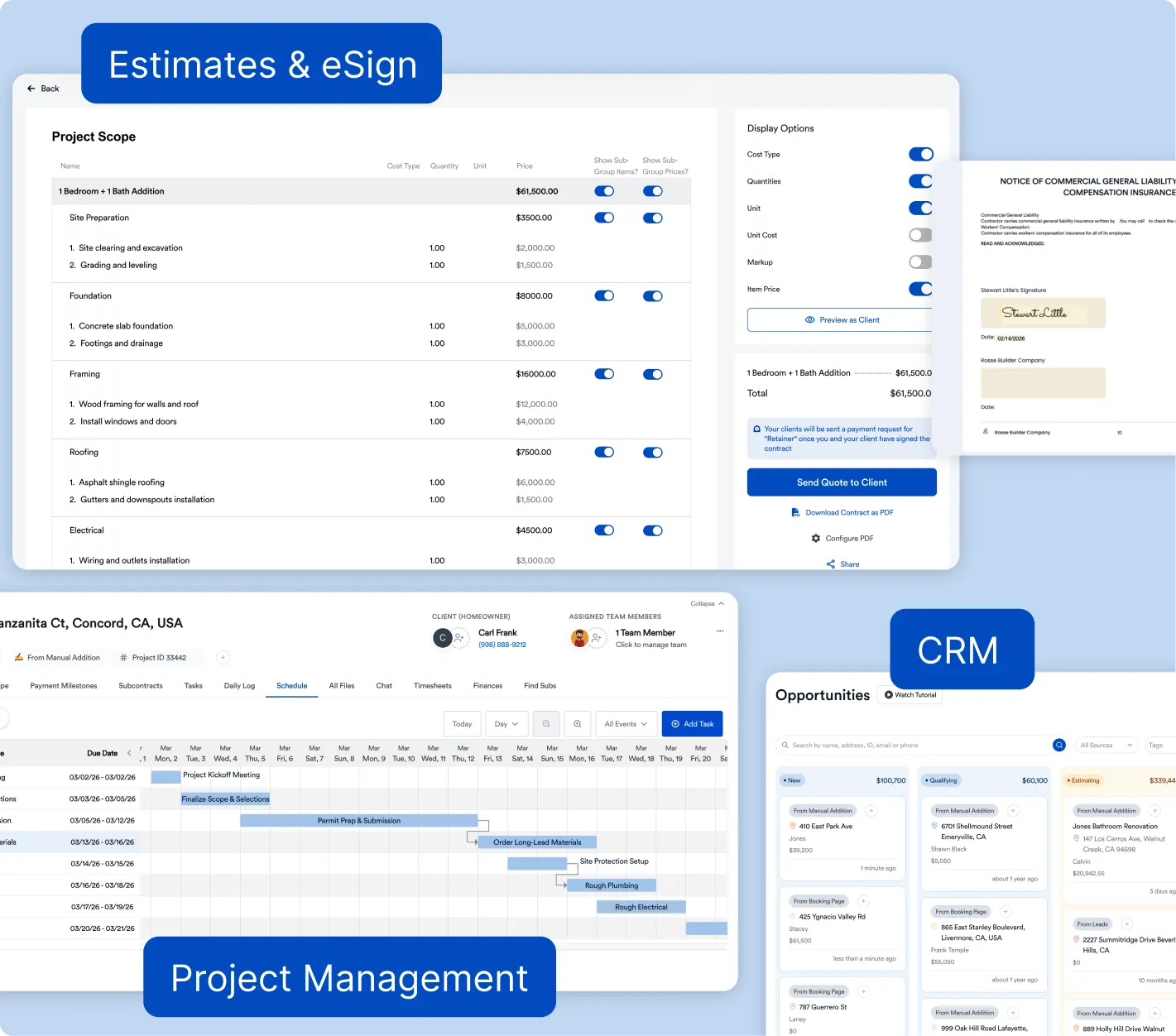
A calculator helps you estimate the material. Eano Pro helps you turn that estimate into a real job workflow.
Once you know how much concrete is needed, the next steps usually include pricing, labor, markup, scope of work, and a proposal for the customer. That is where Eano Pro becomes much more useful than a standalone calculator.
With Eano Pro, contractors can:
- build structured estimates with concrete, labor, equipment, and markup
- create professional client-ready proposals
- standardize pricing across concrete jobs
- keep estimate revisions organized
- move from estimate to signed work more efficiently
- manage the project after the job is won
Instead of calculating material in one place and then rebuilding everything in a spreadsheet or proposal doc, Eano Pro helps connect the estimating workflow into one system.
For concrete contractors and general contractors, that means less manual work and a smoother path from takeoff to proposal to execution.
Why This Matters for Contractors
For small teams, time lost rebuilding estimates manually adds up quickly.
For growing teams, inconsistent estimating creates risk:
- pricing errors
- missed line items
- slower turnaround
- hard-to-track revisions
- inconsistent presentation to clients
Using a calculator for quick quantity checks and Eano Pro for the full estimating workflow gives contractors a better way to move fast without losing structure.
Final Takeaway
The Concrete Bag Calculator is a fast way to estimate how much concrete you need for slabs, columns, curbs, and stairs. It helps reduce guesswork by converting dimensions into cubic feet, cubic yards, and bag counts with optional overage included.
That makes it useful for both field planning and early-stage estimating.
And once you are ready to turn those quantities into a full professional estimate, Eano Pro helps you build the pricing, proposal, and workflow around the job.
Book a demo to see how Eano Pro helps contractors estimate faster, stay organized, and win more work.
Get a Personalized Demo
Related Tools
FAQs
How do I calculate how much concrete I need?
When should I use cubic yards instead of bags?
Can Eano Pro help with concrete estimates?