Construction Framing Calculator
Calculate Wall Framing Materials in Seconds
This construction framing calculator helps you quickly estimate how many studs, plates, and boards you need for a wall—along with a realistic material cost based on your inputs.
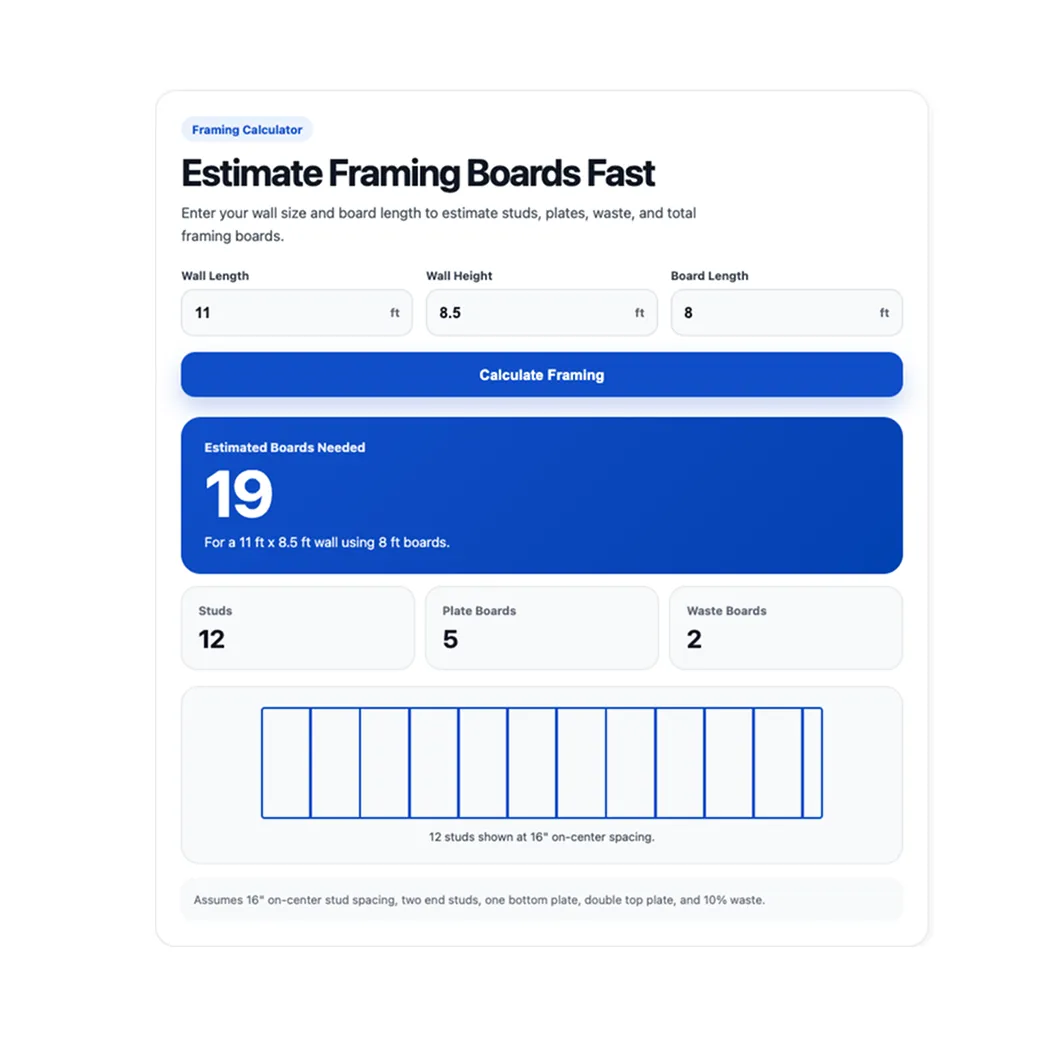
This construction framing calculator helps you quickly estimate how many studs, plates, and boards you need for a wall—along with a realistic material cost based on your inputs.
Instead of manually calculating stud spacing, plate runs, and waste, you can enter your wall details and instantly get:
- stud count
- plate board requirements
- additional framing for openings
- total boards with waste included
- estimated material cost
It’s built to reflect how framing actually happens on the job—not just simplified math.
How to Use the Construction Framing Calculator
Using the framing calculator is simple and quick:
- Enter wall length (in feet) to define how long your wall will be
- Enter wall height (in feet) to match your framing height
- Input board length (typically 8 ft, 10 ft, or 12 ft) based on your material
- Click “Calculate Framing” to generate your estimate instantly
The calculator will automatically:
- Apply standard 16" on-center stud spacing
- Include double top plate and bottom plate
- Add a waste factor for real-world accuracy
You’ll get a clear breakdown of studs, plate boards, and total boards needed, plus a visual layout—so you can plan materials quickly without doing manual calculations.
Why Use a Construction Framing Calculator?
Framing is one of the most material-heavy and cost-sensitive parts of any project. Even small miscalculations can impact your budget and timeline.
Using a construction framing calculator helps you:
- avoid underordering materials
- reduce waste and overbuying
- speed up estimating for bids
- standardize your calculations across jobs
Whether you’re framing a single wall or estimating a full build, accuracy upfront saves time and money.
What This Construction Framing Calculator Includes
This tool goes beyond a basic stud calculator by accounting for real-world framing needs.
Stud Layout
Calculates studs based on wall length and spacing (12", 16", or 24" on center), including end studs.
Plate Boards
Includes bottom plates and single or double top plates, converting total linear footage into board count based on your selected board length.
Openings (Doors & Windows)
Adds additional boards required for framing openings, including extra studs and header allowances.
Waste Factor
Applies a waste percentage to account for cuts, mistakes, and offcuts.
Cost Calculation
Combines lumber cost, headers, and miscellaneous materials into a total estimated project cost.
Understanding Plate Rows in Framing
Plate rows refer to the horizontal framing members at the top and bottom of a wall.
Most walls include:
- 1 bottom plate
- 2 top plates (double top plate)
That equals 3 plate rows, which is standard in residential construction.
Plate rows matter because they directly impact:
- total lumber required
- linear footage calculations
- overall project cost
Key Considerations When Estimating Framing
A construction framing calculator gives you a strong baseline, but real-world conditions can affect your final numbers.
Wall intersections, load-bearing requirements, framing techniques, and local building codes all play a role. Openings like doors and windows also require additional materials such as headers and support studs.
Because of this, estimates should be used as a starting point, then adjusted based on the specific job.
When Should You Use a Construction Framing Calculator?
This tool is useful for:
- residential wall framing
- remodeling and additions
- estimating materials for bids
- planning lumber purchases
- quick on-site calculations
It’s especially helpful when you need fast, consistent estimates without rebuilding your calculations every time.
How Eano Pro Helps You Go Beyond Material Estimates
This construction framing calculator helps you answer:
“How much framing material do I need?”
Eano Pro helps you answer:
“What should I charge for the job?”
With Eano Pro, contractors can:
- turn material quantities into full estimates
- add labor, markup, and overhead
- generate professional proposals
- standardize pricing across projects
- track job costs in real time
Instead of using separate tools for estimating and project management, Eano brings everything into one streamlined workflow.
Get a Personalized Demo
Related Tools
FAQs
How many studs do I need for a wall?
What is standard stud spacing in construction?
What are plate rows in wall framing?