
How to Estimate a Remodeling Job Without Losing Money (Step-by-Step)
Important Steps to Creating a Construction Estimate
Start with a Clear Scope (Not a Rough Idea)
Most bad estimates start with a vague scope. As contractors get more experienced, oftentimes the estimates get more generalized because contractors get a better sense of how much the job will run. The problem is that what used to be a carefully described estimate, now becomes a general description because you've gone through the motions so many times that you don't need the details to come up with an estimate, but it's more for the client than anything else. It's counter-intuitive, right?
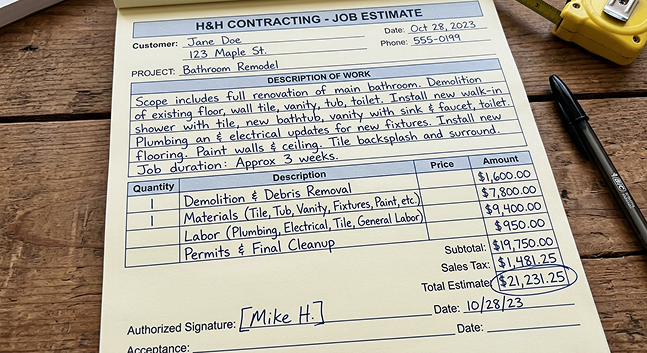
Before you think about pricing, walk the job and document everything:
- What’s being removed?
- What’s being installed?
- What trades are involved?
- Are there access or site constraints?
The more specific you are upfront, the fewer surprises later. Remodeling jobs almost always expand in complexity once walls are opened—your scope should anticipate that, not ignore it.
Break the Job into Line Items
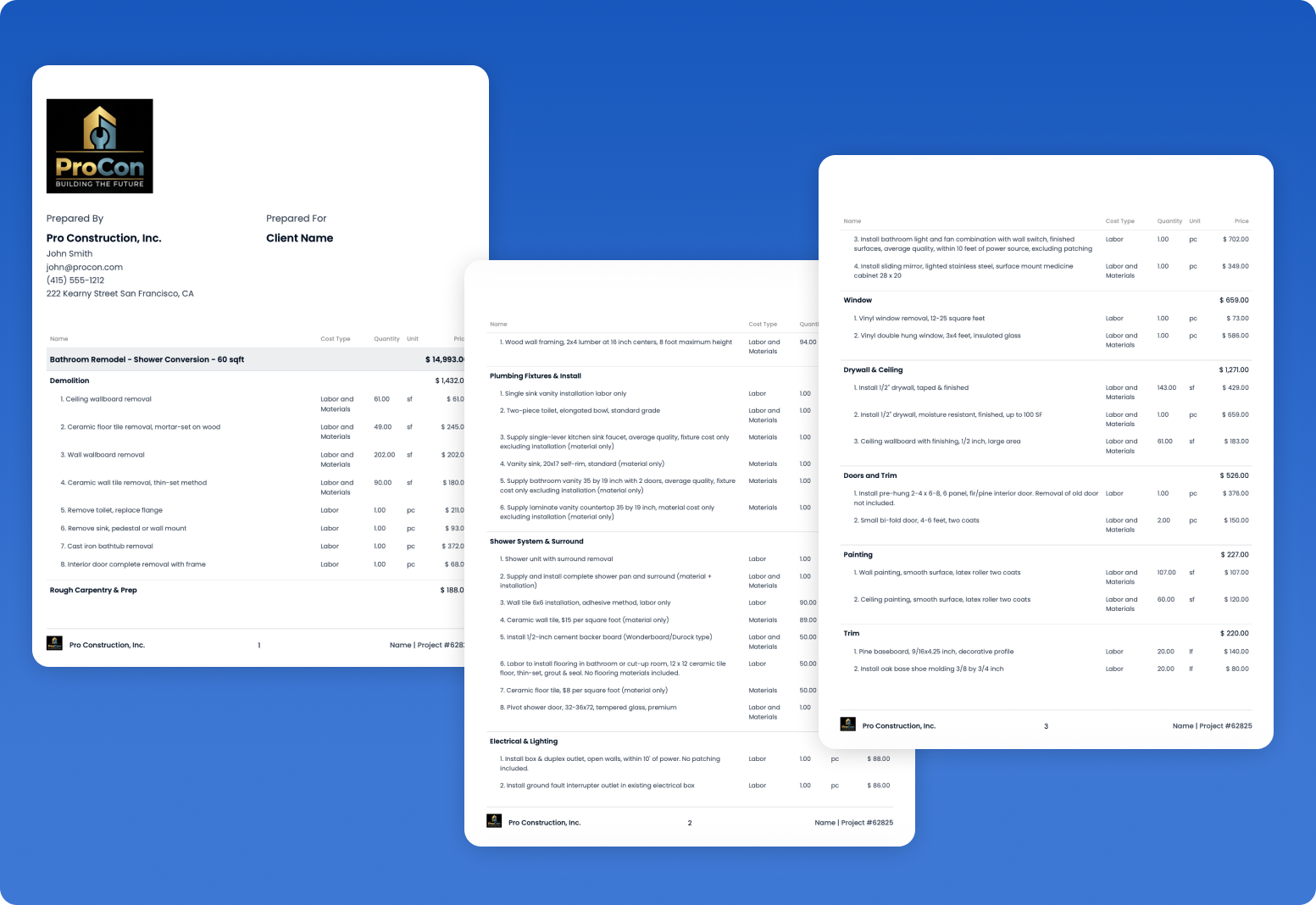
Instead of estimating the job as one number, break it down:
- Demolition
- Framing
- Electrical
- Plumbing
- Finishes
Each category should have its own labor and material costs. This is where most contractors either gain control—or lose it.
When everything is lumped together, it’s almost impossible to spot where margin is being squeezed.
Price Materials Using Current Numbers
Material pricing changes more than most homeowners realize. If you’re relying on old numbers or memory, your estimate is already off.
Pull current pricing for:
- Cabinets
- Fixtures
- Tile
- Lumber
- Specialty materials
Even small price differences can stack up across a full remodel.
Calculate Labor Realistically
Labor is where most estimates break.
Be honest about:
- Crew size
- Time required per phase
- Subcontractor costs
- Delays or inefficiencies
If you consistently underestimate labor, it doesn’t matter how accurate your material costs are—you’ll still lose money.
Add Overhead, Contingency, and Profit
This is where a lot of contractors get uncomfortable—and where profit disappears.
You need to account for:
- Overhead (insurance, admin, vehicles)
- Contingency (unknowns behind walls)
- Profit (not just markup, actual margin)
If you skip this step or “just try to be competitive,” you’re essentially betting against your own business.
Review for Missed Items
Before sending the estimate, pause and review:
- Permits
- Disposal
- Delivery fees
- Travel time
- Equipment rentals
These are the kinds of costs that don’t seem big individually—but they add up fast.
Present the Estimate Clearly
Your estimate is not just a number—it’s a sales tool.
Homeowners are comparing multiple bids. A clear, organized estimate:
- Builds trust
- Reduces confusion
- Justifies your price
Messy estimates create doubt, even if your pricing is correct.
For a full rundown of the sections homeowners expect to see, read what to include in a contractor estimate.
Why This Process Matters
The difference between a profitable remodel and a stressful one usually comes down to the estimate.
When you follow a structured process:
- You catch mistakes earlier
- You price more consistently
- You can explain your numbers with confidence
That’s why more contractors are moving toward structured systems instead of spreadsheets and guesswork. Tools like estimating software or even well-built templates can help standardize this process so you’re not rebuilding it every time. This does look like a pain, but AI estimating features from Eano Pro can generate this is seconds.
Check out the Remodel Estimating Software Guide for how to evaluate the best options.