What Every Contractor Should Include in an Estimate
Every contractor has had that moment: a potential client asks for a price, and suddenly you’re trying to balance speed, accuracy, and professionalism all at once. Give too little detail, and the client feels unsure. Give too much, and you risk confusion or endless back-and-forth. The sweet spot is a clear, well-structured estimate that makes it easy for the customer to understand what they’re paying for and why.
That’s where a good contractor estimate template becomes more than a convenience. It gives you a repeatable structure that keeps your quotes consistent, helps you avoid missed line items, and makes your business look more polished. In a competitive market, that matters. According to the U.S. Chamber of Commerce, small businesses spend a meaningful amount of time on administrative work each week, which is one reason organized estimating systems can make such a difference. The less time you spend reinventing the wheel, the more time you can spend winning jobs and doing the work.
A strong estimate is not just a price sheet. It is part sales tool, part communication tool, and part risk-management tool. It helps the client understand the scope, it helps you protect your margins, and it creates a paper trail if questions come up later. If you want smoother approvals and fewer misunderstandings, the estimate needs to do a lot of heavy lifting.
Start with the basics: who, what, and when
At the top of every estimate, include the essentials. The client should immediately know who the estimate is for, who it’s from, the date it was issued, and how long it’s valid. That may sound obvious, but missing simple details can make your business look disorganized and can create confusion later if pricing changes.
Be sure to include your business name, license number if applicable, address, phone number, and email. On the client side, list the customer’s name and project address clearly. If the estimate is tied to a specific property, don’t rely on memory or a casual conversation. Put it in writing.
Validity dates are especially important when material costs fluctuate. If lumber, tile, fixtures, or labor availability could change in a few weeks, your estimate should state that the pricing is valid for a set period. That gives you a clean way to revisit pricing without awkward conversations.
Define the scope of work in plain English
This is where many estimates fall short. A line that says “remodel bathroom” or “install new deck” is not enough. The estimate should explain exactly what is included. The more specific you are, the easier it is for the client to compare your bid with others and understand the value behind it.
Think in terms of tasks, materials, and finish level. For example, instead of writing “paint bedroom,” describe whether you are patching holes, sanding, priming, painting walls only or walls and trim, and how many coats are included. If you are replacing cabinets, state whether the estimate includes demolition, disposal, new hardware, countertop removal, plumbing disconnects, or paint touch-ups.
Clarity here protects everyone. Clients don’t like surprises, and contractors don’t like being asked to do extra work for free. A well-written scope makes it easier to draw the line between what is included and what counts as additional work.
Break down materials and labor separately
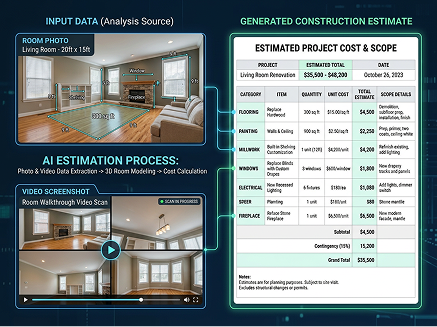
Clients are more likely to trust estimates that show where the money goes. You do not always need to list every nail and screw, but separating labor from materials gives the customer a better sense of the project’s cost structure. It can also help explain why a quote is higher than expected.
When possible, include itemized categories such as demolition, framing, drywall, electrical, plumbing, flooring, paint, finish carpentry, permits, and cleanup. If certain materials are chosen by the client, note that the estimate is based on the selected product grade or allowance. That way, if they later choose a premium upgrade, the price adjustment is easier to justify.
Itemization also helps you during revisions. If one part of the project changes, you don’t have to rewrite the whole estimate. You can update a section and keep the rest intact. That saves time and reduces the chance of errors.
Include allowances and assumptions
Not every project has every detail figured out before the work begins. Maybe the client has not chosen a faucet yet. Maybe you haven’t opened a wall and seen what’s behind it. In cases like these, allowances and assumptions are essential.
An allowance is a budget placeholder for something that has not been finalized. For example, you might include a cabinetry allowance of a certain amount or a lighting allowance based on standard fixtures. Assumptions explain what your estimate is based on, such as “existing subfloor is in usable condition” or “electrical panel has sufficient capacity for the planned upgrade.”
This language is not about covering yourself with fine print. It is about being honest about what you know and what you don’t know yet. If you’ve been in the trades long enough, you already know that hidden conditions are common. A good estimate says that out loud.
State exclusions clearly
Just as important as saying what is included is saying what is not. Exclusions reduce the odds that a client assumes something is part of the price when it isn’t. For example, your estimate might exclude permit fees, structural repairs, asbestos remediation, mold removal, furniture moving, or after-hours work.
This section can prevent a lot of headaches. If your team will not be responsible for hauling away large debris, say so. If the homeowner is supplying fixtures or finishes, spell that out. If the job depends on another trade completing work first, note that the schedule may shift.
Think of exclusions as the boundaries of your bid. They keep the estimate clean and make it easier to manage expectations from the start.
Show pricing in a way that makes sense
There is no single correct way to present pricing, but the goal should always be transparency. Some contractors prefer a lump sum total with a few supporting line items. Others provide a detailed breakdown for each phase of the job. The right format depends on the project and your client base.
Whatever you choose, make sure the math is easy to follow. Include subtotal, taxes if applicable, discounts if any, and the final total. If deposits are required, show the deposit amount and when it is due. If progress payments will be used, outline the payment schedule clearly.
Clients appreciate straightforward pricing. It helps them plan, and it signals that you run a disciplined business. Confusing numbers can slow down approvals, while clear pricing makes it easier to say yes.
Add timing and project milestones
People often focus on price and forget schedule, but timing matters just as much. Your estimate should explain the expected start window, estimated project duration, and any milestones that matter to the client. If material lead times could affect the schedule, say so.
For longer projects, a milestone schedule can be very helpful. For example, demolition may happen in week one, rough-ins in week two, inspections in week three, and finishes after approvals. That gives the client a realistic picture of how the work will unfold.
Be careful not to promise more precision than you can deliver. Weather, inspections, and supply chain delays can all affect timing. A good estimate is specific without being unrealistic.
Use terms and conditions without sounding rigid
Terms and conditions do not have to feel cold or legalistic. In plain language, they can cover the things that keep projects running smoothly: how changes are handled, when payments are due, what happens if the client delays the project, and how disputes are addressed.
A change order policy is especially important. If the client asks for additional work, the estimate should make clear that changes require written approval and may affect the cost and schedule. That protects your margins and avoids awkward “I thought that was included” conversations.
It is also smart to include warranty information, cleanup expectations, and site access rules. The more of these details you address upfront, the easier it is to keep the job moving.
Make it look professional
Even a well-priced estimate can fall flat if it looks sloppy. Spelling errors, inconsistent formatting, and missing details can make a client question your workmanship before the project even starts. Presentation matters.
Use a clean format with headings, consistent fonts, and enough white space to make the estimate easy to scan. If your logo, branding, and contact details are already built into a standard document, even better. A professional look signals that you take the work seriously.
This is another area where Eano Pro can help. Instead of building estimates from scratch each time, you can streamline your workflow and create polished documents faster. That means less time formatting and more time focusing on pricing, client communication, and job execution. When your estimating process is organized, your business feels more reliable from the very first interaction.
Why a better estimate helps you win more work
Clients usually hire the contractor they trust most, not just the one with the lowest number. A thoughtful estimate helps build that trust. It shows that you’ve done the homework, understood the scope, and considered the details. It also makes your company look easier to work with, which is a major advantage when homeowners are comparing bids.
Better estimates can also reduce jobsite friction. When everyone knows what was agreed to, there are fewer surprises, fewer disputes, and fewer delays. That means better margins for you and a better experience for the customer.
In short, a strong estimate is part of good contracting. It is one of the simplest ways to protect your reputation and improve your closing rate at the same time.
If your current process is a mix of spreadsheets, text messages, and half-finished notes, it may be time for a more organized system. A repeatable structure helps you move faster, quote more accurately, and present your business in a way that inspires confidence. The right template can save time, but the real benefit is consistency. Every estimate gets the same level of care, and every client gets the same clear experience.
That is what separates a rushed quote from a professional one. The details do not just support the number; they support the relationship. And in contracting, that relationship is often what wins the job.
Whether you handle small residential repairs or larger remodels, your estimate should work as hard as you do. Make it clear, make it specific, and make it easy for the client to say yes with confidence.