A Simple Estimating Workflow for Contractors
Why a Better Estimating Workflow Matters for Contractors
Most contractors don't lose bids because they can't do the work — they lose because the estimate took too long to turn around, arrived looking disorganized, or quietly left out a line item that later ate into margin. A repeatable estimating workflow fixes all three problems at once: it gives you a consistent process for pricing jobs, communicating scope to clients, and protecting profit before the first shovel hits the ground.
Simpler systems tend to win here, precisely because they're easier to repeat under pressure. A workflow that only works when you have a quiet afternoon to build a "perfect" estimate isn't really a workflow — it's a best-case scenario. The goal is a process that holds up on a Tuesday when you're juggling three site visits, a change order, and a client who wants numbers by end of day.
A standardized contractor estimate template is what makes that repeatability possible. It becomes the backbone of the workflow, especially once site visits, client calls, and revisions start competing for the same afternoon.
The real risk isn't building an estimate from scratch — most contractors can do that in their sleep. It's making sure the same categories get accounted for on every single job, because one missing line item can quietly erase a job's profit weeks after the estimate went out. At minimum, every estimate should account for:
- Labor costs
- Materials
- Subcontractor pricing
- Equipment rentals
- Permits and disposal fees
- Allowances and markups (most residential GCs work in the 10–20% range depending on job complexity and risk)
- Exclusions and assumptions
- Payment terms and timelines
Start With Better Job Information
A reliable workflow starts before a single number goes into the estimate — it starts with how the job information gets collected.
Walk the site whenever the job justifies it. On anything beyond a straightforward repair, a 20-minute walkthrough with a tape measure and a phone camera will surface things a client's description never will: an access point that requires a smaller lift, a subfloor that needs leveling before flooring goes down, an electrical panel that's already at capacity. Ask directly about:
- Scope of work
- Finish selections
- Access limitations
- Scheduling expectations
- Existing conditions
- Special requests or site complications
Photos help document what you saw, but they rarely substitute for seeing a project in person — especially on remodels, where "existing conditions" is doing a lot of quiet work in that phrase. The 20 minutes spent walking the site is almost always cheaper than the change-order conversation that happens when something gets missed.
Organize Estimates Into Clear Cost Categories
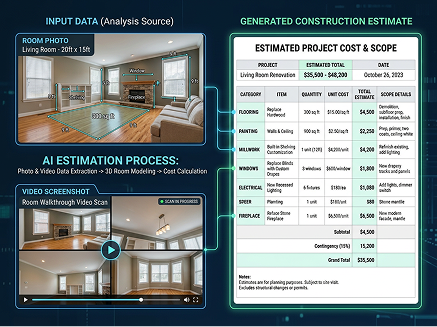
Once the job details are in hand, breaking the estimate into structured categories makes it far easier to review, sanity-check, and adjust before it goes out the door. A clean structure typically separates:
- Labor
- Materials
- Subcontractors
- Equipment
- Overhead
- Permit costs
- Disposal and cleanup
This structure does two things at once: it makes a missing line item easier to catch before you send the estimate, and it gives the client a proposal they can actually evaluate. When a homeowner or commercial client can see what they're paying for — rather than a single lump-sum number — your business reads as more organized and more trustworthy by default, before you've said a word in the sales conversation.
Consistency Is What Turns Estimating Into a System
The case for a repeatable format isn't theoretical — it's a response to real constraints in the industry right now. In the Associated General Contractors of America's 2025 workforce survey (nearly 1,400 firms, surveyed in late July and early August 2025), 92% of construction firms reported having a hard time finding qualified workers, and 88% had open craft positions they hadn't filled. When crews are stretched that thin, there's very little slack left over for wasted estimating time, pricing mistakes, or rework caused by a missed scope item.
A repeatable estimating format pays off twice under those conditions. First, it protects time — you're filling in a structure instead of rebuilding a document. Second, it starts generating something most contractors never think to collect: comparable data. When every proposal follows the same categories, patterns become visible — which project types are actually profitable, which clients generate the most revisions, which jobs quietly eat the most estimating time, and where margins tend to slip. Over time, that turns estimating from a per-job guess into a system you can actually improve.
The way to get there isn't a company-wide rollout on day one. Pick one project type, build one template, and use the same categories, the same review checklist, and the same proposal structure on every job of that type before expanding. The goal isn't a perfect system in month one — it's a repeatable one you're still using in month twelve.
Clients Want Clear Proposals, Not Complicated Ones
A common mistake is overloading estimates with internal notes or dense formatting that makes sense to the estimator and no one else. Most clients aren't looking for complexity — they want direct answers to a handful of questions: What's included? What's excluded? How much will it cost? When can work start?
A proposal that answers those four questions clearly, on one readable page, puts you ahead of competitors who are still sending rough spreadsheets or PDFs exported from a notes app.
How Software Fits Into the Workflow
This is where estimating software earns its place — not as a replacement for judgment, but as the layer that keeps a good process from depending on any one person's memory. Platforms like Eano Pro let contractors standardize estimate formats, save reusable templates by project type, keep project details in one place instead of scattered across texts and spreadsheets, and revise an estimate without rebuilding it from scratch.
That said, software only pays off once the underlying process is sound. A template built around the wrong cost categories just makes it faster to send an incomplete estimate. Get the structure right first — the categories above are a reasonable starting point — and the software compounds the benefit instead of just digitizing the same gaps.
A Strong Workflow Makes Revisions Easier
Scope changes on nearly every job — a client upgrades finishes, demolition reveals hidden damage, structural work turns out to be more involved than the walkthrough suggested. None of that is avoidable. What's avoidable is whether a scope change turns into chaos.
When an estimate is built from structured categories rather than free-form text, a revision means updating specific line items, not rewriting a document from memory. That difference is what lets a contractor respond to a change order in an afternoon instead of a week, without losing track of what changed and why.
Avoid the Trap of Underpricing to Win the Job
Pricing aggressively to win work is tempting, but an estimate built on guesswork tends to create a bigger problem a few weeks in. Thin margins disappear fast the moment labor runs long or material costs shift — and both are more likely, not less, in the environment described above.
The more durable approach is pricing from a clear structure and being able to explain the number with specifics, not defend it. Clients respond better to a price backed by a visible breakdown than to a lower number they have no way to evaluate — a well-organized $18,400 estimate reads as more credible than an unexplained $16,000 one, because the client can see where the money goes.
Better Estimates Improve Project Handoff, Not Just the Sale
A well-structured estimate keeps paying off after the contract is signed. When scope is documented in specific line items rather than a paragraph of prose, scheduling, production, and subcontractor coordination all get easier — because everyone involved is working from the same documented scope instead of someone's recollection of a phone call.
That reduces the number of "that's not what we agreed to" conversations mid-project, which are almost always more expensive to have than the extra ten minutes it takes to write the scope clearly in the first place.
Where to Start This Week
If the current process is phone notes, an old spreadsheet, or a proposal copied and edited from the last job, the fastest improvement is a single standardized format covering:
- Client information
- Project summary
- Scope details
- Line-item pricing
- Assumptions and exclusions
- Timeline expectations
- Payment terms
Keep it clean, keep it repeatable, and make it easy to update as a job evolves. That consistency alone tends to move estimating speed more than any attempt to reinvent the proposal from scratch — and it's also the version of "better estimating" a contractor can actually keep doing, job after job, without it becoming its own source of overhead.
Good Estimating Is Really About Trust
Good estimating was never about writing the longest proposal or building the most elaborate spreadsheet. It's about producing a quote that's clear, accurate, and consistent enough that a client can trust the number the first time they see it.
An estimate is more than a price — it's the client's first real look at how the project will be managed. When the process behind it is organized and repeatable, that shows up in the number, in how confidently it gets presented, and in how the project actually runs afterward.