
Why Fast Estimates Win More Jobs (and How to Speed Yours Up)
Speed Isn’t Just Operational—It’s a Sales Advantage
In construction, speed matters more than most people like to admit. A careful estimate is important, of course, but in the real world, the contractor who responds first often gets the first call back, the first meeting, and sometimes the signed contract.
Homeowners are busy. Property managers are juggling vendors. Commercial clients want clarity fast. If your estimate takes days while someone else sends theirs the same afternoon, you are already at a disadvantage.
That is why fast estimates are not just a nice operational upgrade—they are a sales advantage. They keep prospects engaged, reduce the chances of ghosting, and show that your team is organized and responsive.
Why Speed Directly Impacts Close Rates
There is also real behavioral evidence behind this.
According to Harvard Business Review, firms that respond to leads within an hour are significantly more likely to connect with decision-makers than those that wait longer. While that study spans industries, the takeaway applies directly to construction:
- The longer you wait, the colder the lead gets
- Prospects move on or hear from competitors
- Details fade, urgency drops, and interest declines
Fast estimates don’t just save time—they preserve momentum.
What Actually Slows Down Estimates
For most contractors, delays don’t come from one big issue—they come from friction across the process.
1. Unstructured Lead Intake
The first delay usually happens before estimating even starts.
A homeowner calls, leaves partial information, or submits a form with missing details. Then your team has to:
- Chase down scope details
- Ask the same questions multiple times
- Dig through texts or emails to piece together the job
That back-and-forth eats up time early.
A better approach is structured intake. Every lead should consistently capture:
- Project type
- Location
- Timeline
- Budget range
- Photos or measurements
This alone can remove hours of friction each week.
2. Disorganized Internal Workflow
The second bottleneck typically happens inside the office.
Many contractors still rely on:
- Spreadsheets
- Sticky notes
- Inbox searches
- Phone calls
This might work at low volume, but it breaks down quickly as your pipeline grows.
Without a centralized system:
- Leads get missed
- Quotes get delayed
- Follow-ups fall through
That’s where construction sales management software starts to matter—not as a feature upgrade, but as a way to maintain control as volume increases.
3. Rebuilding Estimates from Scratch
Another common slowdown is starting from zero every time.
When estimates aren’t standardized:
- Teams recreate the same structure repeatedly
- Line items vary across jobs
- Errors become more likely
Instead of refining a system, you’re reinventing it.
What a Faster Estimating Process Actually Looks Like
Speed doesn’t come from rushing—it comes from structure.
When the process is dialed in:
- Intake is clean and consistent
- Job details are easy to access
- Estimates follow a repeatable format
- Follow-ups happen without relying on memory
At that point, estimating becomes less reactive and more controlled.
How Fast Estimates Improve the Customer Experience
Speed isn’t just internal—it’s visible to the customer.
When a prospect receives a quick, well-structured estimate, it signals:
- You’re organized
- You’re responsive
- You’re easy to work with
That perception matters more than many contractors think.
Customers aren’t just comparing price—they’re comparing confidence. And a fast, clear estimate reduces hesitation before objections even come up.
Speed Without Accuracy Is Still a Problem
Of course, speed alone isn’t enough.
Rushed estimates that miss scope or underprice labor create bigger problems later:
- Change orders
- Margin erosion
- Frustrated clients
The goal isn’t to go faster at the expense of accuracy. It’s to remove the slow parts of the process so your team can focus on what actually requires judgment.
Practical Ways to Speed Up Estimating
You don’t need a complete overhaul to improve turnaround time. A few targeted changes can make a big difference.
Standardize Templates
When common job types already have a framework:
- You’re not starting from scratch
- Estimates stay consistent
- Errors are easier to catch
This is one of the simplest ways to save time while improving quality.
Set Response-Time Habits
Speed is often about discipline, not tools.
For example:
- Acknowledge every new lead within minutes
- Schedule walkthroughs within one business day
- Deliver estimates within 24–48 hours after site visits
These aren’t rigid rules—they’re habits that build trust.
Create a Follow-Up System
This is where many contractors lose jobs.
After sending a proposal, they wait.
But most customers need:
- A reminder
- Clarification
- A nudge to move forward
A simple follow-up process can dramatically improve close rates.
How Eano Pro Supports a Faster Sales Process
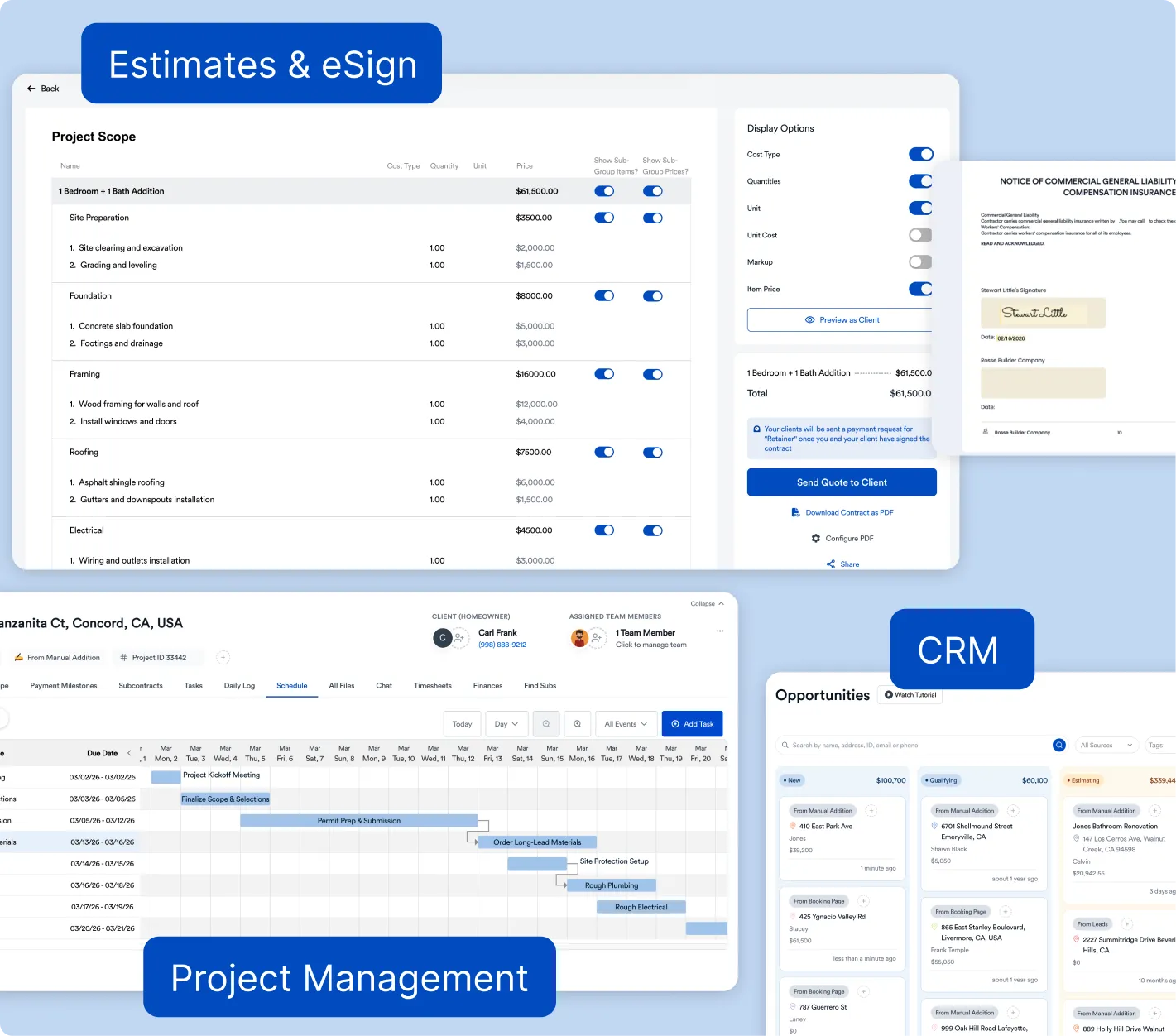
This is where systems like Eano Pro come into play.
Instead of relying on scattered tools, it helps centralize:
- Lead tracking
- Estimate status
- Follow-up timing
- Client communication
That means your team can:
- See what needs attention
- Move leads forward consistently
- Avoid missed opportunities
For growing contractors, this structure often makes the difference between a pipeline that feels chaotic and one that actually converts.
The Hidden Benefit: Less Stress, Better Control
There’s also a human side to this.
When estimating is disorganized, it feels like a constant scramble. Every request becomes urgent, and the team is always reacting.
When the process is structured:
- Work feels more predictable
- Responsibilities are clearer
- The team spends less time chasing details
That consistency makes the business easier to run—not just more profitable.
How to Start Improving Today
If you want to move faster without breaking things, start small.
Focus on:
- Cleaning up your intake process
- Standardizing 1–2 common estimate types
- Defining who owns each step
- Setting basic follow-up expectations
Then layer in tools that support the process.
You don’t need to rebuild everything overnight—you just need to remove enough friction to stay ahead of the next contractor.
Final Thought
The contractors who win the most work aren’t always the cheapest or the biggest.
They’re often the easiest to work with.
A fast estimate signals urgency, professionalism, and reliability. It keeps momentum alive and reduces doubt at the exact moment a customer is deciding who to trust.
In construction, the estimate is often your first real impression. If it’s slow or disorganized, customers notice. If it’s quick and clear, they notice that too.
That’s why faster estimates win more jobs—not because they’re rushed, but because they’re ready.