Why Most Construction Estimates Take Too Long
Most contractors have had the same experience: a lead comes in, the client wants a number fast, and suddenly the estimate turns into a half-day scavenger hunt. You’re checking old jobs, calling suppliers, redoing measurements, and trying to make sure nothing gets missed. By the time the quote is ready, the client may already be talking to someone else.
That delay is more common than people think. In a 2023 Autodesk + FMI report, construction leaders said labor productivity remains one of the industry’s biggest challenges, and rework continues to consume time and profit. While that report covers broader jobsite issues, the same pattern shows up in estimating: when the process is fragmented, time disappears fast. The good news is that most estimating delays are not about talent. They’re about process.
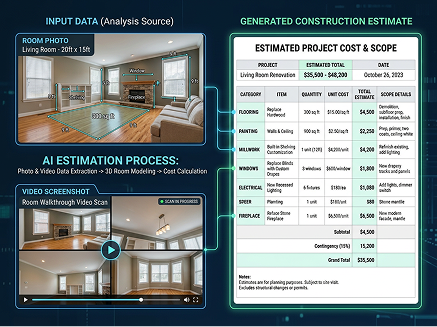
One of the fastest ways to improve speed is to stop building every estimate from scratch. A contracting estimate template gives you a repeatable structure so you can focus on pricing and scope instead of formatting and memory work. But a template alone won’t solve everything. To really cut down turnaround time, you need a better system behind the template.
Why estimates get stuck
Every contractor knows the estimate is more than just a number. It’s a mix of scope, sequencing, labor, materials, overhead, risk, and communication. When any one of those pieces is unclear, the whole thing slows down.
The first delay usually starts with missing information. The client sends a few photos, a quick explanation, and maybe an outdated floor plan. That can be enough to ballpark a rough figure, but not enough to produce a confident proposal. If you have to chase down measurements or ask the same questions multiple times, the calendar starts slipping.
Another common bottleneck is manual takeoff work. Even if you’re experienced, measuring, counting, and checking quantities by hand takes time. It also leaves more room for inconsistency, especially when different team members estimate in different ways. One estimator may include cleanup and protection; another may not. That inconsistency makes it hard to compare jobs or trust your margins.
Then there’s pricing. Material prices change, subcontractor quotes expire, and labor rates vary by region and project type. If your pricing data lives in spreadsheets, text messages, old emails, and a few remembered numbers from the last similar job, assembling a clean estimate becomes an exercise in detective work.
Speed matters more than most contractors admit
There’s a simple reason fast estimates win more jobs: homeowners and property owners usually contact several contractors at once. When your response is slow, the client may assume you’re too busy, too expensive, or not interested. Even if none of that is true, the delay creates doubt.
McKinsey has reported across multiple construction studies that the industry continues to lose time and value through inefficiency, fragmentation, and poor coordination. Estimating is one of the first places those losses show up. A slow estimate does not just cost hours in the office. It can cost the whole project.
At the same time, speed cannot come at the expense of professionalism. A rushed quote with missing details creates problems later, especially when the client starts asking what is and is not included. That is why the goal is not “estimate faster no matter what.” The goal is “estimate faster with a reliable process.”
What a better estimating workflow looks like
A better workflow starts before the estimate is even written. You need a standard intake process that captures the basics every time: property type, project scope, timeline, budget range, photos, measurements, and any special conditions. When the intake is consistent, the estimate becomes easier to build.
Next comes a standard structure. That is where templates help. Instead of deciding from scratch how to format each proposal, you use the same sections every time: scope, exclusions, allowances, pricing, payment terms, and validity period. This saves time and also makes your proposals easier for clients to read.
From there, the best systems use reusable pricing logic. If you know how long a tile installation generally takes per square foot, or what your typical markup is on fixtures, you should not be recreating those calculations for every bid. Good estimating systems preserve your judgment while removing repetitive work.
Finally, you need a quick approval path. Once the estimate is drafted, it should be easy to review, revise, and send. Too many contractors lose momentum because one more edit leads to another hour of file hunting. The more centralized the process, the faster you can move.
Where Eano Pro fits in
This is where Eano Pro can make a real difference. Instead of forcing your team to patch together estimates from spreadsheets, notes, and separate documents, Eano Pro helps organize the process in one place. That means less time rebuilding the same kind of quote, fewer missed details, and a more professional client experience.
For contractors who juggle multiple leads at once, that matters. Eano Pro can help standardize your workflow so you are not reinventing the wheel every time a new project comes in. You spend less energy on admin and more time on actual selling, planning, and delivery. In practical terms, that can mean faster turnaround, better consistency, and fewer surprises after the job starts.
It also helps with the handoff between estimating and execution. When the estimate is built in a cleaner system, the project team has a clearer picture of what was promised. That reduces the chance of confusion later and makes it easier to keep jobs profitable.
How to reduce estimating time without losing accuracy
If estimates are taking too long, start by looking for the parts that repeat. Repetition is where you win back time.
First, create a standard intake form. Ask the same core questions every time and require the same photos or measurements before the estimate gets built. That way, you are not waiting until the last minute to gather basic information.
Second, build job-type libraries. If you regularly handle kitchen remodels, bathroom renovations, flooring projects, or exterior repairs, create pricing presets for each one. These should not replace judgment, but they should give you a fast starting point.
Third, use clear assumptions. A lot of estimate disputes begin because the contractor assumed one thing and the client assumed another. If your estimate always states what is included, what is excluded, and what could change the price, you save yourself a lot of back-and-forth later.
Fourth, review your close rate. If a certain type of estimate takes forever to produce but rarely wins work, it may be a sign that the process is too complicated. Sometimes speed improves simply because you stop overbuilding proposals for jobs that do not need that level of detail.
Fifth, use tools that reduce manual work. The right software should not create more clicks than it removes. It should shorten the path from lead to quote to approval. That is the real test.
What clients really want from an estimate
Clients do not usually ask for the most detailed estimate in the industry. They want something that feels clear, fair, and timely. If you can explain the scope in plain language and deliver the quote quickly, you already stand out from a lot of competitors.
That is why presentation matters. A clean, well-organized estimate signals that your work will be equally organized. A sloppy quote can make a good contractor look uncertain. Clients may not know the technical details, but they can absolutely tell when a proposal feels thought through.
They also want confidence. A fast estimate is helpful, but a fast estimate that changes three times is not. The goal is to answer their questions before they have to ask them. If your estimate shows that you understand the job, the timeline, and the likely complications, it becomes much easier for the client to say yes.
A simpler system usually wins
There is a reason experienced contractors eventually simplify their estimating process. They realize that perfection is not the goal. Repeatability is. A simple, reliable workflow beats a complicated one almost every time because it is easier to maintain under pressure.
If you are still spending too much time on estimates, the fix may not be more effort. It may be better structure. Start with a solid template, standardize your intake, centralize your pricing, and reduce the number of places your information lives. Then layer in tools like Eano Pro to keep everything moving without sacrificing the quality clients expect.
When estimating becomes easier, the rest of the business usually gets easier too. You respond faster, close more jobs, and spend less time buried in admin work. That is a small change with a big payoff.
The fastest estimates are not the ones thrown together in a rush. They are the ones built on a process that already knows what matters.