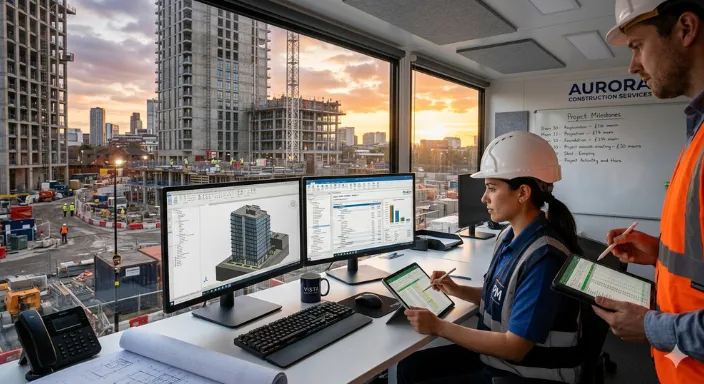

Why Every Contractor Needs Construction Cost Estimating Software in 2026
If you've ever submitted a bid and wondered whether you left money on the table—or worse, priced yourself out of a job you could have won—you already understand the core problem with manual estimating. One transposed number, one forgotten line item, one outdated labor rate can quietly erase the margin you worked hard to build.
The good news is that construction cost estimating software has evolved far beyond basic calculators and spreadsheet templates. Today's platforms use artificial intelligence, live pricing databases, and integrated workflows to help general contractors and remodelers produce faster, more accurate, and more professional bids—without adding administrative overhead or hiring a dedicated estimator.
This guide covers everything you need to know: what the software actually does, which features matter most, how it directly affects your profitability, and how to choose the right platform for your business.
Why Manual Estimating Is Quietly Costing You Money
Before you can appreciate what estimating software does, it helps to understand the real cost of doing things the old way.
Manual estimating—relying on spreadsheets, phone calls to subs, printed price lists, and institutional memory—creates multiple failure points on every single bid. Over 71% of construction firms reported significant errors in manual estimation in 2024, and those errors don't just show up as miscalculations. They show up as scope gaps that you absorb without extra pay, change orders that were never tracked, and defensive markups that price you out of competitive work.
The downstream consequences compound:
- Missed scope items that become your problem once you've signed the contract.
- Slow turnaround that lets faster competitors capture the decision before you've even sent a quote.
- Inconsistent pricing across estimators or projects that erodes your reputation and your margins.
- No historical record to learn from, meaning you make the same pricing mistakes repeatedly.
According to research from the World Bank's Global Construction Outlook, construction cost overruns average 27% across global projects—and inaccurate initial estimates are one of the primary culprits. For small and mid-sized contractors, a 27% budget overrun on the wrong project can be existential.
Estimating software doesn't eliminate every risk, but it systematically removes the most common and costly failure modes from your workflow.
What Construction Cost Estimating Software Actually Does
At its core, construction cost estimating software automates the pricing process from first inquiry to submitted bid. Instead of assembling a quote piece by piece from disconnected sources, these platforms give you a structured environment where takeoffs, pricing, and proposal generation are connected and consistent.
The practical workflow looks like this:
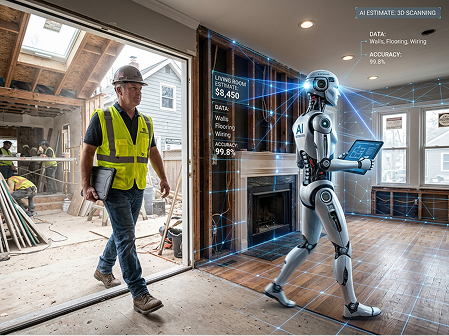
Takeoffs from plans or site data. Modern platforms support 2D and 3D takeoffs from PDFs, blueprints, or even site photos. The software calculates areas, lengths, and volumes automatically, reducing measurement errors and cutting the time you'd otherwise spend with a scale ruler and a highlighter.
Unit-price databases. Labor, materials, and equipment costs are organized in customizable databases that reflect your region, your suppliers, and your standard markup structure. When material prices change, you update the database—not every individual estimate.
What-if scenario modeling. Good software lets you model alternatives (different materials, different phasing, different scope) without overwriting your base estimate. This is valuable for negotiations and for presenting clients with tiered options.
Proposal and contract generation. The estimate feeds directly into a client-ready proposal with your branding, milestone breakdowns, and payment terms—no reformatting or copy-pasting required.
Cost tracking and job performance data. The best platforms connect your estimate to actual field costs, so you can see where your bids were accurate and where they weren't. That feedback loop is how your pricing gets sharper over time.
Transitioning from manual spreadsheets to dedicated estimating software has been documented to improve data accuracy by about 45% on average, with construction companies reporting rework cost reductions of up to 60%. Those aren't abstract statistics—they represent real margin recovered on real jobs.
The Three Ways Estimating Software Helps You Win More Work
Winning bids isn't just about having the lowest number. It's about speed, professionalism, and the confidence that comes from knowing your price is defensible. Here's how estimating software improves each of those factors.
1. Speed: Bid More Jobs Without Burning Out
The slower your estimating process, the fewer opportunities you can realistically pursue. If it takes you three days to produce a quote, you'll pass on jobs that have tight decision windows—or submit a bid after the homeowner has already committed to someone else.
AI-enabled platforms now trim bid preparation time by up to 40%, according to market analysis of the construction estimating software sector. For many contractors, that shift moves turnaround from days to hours—a meaningful competitive advantage when clients are comparing two or three bids simultaneously.
Platforms like Eano use an AI-powered "Quick Start" approach where you drop a project description, email thread, or photo into the system and receive a structured draft estimate within minutes. That draft is editable, brandable, and ready to send—without starting from scratch on every inquiry.
One Eano Pro user put it plainly: "I could just copy and paste, and that's like 10 minutes, done. The fastest estimating system I've ever used."
When you can respond to a lead the same day it comes in, you're not just saving time—you're sending a signal to the client that you're organized and ready to execute.
2. Accuracy: Stop Leaving Money on the Table
Every manual estimate carries invisible risk. The line items you forgot, the scope you underpriced, the change order you never formally captured—these aren't failures of effort, they're failures of system. Estimating software replaces ad-hoc memory with structured checklists, templates, and pricing logic that apply consistently on every job.
The practical results are significant. Contractors who move from spreadsheets to dedicated platforms report accuracy improvements of around 42-45%, with fewer costly overruns and less need for defensive padding in their markups.
For remodelers specifically, Eano's AI estimating tools for remodelers are designed to calculate costs for materials, labor, and project scope from basic project inputs—giving you a reliable starting point you can refine rather than a blank page you have to fill from scratch.
The change-order piece matters too. Many contractors absorb small scope additions informally, which adds up to thousands of dollars in uncompensated labor per year. Estimating software with integrated change-order workflows captures those extras formally, so they become billable rather than buried.
3. Professionalism: Close Deals Faster
Clients don't evaluate your technical skill during the bidding phase—they evaluate your professionalism, clarity, and responsiveness. A well-structured, branded proposal that clearly shows milestones, payment terms, and scope communicates something a messy spreadsheet PDF never can: that you run a real business with real systems.
Eano's construction proposal software generates client-ready proposals directly from your estimate, complete with milestone-based pricing, eSign capability, and a client portal where homeowners can track project progress, view documents, and see when the next payment is due. That level of transparency reduces back-and-forth, builds trust, and accelerates the decision process.
Contractors using all-in-one estimating and proposal tools consistently report closing proposals faster and reducing the client communication overhead that tends to consume evenings and weekends.
Core Features to Look for When Evaluating Software
Not all estimating platforms are built the same. Here's what separates serious contractor tools from glorified calculators.
Digital Takeoffs and AI Scope Capture
The fastest platforms don't require you to manually input every dimension. They accept PDFs, plan images, and even unstructured inputs—emails, inspection reports, handwritten notes—and extract the relevant project data automatically. Eano's AI for construction estimating uses machine learning to identify scope details from uploaded materials and build a structured estimate, which you then review and adjust rather than building from zero.
This capability is especially valuable for contractors who handle high inquiry volume and need to respond quickly without dedicating hours to each initial quote.
Customizable Pricing Databases
Your unit costs should reflect your actual suppliers, your local labor market, and your standard markup structure—not generic national averages. Look for platforms that let you build and update pricing databases over time, and that apply those rules consistently across every estimate without requiring manual enforcement.
This matters particularly for contractors who want to delegate estimating tasks to team members without worrying that each person will use different numbers or apply markup inconsistently.
Integrated Proposal and Contract Generation
The estimate and the proposal should be the same document, not two separate things you maintain in parallel. Platforms that generate client-ready proposals directly from the estimate eliminate the risk of discrepancy between "what you priced" and "what the client signed."
Even better are platforms that include eSign functionality, so the client can approve and execute the contract from the same link where they reviewed the proposal—removing the print-scan-email cycle that adds days to your sales process.
Change Order Management
Eano's AI-powered change order management allows contractors to update scope in real time—uploading a new plan or description and generating a revised cost breakdown instantly. This keeps clients informed of cost impacts before work begins, which is the cleaner and more professional way to handle scope changes compared to informal conversations that become disputed later.
Cost Tracking and Job-Level Profitability
Estimating doesn't end when the client signs. The best platforms connect your submitted estimate to actual costs as the job progresses, flagging variances early and generating profitability reports at the job level. This feedback loop is how you develop a pricing instinct grounded in real data rather than optimism.
CRM and Lead Management Integration
For most contractors, the estimating process begins with a lead, not a formal inquiry. Platforms that connect construction CRM software with estimating let you move from "someone submitted a contact form" to "I just sent a structured quote" without switching systems or re-entering data. That continuity prevents leads from falling through the cracks during busy periods.
Why an All-in-One Platform Beats a Standalone Estimating Tool
Many contractors start by looking for an estimating module and end up discovering that their real problem is a fragmented workflow. Estimating in one app, project management in another, CRM in a spreadsheet, and invoicing in a third tool creates a set of problems that no single feature can solve:
- Data re-entry across systems creates errors and wastes time.
- No one has a complete picture of job status, payment status, or lead pipeline.
- Estimates become static documents that disconnect from how the project actually unfolds.
The construction estimating software market has grown to reflect this reality, with subscription-based integrated platforms now accounting for over 63% of the market and cloud-based tools representing 68% of adoption. The industry shift is clear: contractors want connected systems, not point solutions.
An all-in-one platform like Eano Pro connects the entire workflow—from the first CRM lead through estimating, proposal, contract, scheduling, field tracking, and payment milestones. When every stage shares the same data, your estimate doesn't become a forgotten document the moment the job starts. It becomes a living reference that guides execution and financial management throughout the project.
The time savings compound: contractors using Eano's integrated workflow report saving 15 or more hours per estimate by eliminating the manual work of translating between systems.
How Estimating Software Directly Improves Profitability
The business case for construction cost estimating software is usually made in terms of time savings—and those are real. But the profitability impact runs deeper than efficiency.
Recovering missed line items and change orders.
Structured estimating templates ensure standard items are included on every quote. When a client requests an extra or a scope change occurs, a formal change-order workflow captures it immediately rather than letting it slip through as absorbed cost. Many contractors recover $500 to $1,000 or more per project simply by formalizing items they were previously handling informally.
Bidding more confidently on the right jobs.
When your estimates are grounded in real data and consistent logic, you can model scenarios quickly and decide which jobs are worth pursuing at what margin. This selective discipline protects you from projects that look attractive on the surface but erode profitability in execution.
Reducing administrative time.
Hours spent re-formatting proposals, chasing down signatures, and fielding basic status questions from clients don't generate revenue. Platforms with client portals and milestone dashboards can cut that kind of support communication by 30 to 40%, freeing your attention for work that actually moves the business forward.
Building a pricing intelligence asset.
Every completed project, with its estimate-versus-actual comparison, makes your future estimates more accurate. Over time, your pricing database becomes a competitive advantage that reflects your true costs, your specific suppliers, and the project types where you're most efficient.
How to Choose the Right Construction Cost Estimating Software
The right platform for your business depends on the kind of work you do, the size of your team, and where the biggest gaps currently exist in your workflow. Here are the questions that matter most in an evaluation:
Does it fit how you actually work?
The best platform is the one your team will actually use. Look for tools with low-friction onboarding, flexible input methods, and an interface that doesn't require an IT background to navigate.
Does it connect estimating to the rest of your workflow?
A standalone estimating module that doesn't talk to your CRM, scheduling, or payment tracking creates new coordination problems even as it solves old ones.
Does it scale with your business?
If you're currently running small residential remodels but want to grow into larger commercial or multi-phase work, choose a platform that handles both—so you're not forced to switch tools mid-growth.
Does it make your client experience better?
The proposal is often the first structured document a client receives from you. It should reflect the quality of your work, not the limitations of your software.
For general contractors handling a range of residential and light-commercial projects, an integrated platform like Eano Pro addresses all four criteria: AI-generated estimates with customizable pricing, connected CRM and project management, milestone-based proposals with eSign, and a client portal that keeps homeowners informed without requiring your direct involvement in every status update.
.png)