
California Meal Break Penalties: What Contractors Need to Know Before Your Next Payroll Run
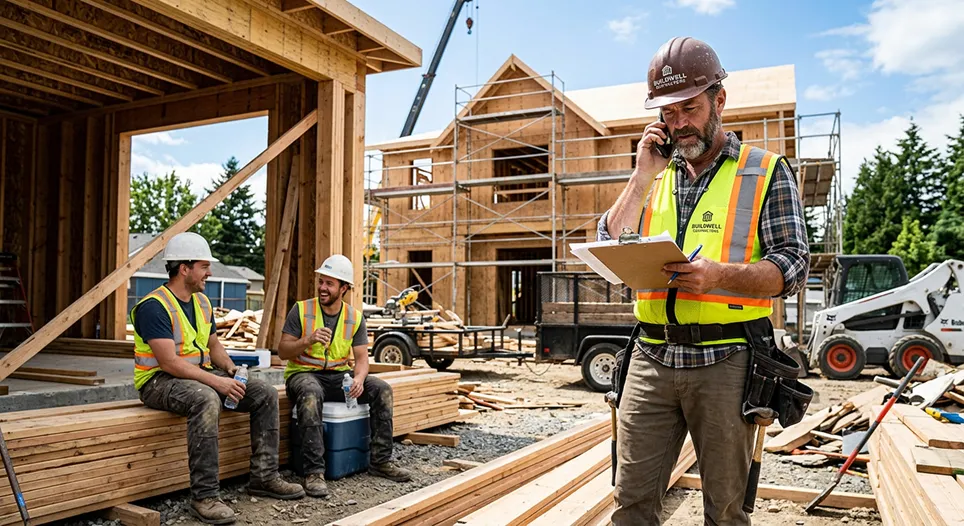
Concrete is curing. The inspection window just opened. A delivery truck is waiting to unload. The electrician is asking questions while the homeowner wants an update before leaving for work.
Construction doesn't always happen on a predictable schedule.
That's one reason meal break compliance can become challenging for contractors. Crews often work through changing priorities, unexpected delays, and weather conditions that make stopping exactly on schedule difficult. While everyone wants to keep the project moving, employers also need systems that help them meet California's labor requirements.
For many contractors, meal break violations aren't the result of intentionally denying employees a break. They happen because breaks aren't consistently tracked, supervisors aren't sure what's required, or payroll records don't accurately reflect what happened on the jobsite.
Fortunately, a few operational improvements can go a long way toward reducing risk.
Why Meal Break Compliance Matters
Meal breaks aren't just another payroll checkbox.
They're part of California's broader effort to ensure employees have an opportunity to rest during the workday.
For employers, meal break records also become important documentation if questions arise months—or even years—later about how employees were paid.
Without accurate records, employers may have a harder time showing what actually occurred during a shift.
That's why many construction companies have moved away from handwritten timesheets and toward digital time tracking systems that record work hours and breaks as they happen.
Why Construction Is Different
Few industries face as many scheduling variables as construction.
A typical day might include:
- Multiple job sites
- Travel between projects
- Weather delays
- Concrete pours
- Equipment deliveries
- Inspection windows
- Emergency repairs
- Homeowner schedule changes
Every one of those can interrupt a carefully planned day.
Because of that, contractors often rely on field supervisors to manage break schedules while balancing the needs of the project.
Without consistent procedures, though, documentation can become inconsistent.
How California Meal Break Rules Generally Work
California meal break requirements depend on factors such as the length of an employee's shift and other circumstances.
Generally speaking:
- Employees working shifts over certain lengths are often entitled to an unpaid meal period.
- Longer shifts may require an additional meal period depending on applicable law.
- Specific exceptions, waivers, and industry rules may apply in certain situations.
Because labor laws can be nuanced and change over time, employers should consult current legal guidance or qualified employment counsel regarding their specific obligations.
The important operational takeaway is simple:
If your company is responsible for tracking employee hours, it should also have a reliable process for documenting meal periods.
Where Contractors Usually Run Into Trouble
Rarely is it because someone intentionally skipped lunch.
Instead, problems often begin with inconsistent recordkeeping.
Examples include:
Employees forget to clock out for lunch
The break happened.
It simply wasn't recorded.
Lunch is written on paper later
Instead of recording breaks in real time, employees reconstruct the day at the end of the shift.
Memory isn't always accurate.
Supervisors approve incomplete timecards
When payroll deadlines arrive, supervisors sometimes approve missing information without realizing it.
Crews eat while working
This is common during busy projects.
However, simply grabbing a sandwich while continuing to work isn't necessarily the same as taking a compliant meal period.
Common Meal Break Documentation Problems
Why Documentation Matters
One of the biggest misconceptions contractors have is that documentation only matters if someone files a lawsuit.
In reality, accurate records help every payroll cycle.
Good documentation can make it easier to:
- Review employee hours
- Confirm overtime
- Verify lunch periods
- Answer payroll questions
- Prepare payroll reports
- Resolve misunderstandings quickly
When records are clear, everyone spends less time debating what happened.
Paper Timecards vs Digital Break Tracking
Paper systems have worked for decades.
But as companies grow, they become increasingly difficult to manage.
Consider what happens when a supervisor oversees three job sites in one week.
By Friday afternoon they may have:
- dozens of handwritten timecards
- lunch corrections
- overtime notes
- weather delays
- missing signatures
Now payroll has to reconstruct everything before checks are issued.
Digital systems reduce much of that administrative work.
Comparing Break Tracking Methods
What If Someone Misses a Meal Break?
Meal break premium pay
If a non-exempt employee is not provided a legally compliant meal period, the employer owes:
- 1 additional hour of pay at the employee's regular rate of pay for each workday a meal period violation occurs.
This is often called a meal period premium.
It's per day—not per missed meal
If an employee misses multiple meal periods in the same day, they generally receive:
- 1 hour of premium pay for meal period violations that day, not one hour for each missed meal.
Rest breaks are separate
Meal and rest breaks are treated independently.
If an employee is denied both a compliant meal period and a compliant rest break on the same day, the employer may owe:
- 1 hour of premium pay for the meal violation
- plus 1 hour of premium pay for the rest break violation
Maximum: 2 hours of premium pay per workday (one for meal, one for rest).
Example
An employee earning $32/hour:
- Missed meal break Monday → $32 premium
- Missed meal + rest break Tuesday → $64 premium
- Missed two meal breaks Wednesday (10+ hour shift) → $32 premium for meal violations that day (assuming no separate rest break violation).
Other potential exposure
The premium pay is often just the beginning. If violations are widespread or not paid correctly, employers can also face:
- Claims for unpaid wages
- Waiting time penalties (if owed wages aren't paid upon termination)
- Wage statement penalties if premiums should have appeared on pay stubs
- Civil penalties in certain enforcement actions
- Attorneys' fees and class or representative actions in some cases
For most contractors, the everyday cost is the premium itself—one extra hour of pay for each day with a meal break violation, plus potentially another hour if there was also a rest break violation.
Check out the full rundown on California Labor Code 226 ->>
Building Better Break Policies
Good policies don't need to be complicated.
Consistency is more important than complexity.
Some practical habits include:
- Train new employees on timekeeping procedures.
- Encourage employees to record breaks in real time.
- Review missing punches before payroll closes.
- Ask supervisors to verify unusual shifts.
- Maintain organized digital records.
- Regularly review payroll reports for inconsistencies.
These habits improve both payroll accuracy and job costing.
How Better Time Tracking Supports Compliance
Many payroll issues begin long before payroll is processed.
They start when hours aren't recorded accurately.
Modern construction time tracking systems help simplify this by allowing employees to:
- Clock in from the field
- Record meal periods
- Submit digital timecards
- Track hours by project
- Send information directly to supervisors for approval
The office receives cleaner information while crews spend less time filling out paperwork.
How Eano Pro Helps Contractors Track Time and Meal Breaks
Construction management software isn't a substitute for legal advice, nor can it guarantee compliance with labor laws. What it can do is help contractors create more consistent records and simplify the payroll process.
Eano Pro includes built-in mobile construction time tracking designed specifically for construction companies. Employees can clock in and out directly from the jobsite, record their work hours digitally, and submit timecards for supervisor approval. Instead of relying on handwritten notes or end-of-week estimates, contractors have access to organized labor records that are easier to review before payroll is processed.
Because hours are tied to specific projects, contractors also gain better visibility into labor costs while reducing manual payroll entry. Digital records, approval workflows, and payroll-ready reporting help create a more consistent process for documenting employee time and responding to payroll questions.
For growing contractors managing multiple crews, having one centralized system can reduce administrative work while making payroll preparation much more efficient.
Meal Break Compliance Is Really About Good Processes
The companies that handle payroll most smoothly usually aren't doing anything extraordinary.
They simply have consistent systems.
Employees know how to record time.
Supervisors know what to review.
Payroll receives complete records.
Whether you're managing five employees or fifty, investing in better documentation today can prevent unnecessary headaches later.
Final Thoughts
Construction projects move fast, and jobsite priorities change constantly. That reality makes accurate timekeeping even more important.
Meal break compliance isn't only about following labor laws—it's about maintaining reliable payroll records that employees and employers can trust. When timecards are complete, supervisors review them consistently, and payroll has accurate information, everyone benefits.
Digital time tracking tools won't replace thoughtful management or legal guidance, but they can remove much of the administrative friction that often leads to payroll mistakes. For contractors focused on growing their business, creating dependable systems today is one of the simplest ways to reduce risk tomorrow.



.png)