

Reducing Miscommunication: The Hidden Benefit of Construction Management Software
Most jobsite problems don't start as disasters—they start as something small that no one thinks twice about in the moment.
Someone mentions a change in passing. A subcontractor hears part of it and fills in the rest. A revised plan gets sent, but not to the right person—or it gets buried in a thread nobody revisits. At the time, everything still feels under control.
Then a few days later, you're tearing something out, reordering materials, or explaining to a homeowner why the timeline just slipped again.
If you've been in construction for any amount of time, you've seen this play out more than once. It's common enough that people start to accept it as part of the job—but in reality, it's one of the biggest and most preventable drains on your time and margin.
What Communication Actually Looks Like on a Real Job
In theory, communication sounds straightforward. Share updates, keep everyone aligned, and move forward.
In practice, it rarely works that cleanly.
On most jobs, communication is spread across a mix of tools and moments. You've got text messages flying throughout the day, emails that matter mixed in with ones that don't, phone calls when something needs immediate attention, and quick conversations on-site that never quite make it into any system. Photos get taken, but they're saved on someone's phone or buried in a thread.
None of this is inherently broken. It's just disconnected.
The real issue is that no single place holds the full picture. So when someone tries to understand what's actually happening on a job, they're piecing it together from fragments—and that's where things start to drift.
Where Things Start to Go Sideways
Most problems don't come from someone making a huge mistake. They come from people doing reasonable work based on slightly wrong information.
A subcontractor shows up thinking they're ready to start, only to find the previous phase isn't finished. A crew builds from a plan that was accurate last week but has since changed. Materials get ordered based on outdated quantities because no one flagged the update.
Individually, these situations don't seem dramatic. But construction is highly sequential, and small misalignments tend to compound quickly. What starts as a minor gap in communication can ripple into delays, added costs, and a lot of unnecessary frustration.
The Money Leak Nobody Tracks
Most contractors are disciplined about tracking the obvious costs—labor, materials, equipment. What tends to fly under the radar is the cost of miscommunication.
It shows up indirectly: doing work twice, crews waiting around for clarification, last-minute changes that could have been avoided, or tense conversations with clients and subcontractors over what was or wasn't agreed upon.
A 2018 study by FMI Corporation and PlanGrid, based on a survey of nearly 600 construction leaders, found that miscommunication and poor project data account for 48% of all rework on U.S. construction jobsites — and put the combined annual cost of poor communication and bad project data at $31.3 billion in the U.S. alone. That's not a rounding error. It's that steady erosion of margin where nothing feels catastrophic, but jobs don't perform as well as they should.
Why "Let's Communicate More" Usually Backfires
When communication issues start to surface, the instinct is to increase communication. More messages, more calls, more follow-ups.
On paper, that sounds like the right move. In reality, it often makes things worse.
More communication across the same fragmented channels just creates more noise. Important details get buried faster, threads become harder to follow, and people naturally start skimming or missing things. Instead of clarity, you end up with overload.
The real problem isn't how much communication is happening—it's how it's organized and whether people can reliably find what they need.
At a certain point, trying to manage this across texts, emails, and conversations just isn't reliable. This is where having a centralized system starts to matter—and it's exactly the role that using construction management software is meant to fill.
What Actually Fixes It
The shift happens when communication is no longer scattered, but tied directly to the work itself.
Instead of updates floating between texts, emails, and conversations, everything is anchored to the job, the task, or the timeline it relates to. That way, when someone needs to understand what's going on, they're not asking around—they're looking in one place and getting a clear answer.
This doesn't necessarily mean more communication. It means communication that's easier to follow, easier to reference, and far less dependent on memory.
This leads to the pillars that allow construction teams to scale, when your workflow and team is well oiled.
Subcontractors: Where This Breaks Down Fastest
Subcontractor coordination is where communication issues tend to surface the quickest.
In most cases, problems don't come from a lack of skill. They come from gaps in alignment. A subcontractor may not have the full scope, may not be aware of a recent change, or may be working off timing that's no longer accurate.
From their perspective, they're doing exactly what they were told. From yours, something has gone off track.
That's when you start hearing things like, "That's not what I bid," or "No one told me that changed." At that point, you're already dealing with the consequences—rescheduling, renegotiation, or rework.
When communication is clearer and easier to reference, these situations become far less common. It's not that subcontractors behave differently; it's that they have better information to work from.
Eano Pro has vendor management to bid the work, roll it into accurate construction estimates, keep compliance docs organized for each vendor such as liability insurance, licenses, and worker's comp.
Clients need communication, too
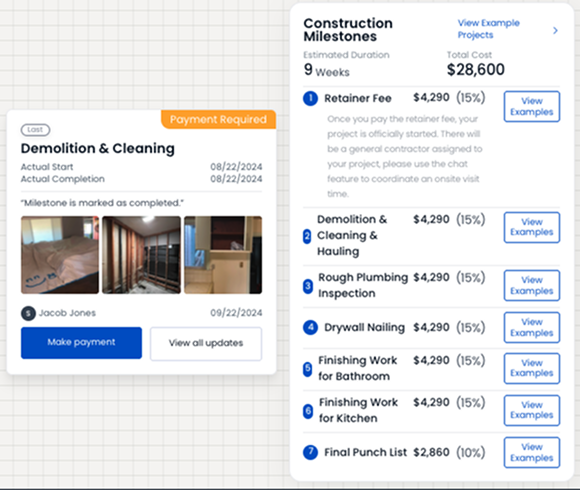
You can proactively manage the communication to client to bring more confidence to the job. Setup milestones so clients and the team understand what work needs to be done before payments.
Updated logs with photos help keep clients updated before they ask, "How's it going? When will it be done?"
A Situation That Probably Feels Familiar
A contractor I spoke with was running several remodels at once—nothing out of the ordinary, and overall a well-run operation.
Their communication relied heavily on texts, calls, and in-person updates. It worked fine until volume increased.
On one project, a layout change was discussed with the client and agreed to on-site. Everyone involved at that moment understood the plan, and it felt resolved.
But the update was never formally documented or shared with the installer.
When the crew arrived, they followed the original layout. By the time the mistake was caught, the work had already been completed. What followed was predictable: tear-out, additional labor, a delayed schedule, and a frustrated client.
No one failed to communicate—the information just didn't live anywhere reliable.
Where Software Actually Helps (When It's Done Right)
Construction software doesn't fix communication by adding more channels—it fixes it by removing the uncertainty around where information lives.
When it's implemented well, communication is no longer separate from the work. Conversations are tied to specific jobs and tasks, updates are visible in context, and files are stored where they're actually needed.
Instead of wondering whether something was sent or who has the latest version, teams can quickly find what they need and move forward with confidence.
How Eano Pro Fits Into This
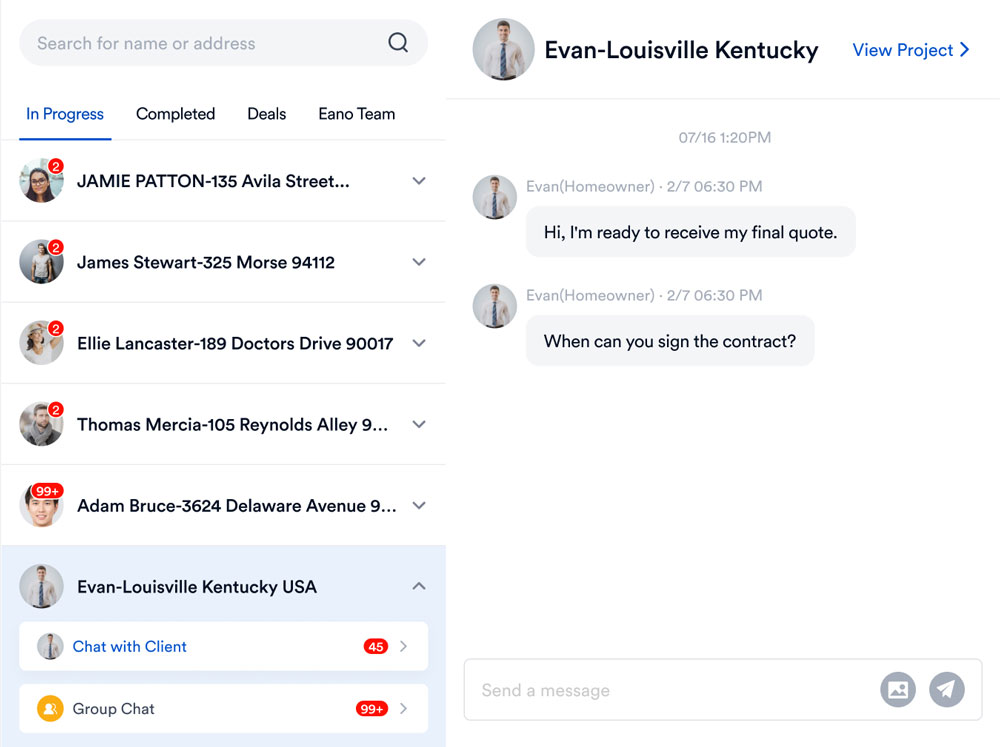
Eano approaches this by keeping communication connected to the rest of your workflow instead of letting it exist in isolation.
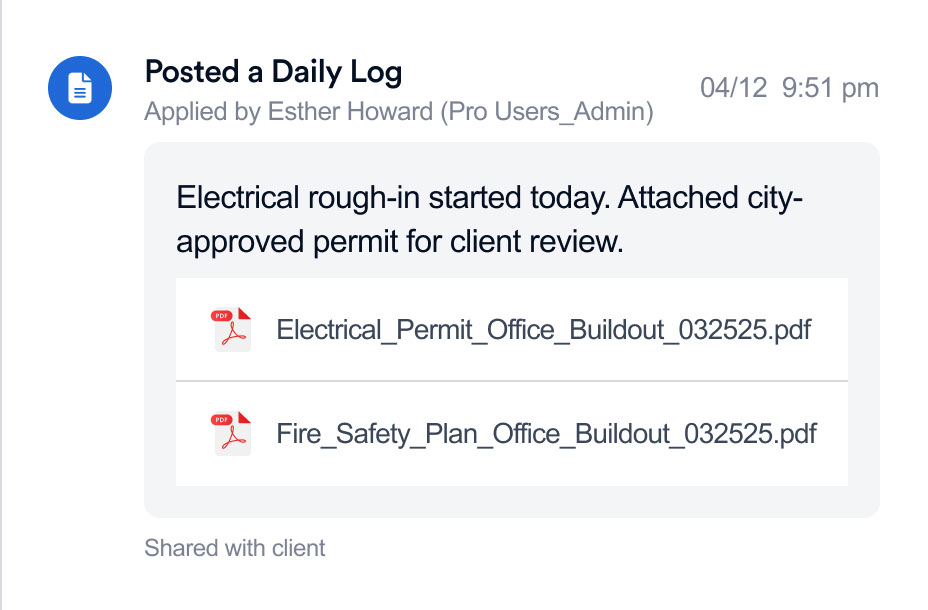
Messages are tied directly to projects and tasks, which makes it easier to follow what's happening without digging through threads. Photos and documents are stored alongside the job, so you're not relying on someone's phone or memory to track down key details later.
One piece that tends to make an immediate difference is visibility on the client side. When homeowners can log in and see progress, updates, and what's coming next, it reduces a lot of the routine check-in calls and emails. That alone can free up a surprising amount of time.
More importantly, updates don't rely on manual follow-up. When something changes, the right people see it without needing to be chased down.
What This Changes Day to Day
Once communication is more structured, the day-to-day experience of running jobs starts to feel different.
There's less time spent clarifying basic details or answering the same questions multiple times. Fewer issues stem from outdated information, and when problems do come up, they're easier to diagnose because the context is already there.
Over time, this leads to smoother projects, more predictable timelines, and fewer situations where you're reacting to something that could have been avoided.
Why This Matters More as You Grow
The more jobs you take on, the harder it becomes to manage communication informally.
What works when you're running one or two projects starts to break down when you're juggling five, ten, or more. There are simply too many moving parts and too many people involved for information to stay aligned without a system.
At that point, communication either becomes structured—or it becomes a constant source of stress.
Contractors who put systems in place early tend to scale more smoothly because their processes don't rely on memory or constant oversight. Instead, information flows in a way that teams can actually keep up with.
Final Thought
Miscommunication in construction usually isn't about people failing to do their jobs—it's about how information is handled across a project.
When communication is scattered across different tools and conversations, even experienced teams end up working with incomplete or outdated information. That's where mistakes, delays, and frustration start to build.
By contrast, when communication is organized in a way that's easy to access and tied directly to the work, teams spend less time guessing and more time executing. The goal isn't to communicate more—it's to make communication clear enough that everyone is working from the same understanding at any given moment.
Ready to see what centralized communication could look like on your jobs? Book a demo with Eano Pro.



.png)