
How Growing Contractors Keep Their Estimates Organized
When a contracting business starts picking up momentum, estimating can quickly become the part of the day that causes the most friction. One job needs a quick turn, another needs a revised scope, and a third comes back with questions from a client who wants every line item explained. If the team is still relying on scattered notes, old spreadsheets, and memory, the process starts to slow everything down.
That is why growing contractors benefit from having a clear estimating system from the start. A reliable construction estimating template gives every bid the same structure, which makes it easier to compare jobs, track costs, and present a professional proposal. It does not just save time. It also helps contractors protect margins and reduce the little mistakes that can turn a profitable job into a stressful one.
Other free resources:
The need for better organization is not just a hunch. According to the Project Management Institute, poor project performance can waste significant time and money, with weak communication and planning consistently ranking among the biggest causes of overruns. In construction, where jobs are built on narrow margins and fast-moving schedules, even small estimating errors can ripple through the entire project. That is why an organized estimating process matters long before the first hammer swings.
Why estimating gets messy as a business grows
In the early days, a contractor can often get by with a handful of repeatable jobs and a rough mental system. But growth changes everything. More leads come in. More trades are involved. More people need access to the numbers. Suddenly, estimating is no longer a simple back-office task. It becomes part sales tool, part planning tool, and part recordkeeping system.
The trouble starts when each bid is built differently. One project includes labor in one place and materials in another. Another uses a different markup method. A third has missing notes on allowances or exclusions. When there is no standard format, comparing opportunities becomes difficult and follow-up gets sloppy. A contractor may even lose track of which version was sent to which client.
That is where a consistent template changes the game. Instead of reinventing the wheel every time, the team can pull from the same structure, update the job-specific details, and move faster without losing control.
What a strong estimating template should include
A good estimating template should do more than list costs. It should guide the estimator through a complete picture of the job. At minimum, it should include:
- Client name and project address
- Job scope or description
- Labor costs
- Material costs
- Equipment or rental costs
- Subcontractor expenses
- Overhead and markup
- Allowances and exclusions
- Timeline or expected start date
- Total price and payment terms
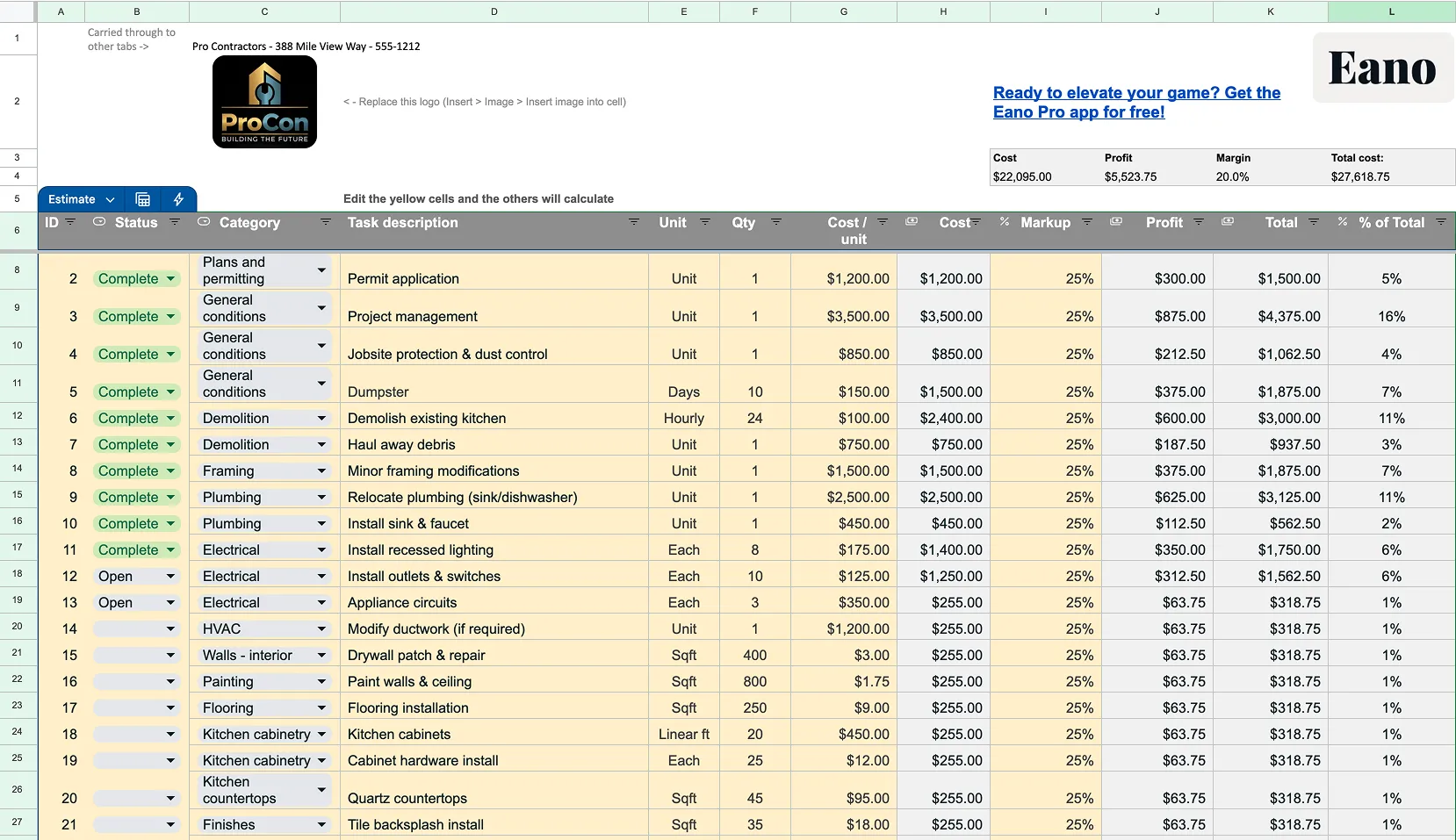
That level of detail makes estimates easier to audit later. If the client asks how a number was calculated, the answer is already there. If the team needs to revise the bid, they can update a few sections without rebuilding the whole document.
Just as important, a template helps keep language consistent. Contractors know that a vague estimate can create confusion, especially when the scope changes midstream. Clear notes about what is included and what is not included help prevent arguments later.
How organization leads to better bidding
One of the biggest advantages of a structured estimating process is speed. When the same format is used every time, estimators spend less energy figuring out where information belongs. That means more time can go into pricing strategy and less into formatting.
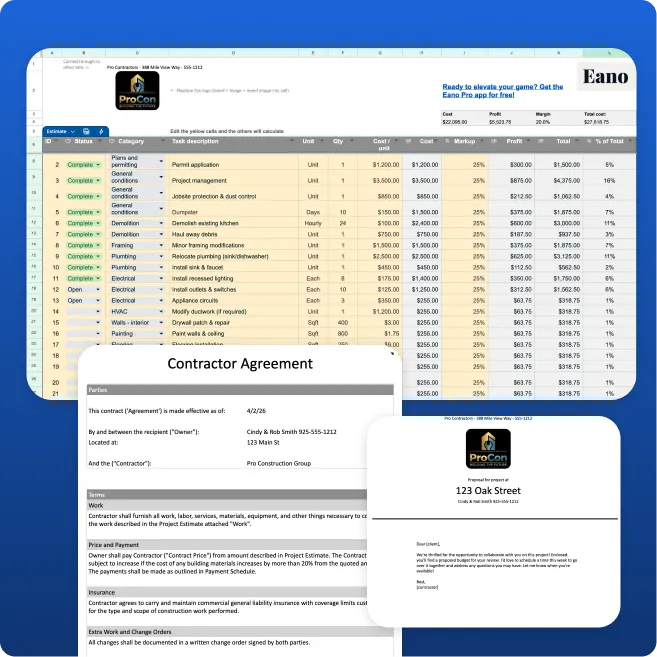
The free Eano contracting worksheet then outputs to a client-facing estimate that removes markup, and rolls up cost categories together so everything is organized.
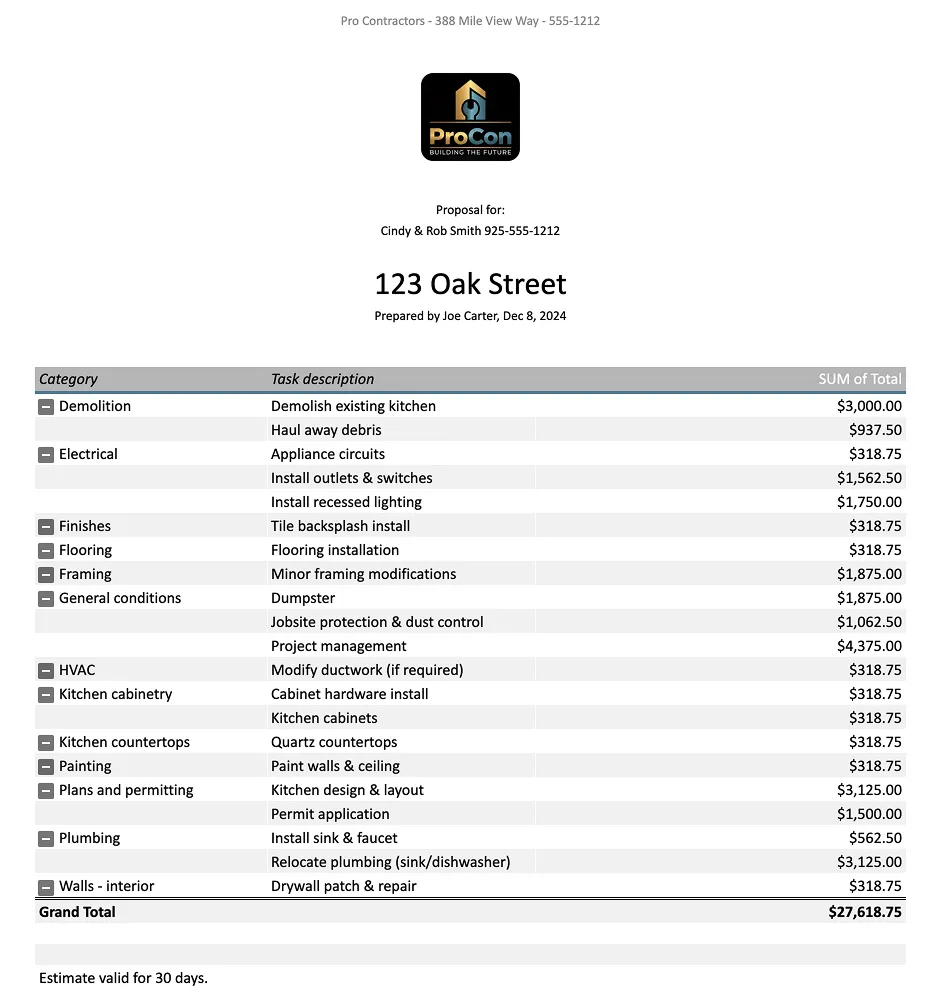
Organization also improves accuracy. A repeatable process makes it easier to spot missing items before a bid is sent. Maybe trim work was left out. Maybe disposal fees were forgotten. Maybe the permit cost was never added. A template creates a built-in checklist that helps catch those gaps.
And then there is the client experience. People are far more likely to trust a contractor who sends a clean, organized estimate than one who sends a loose text message with a few rough numbers. A well-presented proposal signals professionalism. It shows that the contractor is thoughtful, prepared, and serious about the work.
Why growing contractors need more than spreadsheets alone
Spreadsheets are useful, and many contractors rely on them for good reason. They are flexible, familiar, and easy to update. But once a business begins handling multiple active bids, spreadsheets can become harder to manage than they first appear. Version control becomes messy. Files get duplicated. An estimate sent last week may no longer match the latest numbers. Someone may accidentally overwrite formulas or use an outdated markup rate.
That is why growing teams often reach a point where they need more structure than a spreadsheet can provide on its own. A more organized workflow brings estimates, notes, follow-ups, and customer communication into one system. It reduces the back-and-forth that happens when project details live in too many places.
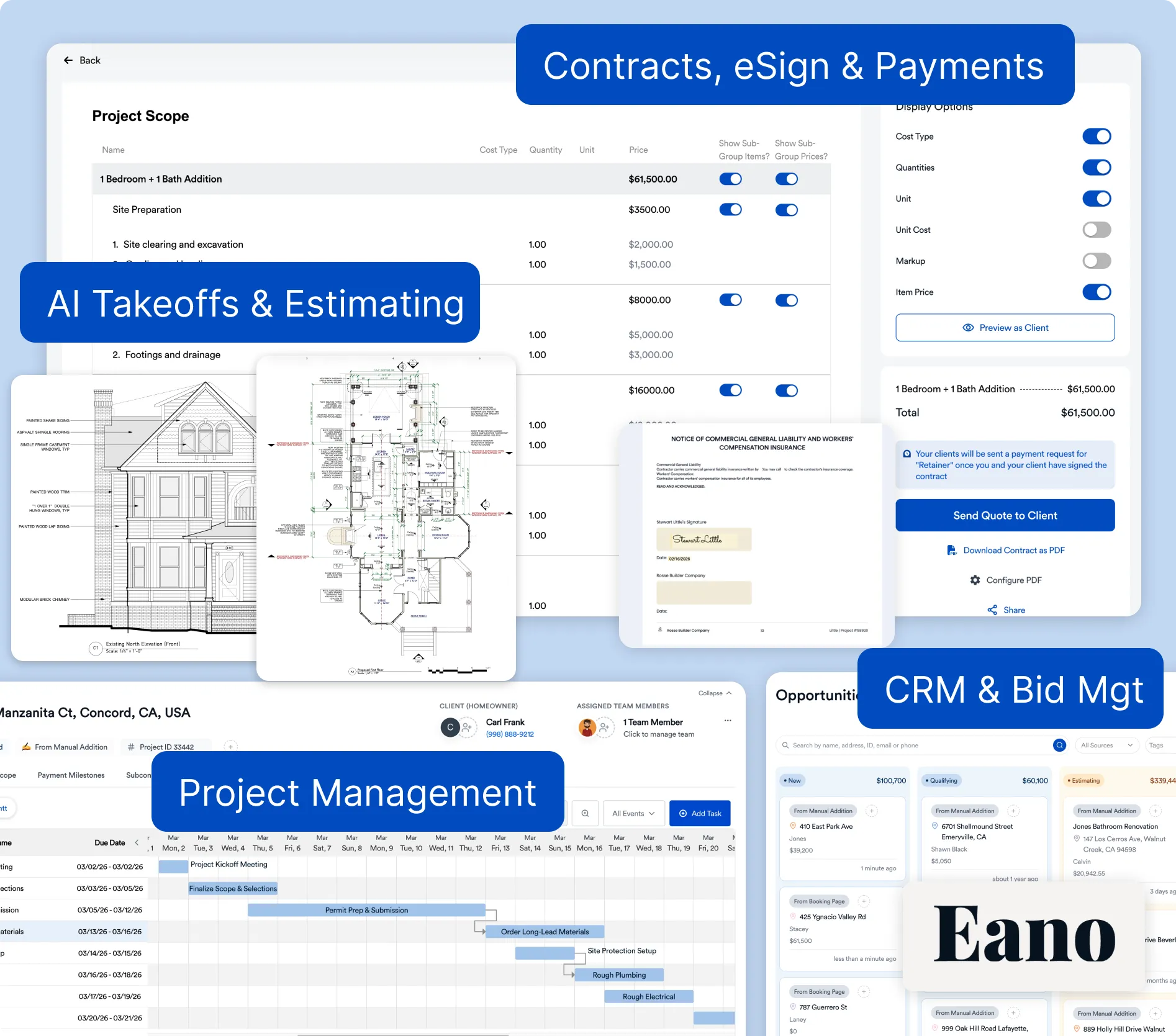
This is also where Eano Pro can make a real difference. Instead of treating estimating as an isolated task, Eano Pro helps contractors stay on top of the full workflow around each job. That includes managing client communication, keeping proposal details organized, and reducing the odds that an important update slips through the cracks. For a business that is trying to grow without losing its grip on quality, that kind of support matters.
How to keep estimates consistent across your team
Once a contracting business has more than one person involved in estimating, consistency becomes essential. The goal is not just to make estimates look similar. The goal is to make sure everyone is pricing work the same way and using the same assumptions.
One simple way to do this is to create a standard estimating process. That process should answer a few basic questions:
- Who collects the job details?
- Who reviews material pricing?
- Who approves the final number?
- What margin or markup rules are used?
- How are revisions handled?
When those answers are documented, the team can work faster and with fewer misunderstandings. It also becomes easier to train new staff. Instead of teaching someone by trial and error, contractors can hand them a process that already works.
Another smart move is to keep a record of completed estimates and actual job costs. Over time, that comparison helps reveal whether the company is pricing accurately. If estimates are consistently too low, the business can adjust before margins suffer. If some job types tend to run higher than expected, the team can update future bids accordingly.
How Eano Pro supports organized estimating
Contractors often do their best work when they are not buried in admin tasks. Eano Pro helps create that breathing room. By keeping project information, client communication, and proposal details in one place, it becomes easier to stay organized from the first conversation through the final bid.
That matters because estimating is rarely a one-and-done task. Prospects ask for revisions. Homeowners change their minds. Scope details evolve as the conversation continues. With Eano Pro, contractors can keep everything tied together so that updates are easier to track and nothing important gets lost in a thread of texts or scattered documents.
It also helps contractors present a more polished experience. When estimates look clean and the communication stays consistent, clients feel more confident moving forward. That confidence can be the difference between winning a project and losing it to a competitor who simply appears more put together.
Practical habits that keep estimates in order
Templates and tools are important, but the day-to-day habits matter too. The contractors who stay organized usually do a few things consistently:
- They save all bid notes in one place
- They update pricing regularly
- They use the same naming system for files
- They review each estimate before sending it
- They track follow-ups after proposals go out
These habits may sound small, but they add up quickly. A company that does them well will usually spend less time cleaning up mistakes and more time closing work.
There is also a confidence factor. When a contractor knows the estimate is built on current numbers, clear assumptions, and a repeatable process, it is easier to stand behind the bid. That confidence comes through in client conversations.
Building a system that scales
The best estimating system is one that can grow with the business. What works for five jobs a month may not work for twenty. As demand rises, contractors need a process that can handle more activity without becoming chaotic.
That means standardizing the template, documenting pricing rules, reviewing completed jobs for accuracy, and using software that helps keep the work organized. A construction estimating template is a strong starting point, but it becomes much more powerful when paired with a system that supports communication, follow-up, and project visibility.
For many contractors, that combination is the sweet spot. It keeps the estimating process efficient without making it rigid. It creates enough structure to avoid mistakes while still leaving room for the judgment that great contractors bring to every job.
Growth is exciting, but it can expose weak spots fast. If estimating has become a scramble, the fix is usually not to work harder. It is to work more consistently. Start with a dependable template, keep your process simple, and use tools like Eano Pro to bring the moving parts together. That way, estimates stay organized, clients get faster answers, and the business is better positioned to grow without losing control of the details.