How Stud Spacing Impacts Your Framing Material Costs
Why Stud Spacing Matters More Than You Think
When people talk about framing costs, they usually focus on lumber prices first. That makes sense, but it is only part of the picture. Stud spacing can quietly change how much material you buy, how much time the crew spends on site, and even how cleanly the job moves from framing to drywall.
If you are trying to keep a project on budget, spacing is one of those details worth slowing down for.
Why Use a Framing Calculator
That is where using a construction construction framing calculator becomes so useful. Instead of guessing how many studs, plates, headers, and sheets you may need, you can test different layouts before ordering anything.
A small change from 16 inches on center to 24 inches on center may not sound dramatic, but over an entire house or addition, it can shift the budget in noticeable ways.
With a framing calculator, you can:
- Compare different stud spacing layouts
- Estimate total material quantities more accurately
- Reduce over-ordering or under-ordering
- Align your estimate with real project conditions
How Stud Spacing Impacts Material Costs
At a basic level, stud spacing determines how many vertical framing members are needed along a wall.
- Tighter spacing (16” OC):
- More studs
- More fasteners
- Higher lumber costs
- Wider spacing (24” OC):
- Fewer studs
- Lower upfront material cost
- Potential structural or code limitations
The “cheaper” option is not always better if it creates extra work later or does not meet design requirements.
Why These Decisions Affect Your Budget
Industry data shows that framing decisions have a real financial impact. Residential construction costs are highly sensitive to both material and labor pricing, especially in framing-heavy scopes.
In practical terms:
- A few extra studs per wall adds up quickly
- Framing is one of the first major cost drivers on a project
- Small quantity changes can ripple through the entire budget
Common Stud Spacing Options
For most projects, spacing starts with function.
- 16-inch on center (OC):
- Standard for most walls
- Strong and widely accepted
- Works well with drywall and sheathing
- 24-inch on center (OC):
- Used in select non-load-bearing walls
- Works with engineered systems
- Requires code and design validation
The right choice depends on:
- Load requirements
- Local building codes
- Wall design
- Finish materials
The Hidden Cost: Labor
Material cost is only part of the equation. Labor often gets overlooked.
More studs means:
- More measuring and layout
- More cutting and fastening
- More time per wall
On larger projects, small inefficiencies multiply into hours of extra work.
Crews also move faster when layouts are consistent and simple.
Waste and Material Efficiency
Framing materials come in standard lengths, which means waste is unavoidable—but it can be minimized.
Poor planning can lead to:
- Excess offcuts
- Inefficient sheet usage
- Slower installation
Better planning helps you:
- Align framing with standard sheet sizes
- Reduce awkward cuts
- Improve workflow on-site
How Stud Spacing Affects Finishes
Stud spacing does not just impact framing—it affects everything that comes after.
- Drywall: cleaner seams, easier fastening
- Insulation: more consistent coverage
- Siding: better alignment and performance
A predictable framing grid makes downstream trades more efficient.
Plan Before You Order Materials
This is where planning pays off.
Using a framing calculator allows you to:
- Test multiple layout scenarios
- Get tighter material estimates
- Improve communication with builders and suppliers
When everyone is working from the same numbers, the job runs smoother.
How Eano Pro Helps Streamline the Process
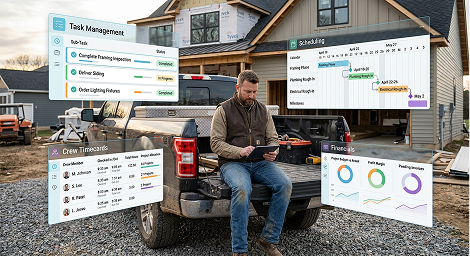
If you are managing a renovation or new build, Eano Pro helps bring structure to the entire process.
With Eano Pro, you can:
- Build more accurate estimates from the start
- Reduce back-and-forth when plans change
- Keep framing decisions tied to your budget
- Improve handoffs between estimating and execution
Think of Stud Spacing as a Lever
Stud spacing is not just a technical detail—it is a budgeting tool.
- Tighter spacing → stronger but more expensive
- Wider spacing → cheaper, but only if design allows
Good estimating means understanding the full impact, not just the lumber price.
Final Takeaway
The best framing plan balances:
- Safety
- Performance
- Labor efficiency
- Cost
Stud spacing plays a role in all four.
If you want better numbers before the first board is cut:
- Use a framing calculator
- Review the plan with your builder
- Use tools like Eano Pro to stay aligned
A little precision at the framing stage can save a lot of stress later.