Sample Estimate for Retaining Wall
Make informed decisions with our detailed breakdown of retaining wall project estimates and proposals designed for homeowners and contractors.
What's Included in the Retaining Wall Construction Estimate?
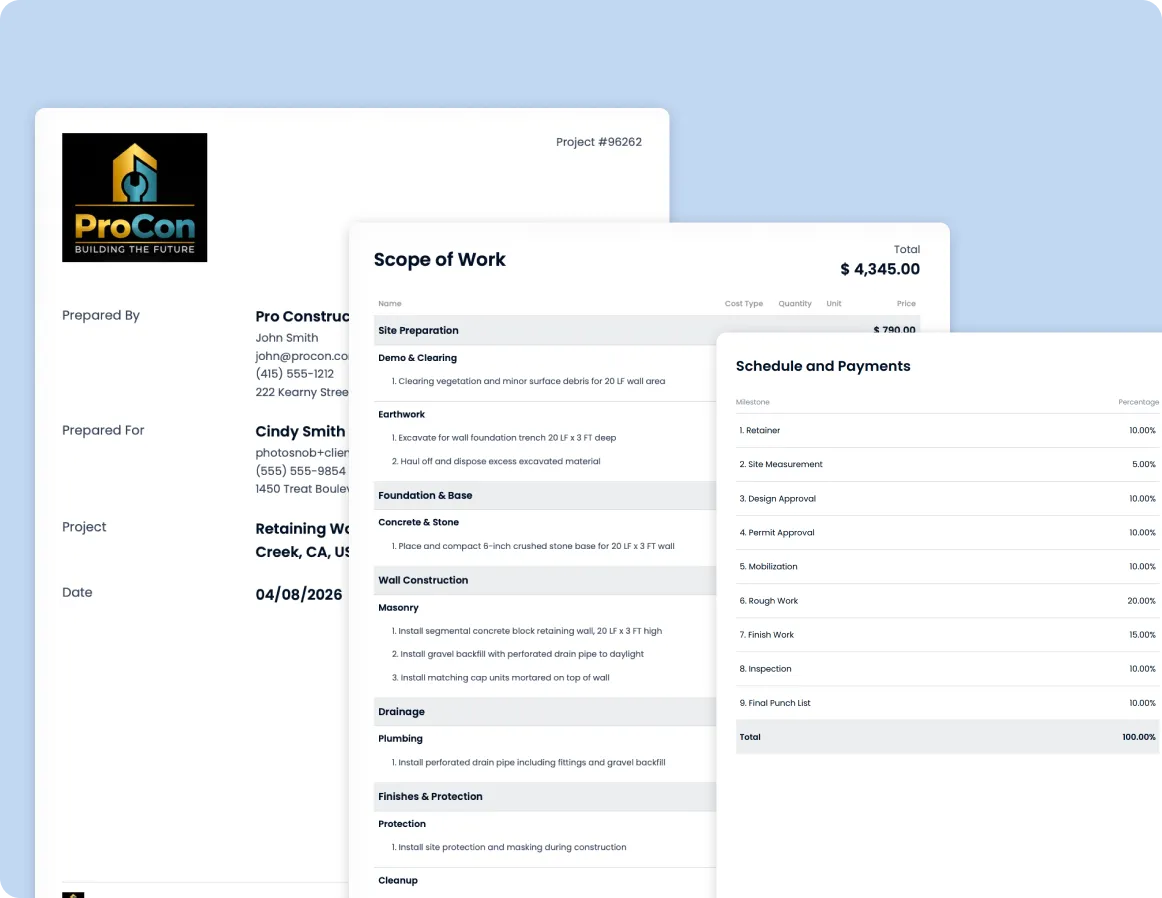
When evaluating a retaining wall estimate, it's essential to understand the key components and services included to ensure comprehensive planning and budgeting. This proposal typically covers site preparation, earthwork, foundation, wall construction, drainage, finishes, permits, and project administration. Each element plays a critical role in achieving a solid, durable retaining wall that meets safety and design expectations.
This estimate includes specific line items such as clearing vegetation, excavating the foundation trench, laying a compacted stone base, installing segmental concrete block walls with appropriate drainage systems, and finishing with matching cap units. It also accounts for temporary facilities like toilets and water for the construction crew, as well as necessary permits and inspections. This approach ensures all aspects of site and construction management are included, preventing unexpected costs down the line.
Scope Breakdown for the Retaining Wall Project
The proposal scope is divided into clear sections for easy tracking and evaluation. Breaking down the scope helps both homeowners and contractors visualize the workflow and understand the cost drivers:
- Site Preparation: Clearing and removing vegetation and minor surface debris to prepare for excavation.
- Earthwork: Excavation of the foundation trench and hauling away excess soil.
- Foundation & Base: Installing a 6-inch crushed stone base, which is vital for stability and drainage.
- Wall Construction: Erecting the retaining wall with segmental concrete blocks, backfilling with gravel, and setting a perforated drain pipe for effective drainage.
- Drainage Systems: Adding perforated drain pipes with gravel backfill to prevent water accumulation behind the wall, which could compromise its integrity.
- Finishes & Protection: Applying protective measures during construction and conducting final cleanup to ensure the site is left in excellent condition.
- Temporary Facilities & Permits: Providing on-site amenities for workers and obtaining required permits, which help maintain compliance and smooth project progress.
This comprehensive scope ensures that the retaining wall is not only functional but also constructed following regulatory standards and best practices.
Why This Proposal Structure Works for Retaining Wall Projects
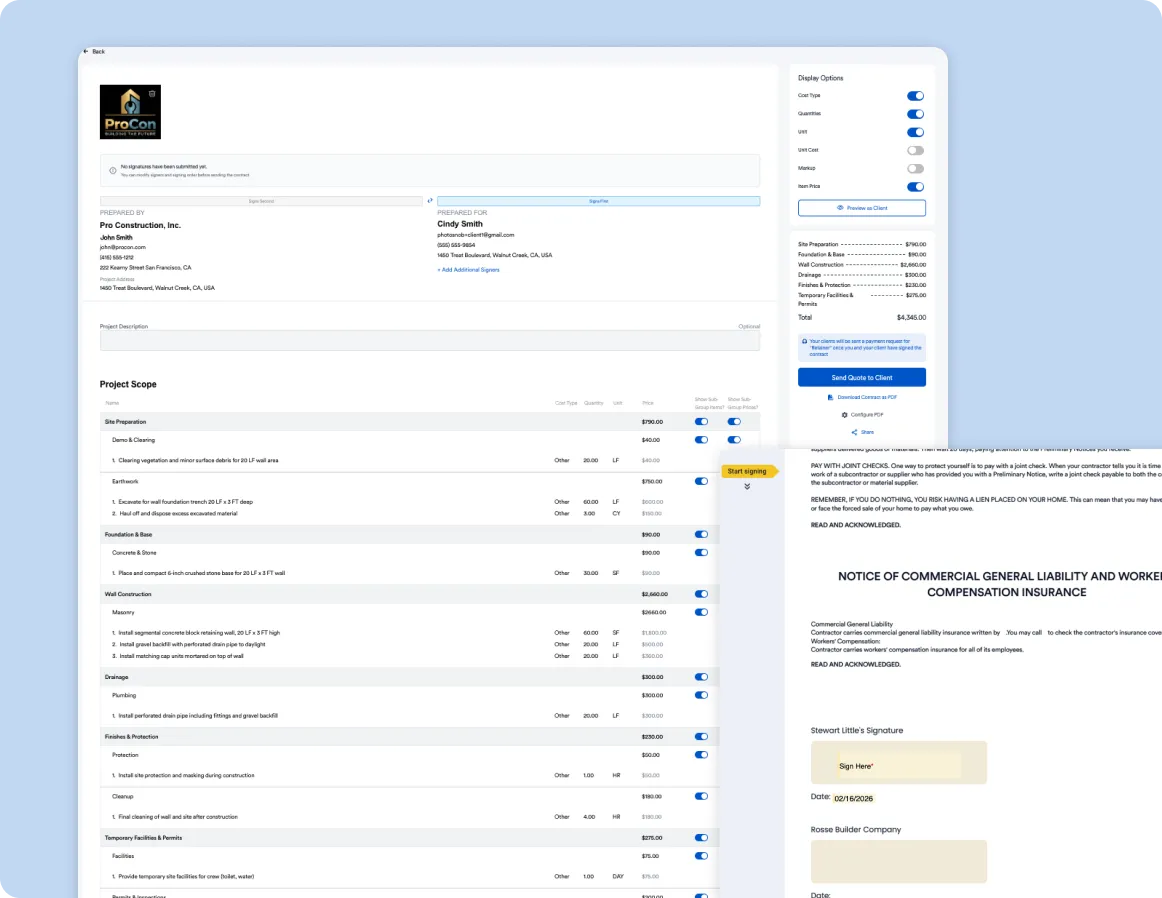
Structuring the proposal with a detailed breakdown and clear payment milestones promotes transparency and confidence for both parties involved. Homeowners can track the progress and correlate payments with milestones such as design approval, permit approval, mobilization, rough work, finishing, and inspection. This helps manage cash flow effectively while holding contractors accountable for timely completion.
The inclusion of clauses covering change orders, insurance requirements, warranty periods, and dispute resolution frameworks adds a layer of security and professionalism to the agreement. For homeowners, understanding this structure means better project planning and fewer surprises. For contractors, it fosters clear communication and smooth project execution.
Moreover, confirming insurance coverage and permit handling in the proposal protects homeowners from liability and legal issues. Clear documentation also simplifies any future claim processes and supports compliance with local construction regulations.